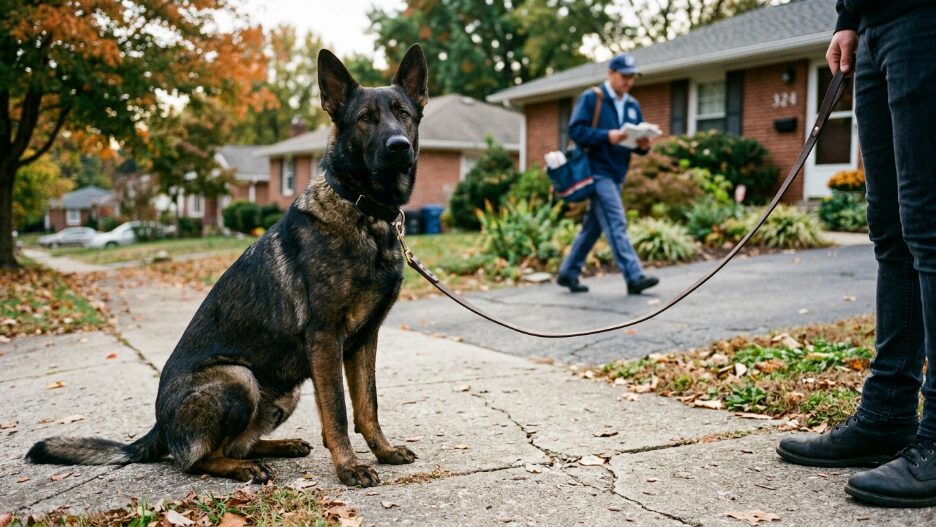
Dog Bite Laws in New Jersey: What Every Dog Owner Needs to Know
You are standing on your front porch when your dog darts past you and snaps at a neighbor walking on the sidewalk. You know your dog has never done anything like this before. You believe in your gut that the neighbor startled them, or maybe the dog was just having a bad day.
None of that matters under New Jersey dog bite laws.
New Jersey operates under one of the strictest dog bite liability frameworks in the country. As a dog owner in this state, you are responsible for damages the moment a bite occurs, regardless of your dog’s history, regardless of what you did to prevent it, and regardless of whether you had any reason to believe your dog was capable of biting.
This guide covers everything New Jersey dog owners need to understand about dog bite laws: the exact statute, what it means in practical terms, what defenses exist, what a bite incident can cost you financially, and, most importantly, what you can do right now to protect yourself, your dog, and the people around you.
This is not legal advice. For guidance on a specific legal matter, always consult a licensed New Jersey attorney. This article is written for educational purposes to help dog owners understand their responsibilities under New Jersey law and take proactive steps to fulfill them.
Quick Overview: New Jersey Dog Bite Laws at a Glance
New Jersey’s dog bite law is built on the principle of strict liability. Here is what that means in plain language:
- No “one free bite” rule. Some states only hold dog owners liable after the dog has shown prior aggression. New Jersey does not. A first-time bite carries full legal liability.
- No negligence required. The victim does not need to prove you were careless. The bite itself is sufficient to establish liability.
- No knowledge required. The victim does not need to prove you knew your dog was dangerous. You can be fully surprised by the bite and still be held liable.
- Covers public and private property. The law applies in parks, on sidewalks, and on your own property, as long as the victim was lawfully present.
- Two-year statute of limitations. Victims have two years from the date of the bite to file a lawsuit. For children, the clock starts when they turn 18.
NJ Dog Bite Law: Key Facts at a Glance
| Element | New Jersey Rule |
| Governing statute | N.J.S.A. 4:19-16 |
| Liability standard | Strict liability — no proof of negligence or prior aggression required |
| Applies where | Public places and private property where victim is lawfully present |
| Prior bite history needed | No — first bite triggers full liability |
| Owner knowledge needed | No — irrelevant under strict liability |
| Statute of limitations | 2 years from incident (18 years for minors) |
| Average NJ claim (2025) | $77,447 per Insurance Information Institute data |
| Non-bite injuries | May also result in liability under negligence law |
| Dangerous dog designation | Additional criminal and civil penalties under N.J.S.A. 4:19-17 to 4:19-37 |
New Jersey Dog Bite Law: What the Statute Actually Says
New Jersey Revised Statutes Section 4:19-16 is the foundation of dog bite liability in this state. It reads:
| N.J.S.A. 4:19-16 — Liability of Owner Regardless of Viciousness of Dog“The owner of any dog which shall bite a person while such person is on or in a public place, or lawfully on or in a private place, including the property of the owner of the dog, shall be liable for such damages as may be suffered by the person bitten, regardless of the former viciousness of such dog or the owner’s knowledge of such viciousness. For the purpose of this section, a person is lawfully upon the private property of such owner when he is on the property in the performance of any duty imposed upon him by the laws of this state or the laws or postal regulations of the United States, or when he is on such property upon the invitation, express or implied, of the owner thereof.” |
Read that carefully. The phrase “regardless of the former viciousness of such dog or the owner’s knowledge of such viciousness” is not legal boilerplate. It is the core of why New Jersey’s law is so powerful and so consequential for dog owners.
In most personal injury cases, you walk into court and prove someone was careless. In New Jersey dog bite cases, the victim does not need to prove that. The old legal excuse “he has never done this before” carries zero weight. Your dog’s impeccable history, your careful management practices, your years of responsible ownership: none of it shields you from liability the moment a bite occurs.
What Strict Liability Means in Practice
Strict liability is a legal standard that removes fault as a requirement for establishing responsibility. In the context of New Jersey dog bite law, it means the victim only needs to prove two things:
- That you are the dog’s owner. This can become complicated when the dog is in the temporary care of a dog walker, a kennel, a house-sitter, or a family member. Courts will look at ownership and control.
- That the bite occurred while the victim was on public property or lawfully on private property. The victim does not have to be invited onto your property specifically. A mail carrier, a delivery person, or a contractor performing work on your home qualifies.
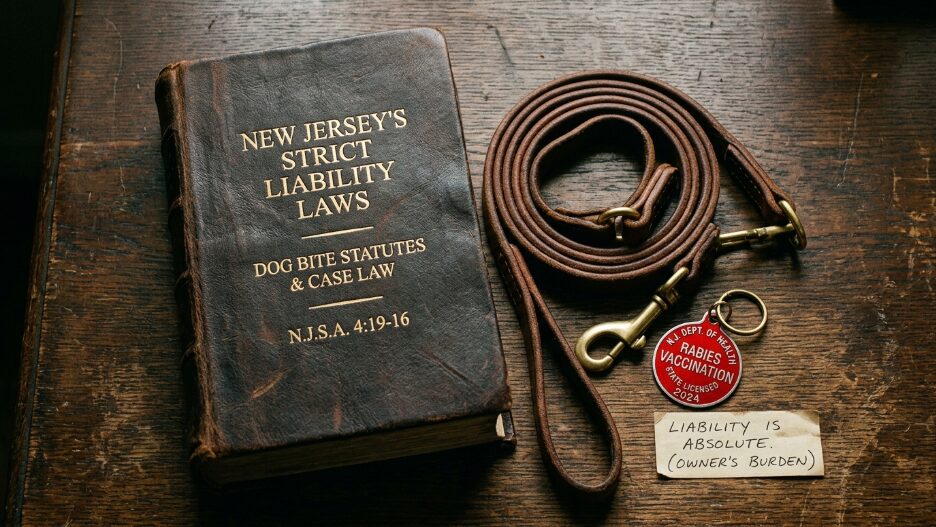
Once those two facts are established, liability follows automatically. There is no third step where the owner gets to argue they were careful, or that their dog is normally gentle, or that the victim should have seen it coming.
The Scope Goes Beyond the Bite Itself
New Jersey courts have interpreted strict liability broadly. Under the 1966 case Gross v. Dunham, when a bite triggers strict liability, the owner becomes responsible for all injuries suffered as a result of the dog’s behavior during that incident, not just the bite wound itself.
Imagine a dog that knocks someone to the ground and then bites them on the arm. The broken wrist from the fall and the bite wound on the arm are both covered under strict liability. The chain of events started with the dog’s behavior, and the owner is responsible for the full chain.
When Strict Liability Does Not Apply: Defenses and Exceptions
New Jersey’s strict liability law is strong, but it is not absolute. Dog owners facing a bite claim have several potential defenses, though each has significant limitations.
Trespassing
The statute explicitly covers people who are lawfully on the property. A trespasser, someone who has no legal right to be on the property and was not invited, may not be covered by strict liability.
That said, even trespassing is not a clean defense. Courts have found that owners can still face negligence claims from trespassers in some circumstances, particularly if the owner knew people regularly entered the property or failed to post adequate warning. And the definition of lawful presence is broad: anyone performing a legal duty (mail carriers, utility workers, government inspectors) is considered lawfully present regardless of whether they were personally invited.
Provocation
If the victim directly provoked the dog through teasing, hitting, or other harassment immediately before the bite, courts may reduce or eliminate the owner’s liability. Provocation is an affirmative defense, meaning the owner must prove it, not just assert it.
Provocation is also narrowly interpreted. A dog that is startled by a sudden movement or a loud noise is not a provoked dog in the legal sense. A dog that is teased repeatedly by a child who should have known better occupies a grayer area. Courts examine the specific facts and the reasonableness of the dog’s response.
Comparative Negligence
New Jersey uses a modified comparative negligence system. If the victim contributed to the incident through their own actions, their compensation may be reduced proportionally. A victim who is 30% at fault receives 30% less compensation.
Critically, a victim who is found to be more than 50% at fault receives nothing. However, for a dog bite victim to be assigned more than 50% of the fault is rare and difficult to prove. The bar is high, and NJ courts are generally plaintiff-friendly in dog bite cases.
Law Enforcement and Military Dogs
Dogs used in official law enforcement or military capacities are generally exempt from strict liability when performing their official duties. This exception applies to government working dogs, not privately owned dogs.
| Important: These Defenses Are Narrow. Do not assume any of these defenses will apply to your situation. Even provocation and trespassing defenses frequently fail in New Jersey courts. The law is deliberately written to protect bite victims, and courts interpret it with that purpose in mind. If you face a dog bite claim, consult a licensed New Jersey attorney immediately. |
The Dangerous Dog Law: What Happens After a Bite Incident
Beyond civil liability, New Jersey has a separate legal framework that classifies dogs as “potentially dangerous” or “vicious” after a bite or attack. This is where things can escalate significantly beyond a financial settlement.
Potentially Dangerous Dog Designation (N.J.S.A. 4:19-23)
A municipal court can declare a dog potentially dangerous if clear and convincing evidence shows the dog:
- Caused bodily injury to a person in an unprovoked attack and poses a serious ongoing threat of injury or death
- Caused serious injury to or killed another domestic animal and poses a threat to people or other animals
- Behaved in a manner that a reasonable person would believe posed a grave risk of serious injury, even without actually biting
Once a dog is designated potentially dangerous, the owner faces mandatory requirements under N.J.S.A. 4:19-24:
- Secure enclosure. A locked enclosure with sound sides, top, and bottom to prevent escape by climbing, jumping, or digging. The outer fence must be at least six feet high with at least three feet of separation from the confinement area.
- Muzzle and tether when outside. Any time the dog leaves the enclosure, it must be securely muzzled and restrained with a tether approved by the animal control officer, restricting movement to a radius of no more than three feet from the owner.
- Registration and red ID tag. The dog must be registered as potentially dangerous and wear a red identification tag at all times.
- Microchipping and photographs. Required for identification purposes.
- Liability insurance. The owner must maintain a surety bond or liability insurance policy with a minimum coverage of $100,000.
Vicious Dog Designation
A dog can be declared vicious if it has caused serious bodily injury to a person or was involved in organized dog fighting. The consequences are significantly more severe than a potentially dangerous designation and can include removal of the dog from the owner or court-ordered euthanasia.
Penalties for Non-Compliance
An owner who fails to comply with a potentially dangerous dog order faces fines of up to $1,000 per day of violation. Each day the enclosure, muzzle, or registration requirements are not met is a separate offense.
| Criminal Exposure Is Also Possible: If your dog seriously injures someone and you failed to take reasonable precautions after prior warning signs or a previous incident, you could face criminal charges in addition to civil liability. This is particularly relevant for owners who ignored prior aggressive behavior, allowed a dangerous dog to roam unsecured, or failed to comply with a potentially dangerous dog designation order. |
The Real Financial Cost of a Dog Bite in New Jersey
Numbers make the risk concrete. New Jersey is among the more expensive states in the country for dog bite claims, and the costs have risen sharply over the past decade.
What the Data Shows
According to the most recent data from the Insurance Information Institute, New Jersey recorded 818 dog bite insurance claims in 2025, with an average claim value of $77,447. That is a significant figure, and it represents only the average. Severe cases go much higher.
Typical NJ Dog Bite Settlement Ranges by Severity of Injury:
| Injury Category | Typical Settlement Range |
| Minor injuries (bruising, minor lacerations) | $10,000 to $25,000 |
| Moderate injuries (stitches, follow-up care, therapy) | $30,000 to $75,000 |
| Severe injuries (surgery, permanent scarring, disfigurement) | $100,000 to $250,000+ |
| Catastrophic or fatal incidents | Wrongful death claim; potentially unlimited |
Children are the most common victims of dog bites nationally, and facial bites on children are among the most expensive cases due to the long-term reconstructive treatment involved, the psychological trauma, and the extended treatment timelines.
What Damages Can Be Claimed Against You
A dog bite victim in New Jersey can pursue the following categories of compensation:
- Medical expenses. Emergency room treatment, hospitalization, surgery, follow-up care, medications, physical therapy, and future medical costs including reconstructive surgery.
- Lost wages. Income the victim lost while recovering, and in severe cases, future earning capacity if the injuries are permanently disabling.
- Pain and suffering. Non-economic damages for the physical pain of the injury and its aftermath. These can be substantial in cases with serious wounds.
- Emotional distress and PTSD. Dog bite trauma, particularly in children, frequently results in diagnosable anxiety, phobias, and post-traumatic stress disorder that require ongoing psychological treatment.
- Disfigurement and scarring. Visible scarring, particularly on the face, hands, and arms, significantly increases settlement values. Permanent disfigurement is compensated as a long-term quality-of-life loss.
- Wrongful death. In rare but devastating cases where a bite or attack results in death, the family can pursue wrongful death damages including funeral costs, loss of companionship, and lost income.
Does Homeowner’s Insurance Cover Dog Bites
Most homeowner’s and renter’s insurance policies do cover dog bite liability, typically up to the policy limit of $100,000 to $300,000. This is important because most bite claims are handled through insurance rather than direct lawsuits against the owner.
However, some insurance policies exclude certain breeds or dogs with prior bite histories. Some insurers will drop coverage or increase premiums significantly after a dog bite claim. And if a claim exceeds your policy limit, you are personally responsible for the difference.
An umbrella policy is worth serious consideration for dog owners in New Jersey. It extends your liability coverage beyond your standard homeowner’s policy limit and provides a meaningful buffer against high-value claims.
| National Context for New Jersey Dog Owners. The Insurance Information Institute reports that dog bite claims nationwide rose 25.6% from 2024 to 2025, reaching 28,450 claims nationally. The average cost per claim nationally has risen 97% since 2016. New Jersey’s strict liability framework consistently produces claims at or above the national average for moderate-to-severe injuries. |
What to Do If Your Dog Bites Someone in New Jersey
A bite incident is stressful, and the choices you make in the hours and days afterward can significantly affect the outcome. Here is the right sequence of actions.
Immediately After the Bite
- Secure your dog. Remove the dog from the situation calmly. Do not allow additional access to the victim or to bystanders. Confine the dog immediately.
- Assist the victim. Offer practical assistance: help them clean the wound, provide contact information, and call emergency services if the injury is serious. Do not minimize the injury.
- Exchange information. Provide your name, address, and phone number. Provide your dog’s vaccination records, particularly rabies vaccination documentation.
- Document the scene. Take photographs of the location, any conditions that may be relevant, and if possible, a description of how the incident occurred.
- Report if required. New Jersey requires dog bite incidents to be reported to local animal control in most municipalities. Check with your local authority.
- Cooperate with the mandatory quarantine. New Jersey law requires that any dog that bites a human be placed in a 10-day quarantine at the owner’s expense. This is a public health measure to monitor for rabies.
In the Days Following
- Contact your insurance company. Notify your homeowner’s or renter’s insurer immediately and file a claim report. Do not delay this step.
- Consult an attorney. Even if you believe the situation will resolve easily, a consultation with a New Jersey personal injury defense attorney gives you a clear picture of your exposure.
- Do not make statements about fault. Avoid saying “I am so sorry, I had no idea he would do that” to the victim or their family in a way that could be used as an admission. Let your insurer and attorney manage communications.
- Assess your dog’s training and management. A bite incident is a signal that something needs to change. Identifying the root cause, whether it is fear, pain, poor socialization, or a lack of obedience training, and addressing it immediately is both the ethical and the legally prudent response.
The Most Effective Way to Protect Yourself Under NJ Dog Bite Laws: Train Your Dog
Here is the honest reality that every New Jersey dog owner needs to sit with: the law does not care what you intended, what you knew, or how much you love your dog. Once a bite happens, liability is established. Your only meaningful protection is prevention.
And the single most effective prevention tool available to any dog owner is professional obedience training.
Training Builds the Impulse Control That Prevents Bites
Most dog bites are not the result of a vicious, predatory dog. They are the result of an undertrained dog in an overstimulating situation, or an undertrained dog that has learned that biting produces results.
A dog that has been through structured obedience training has fundamentally different neural pathways than an untrained dog. Hundreds of repetitions of sitting on command, stopping on command, focusing on the owner in distracting environments, and deferring to human direction build the impulse control that keeps a dog below the threshold where biting occurs. The dog that knows to sit and look at its owner when a stranger approaches is not a dog that bites that stranger.
Socialization Reduces Fear-Based Biting

Fear is the single most common root cause of dog bites. A dog that is poorly socialized, one that has not been adequately exposed to the full range of people, environments, sounds, and situations they will encounter as an adult, is a dog that experiences the ordinary world as threatening.
Fearful dogs bite. They bite children who approach too quickly. They bite strangers who reach toward them. They bite when cornered, when startled, or when their normal distance-increasing signals (growling, stiffening, turning away) are ignored or misread.
Professional training that includes structured socialization gives dogs the experiential foundation to encounter novelty with confidence rather than anxiety. That confidence is protective, for the people around the dog and for the dog’s owner.
Trained Dogs Are Manageable in High-Risk Situations
Many bite incidents happen at predictable moments: guests arriving at the front door, children running in the backyard, walks in crowded areas, veterinary examinations. A trained dog has learned behaviors for each of these scenarios. They know to sit when visitors enter. They know to stay when asked. They know to focus on their owner on a busy sidewalk.
An untrained dog manages these situations through instinct alone, and instinct under stress does not reliably produce safe outcomes.
Training Is Not a Legal Shield, But It Is Your Best Practical Defense
Training will not eliminate your legal liability under New Jersey’s strict liability statute if a bite occurs. But a well-trained dog is dramatically less likely to bite in the first place. Prevention is the only complete defense available to NJ dog owners, and training is the most reliable path to prevention.
Courts and insurance adjusters also view a dog owner who invested in professional training differently than one who did not. In comparative negligence arguments and in the context of damages discussions, an owner who can demonstrate proactive, responsible steps to manage their dog is in a meaningfully better position than one who cannot.
| Important: We Do Not Train Aggressive Dogs: Dan Gentile Dog Training Center does not accept dogs with confirmed aggression histories or dogs that have already been designated as potentially dangerous or vicious under New Jersey law. These cases require specialized behavior modification expertise beyond the scope of our program. If your dog has already bitten someone or displayed aggressive behavior, please consult a certified veterinary behaviorist or a specialist in aggression rehabilitation. Our programs are designed for prevention: building the obedience, socialization, and impulse control that keep dogs safe before a problem develops. |
Dan Gentile Dog Training Center: Helping New Jersey Dog Owners Train Responsibly
The best time to protect yourself under New Jersey’s dog bite laws is before any incident ever occurs. That protection starts with professional training, and it starts with Dan Gentile Dog Training Center in Howell Township, Monmouth County, NJ.
For more than 40 years, Dan Gentile has been training dogs across New Jersey and beyond, building the kind of reliable obedience, social confidence, and impulse control that makes dogs genuinely safe companions. With 2,500+ dogs trained and a 4.3-star Google rating, the results speak clearly.
| 40+ Years of Professional Training Experience: Real Expertise With Real Dogs. Dan Gentile has worked with dogs of every breed, age, and temperament across more than four decades of professional training in New Jersey. That experience translates directly into the ability to identify and address the specific behaviors and tendencies in your dog that could create risk, before any incident occurs. |
| Train While Boarding: Immersive Obedience That Produces Real Results. The Fastest Path to a Reliably Safe Dog: The flagship Train While Boarding program places your dog in a structured training environment for 2 to 3 weeks, building foundational obedience commands, leash manners, impulse control, and social confidence through daily, consistent repetition. The immersive format produces faster and more durable results than weekly one-hour sessions. Owners who want a reliably obedient dog, one that sits on command, responds to recall, and stays calm in high-stimulation environments, consistently choose this program. |
| Puppy Training: The Best Time to Build a Safe Dog Is Now. Prevention Before Any Risk Develops. The ideal time to establish obedience, socialization, and impulse control is during puppyhood, when the brain is most plastic, and the training takes hold most efficiently. Puppy training is the highest-return investment any dog owner can make, and it is the single most effective thing you can do to reduce your long-term exposure under New Jersey dog bite law. |
| Owner Education at Pickup and Free Lifetime Consultation. So the Training Follows Your Dog Home. Every program includes a handoff session with the owner at pickup, teaching you the exact cues, management techniques, and daily habits that maintain your dog’s trained behavior. Free lifetime consultation support means that if a situation arises months or years later, you have access to Dan’s expertise without starting over. That ongoing relationship is what turns training into long-term behavioral reliability. |
| Veteran-Owned, Credentialed, and Trusted Across NJ, NY, and PA. The Right Credentials, the Right Results. Dan Gentile Dog Training Center is a veteran-owned business with credentials from the US Professional Dog Trainers Association, the North American Police Work Dog Association, and NJ certification as a professional dog trainer. In a state where anyone can legally call themselves a dog trainer, those credentials matter. Owners travel from across New Jersey, New York, and Pennsylvania for programs that produce consistent, verifiable results. |
To discuss your dog’s training needs and learn whether our programs are a fit, call (732) 938-5040 for a free consultation. You can also explore our puppy training program, obedience training options, and the Train While Boarding program online. Contact us here or call to schedule.
FAQ: New Jersey Dog Bite Laws
Does the NJ dog bite law apply if the bite happened on my own property?
Yes. N.J.S.A. 4:19-16 explicitly covers bites that occur on the owner’s property, as long as the victim was lawfully present. A neighbor invited to a backyard barbecue, a delivery driver dropping off a package, or a contractor performing work on your home are all lawfully present on your property. Strict liability applies in every one of those situations.
My dog has never shown aggression before. Does that matter legally?
No. New Jersey’s strict liability statute was specifically written to eliminate the relevance of prior behavior. The phrase in the statute ‘regardless of the former viciousness of such dog or the owner’s knowledge of such viciousness’ means that a first-time bite carries the same legal liability as a bite by a dog with a known history of aggression. There is no legal benefit to a clean record in New Jersey.
What if the person who was bitten was partially at fault?
New Jersey uses a modified comparative negligence system. If the victim is found to share some of the responsibility, their compensation is reduced proportionally. A victim found 30% at fault recovers 30% less. However, a victim who is more than 50% at fault receives nothing. In practice, assigning more than 50% of fault to a bite victim is very difficult, and NJ courts generally favor victim compensation in dog bite cases.
Can I be held liable if my dog knocks someone over without biting them?
Strict liability under N.J.S.A. 4:19-16 requires an actual bite to trigger. However, non-bite injuries caused by your dog can still lead to liability under negligence law. If your dog has a known habit of jumping on people or has knocked someone over before and you failed to manage that behavior, and someone is injured as a result, New Jersey courts have consistently found owners liable under a ‘dangerous habits’ theory. Strict liability is not the only path to compensation for bite victims in New Jersey.
How does homeowner’s insurance work with NJ dog bite claims?
Most homeowner’s and renter’s insurance policies cover dog bite liability up to the policy limit, typically $100,000 to $300,000. Most claims are settled through insurance without going to court. However, some policies exclude specific breeds or dogs with prior bite histories. If a claim exceeds your policy limit, you are personally responsible for the excess. Review your policy carefully and consider an umbrella policy for additional coverage.
Is professional dog training a legal defense against bite liability?
Training does not eliminate your liability under strict liability law if a bite occurs. What it does is substantially reduce the probability that a bite will occur in the first place. Prevention is the only complete protection available to NJ dog owners. A well-trained dog is exponentially less likely to bite than an untrained one, and investing in professional training is the most responsible and practical step any NJ dog owner can take.
What is the statute of limitations for a dog bite lawsuit in New Jersey?
Victims have two years from the date of the bite to file a lawsuit under N.J. Stat. Ann. § 2A:14-2. For child victims, the two-year clock does not start until they turn 18 years old, meaning an owner could face a lawsuit many years after an incident involving a minor. This extended window is one more reason to take every bite incident seriously and to maintain thorough documentation.
New Jersey Dog Bite Laws Put the Responsibility on You. Training Is Your Best Response.
New Jersey has made a clear policy choice. In this state, the protection of bite victims comes first. The law does not ask whether you were careful. It does not ask whether you knew your dog could bite. It asks only one question: did your dog bite someone who was lawfully present?
If the answer is yes, you are liable.
That legal reality is not something to resent. It is something to prepare for. And the best preparation is a dog that is trained well enough, socialized thoroughly enough, and managed consistently enough that a bite never becomes a possibility in the first place.
The financial stakes in New Jersey are real. The average claim in 2025 was $77,447, and severe cases climbed well into six figures. Beyond the money, a bite incident can trigger a potentially dangerous dog designation with lifelong management requirements, criminal exposure in serious cases, and the kind of neighborhood and community consequences that follow a family for years.
Professional training is not a luxury for New Jersey dog owners. It is the most practical, proactive step you can take to protect yourself, your family, your finances, and, just as importantly, the people your dog encounters every day.
At Dan Gentile Dog Training Center in Howell Township, Monmouth County, we have been helping New Jersey dog owners build safe, reliable, well-mannered dogs for over 40 years. Our programs are built on the same principle that underlies responsible dog ownership in this state: a well-trained dog is a protected dog. And a protected dog is a protected owner.
Call (732) 938-5040 today for a free consultation. Train now, so the law never has to be involved later.