How to Stop Leash Pulling Fast (Proven Strategies)
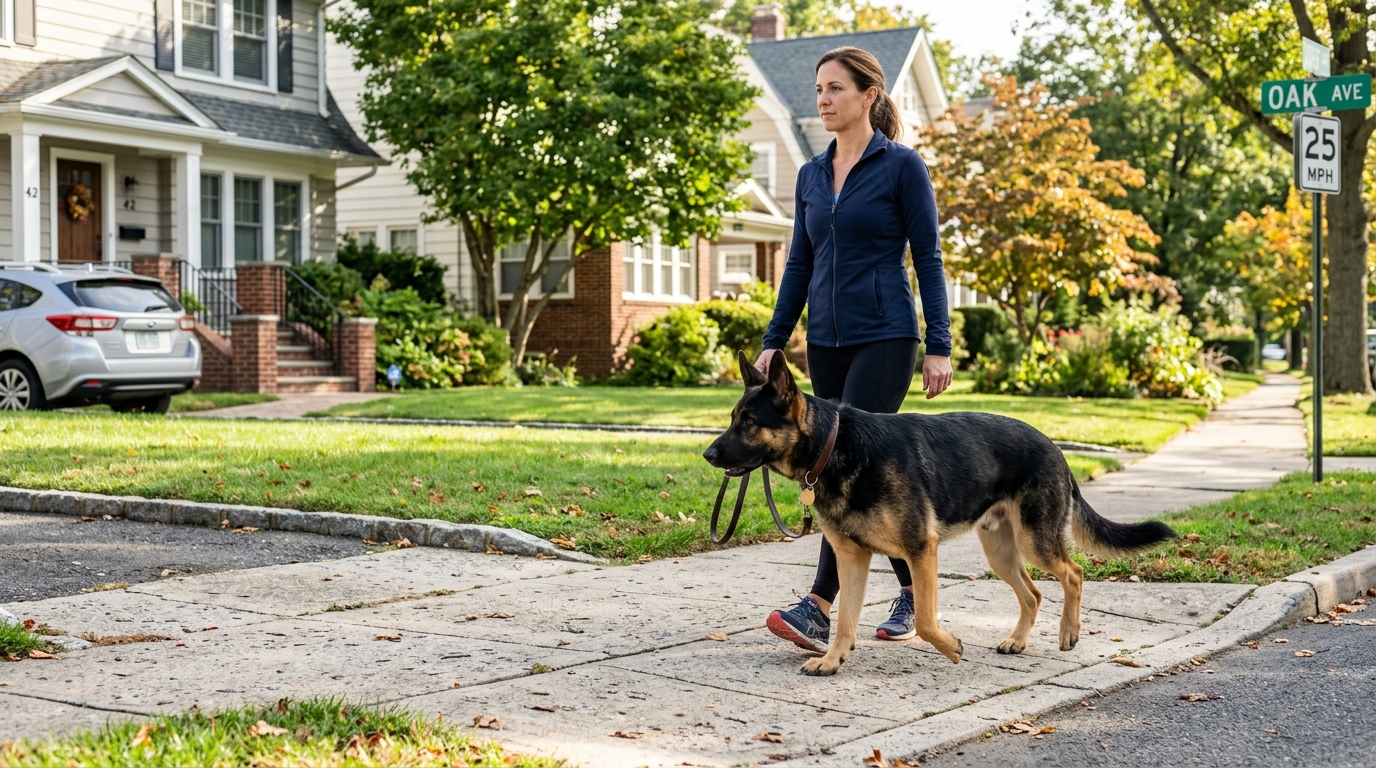
If you want to stop leash pulling quickly without relying on treats, you have to change what your dog has learned. Right now, pulling gets your dog where they want to go. That’s the problem. The moment pulling stops leading to forward movement and calm walking, it starts getting rewarded with progress, behavior begins to shift.
This is not about food rewards. It’s about clarity, structure, and consistency.
Quick Overview
Leash pulling can be corrected without treats when the focus shifts from bribery to structure. Dogs do not need food to learn how to walk properly. They need clear rules and consistent outcomes. When pulling no longer works and calm behavior consistently leads to forward movement, the dog begins to adjust quickly. Most owners struggle because they unknowingly reward pulling by continuing the walk or because they lack a consistent system.
The fastest results come from removing confusion. The dog must clearly understand what is expected and what does not work. Without that clarity, progress is slow or nonexistent. With it, change can happen much faster than most people expect.
Why Treats Alone Don’t Fix Leash Pulling
Treats are not the problem. Over-reliance on them is.
Many dog owners use treats to get short bursts of attention, but the moment the food disappears, the behavior often disappears with it. That’s because the dog has not actually learned a consistent pattern. They are simply responding to a reward at the moment.
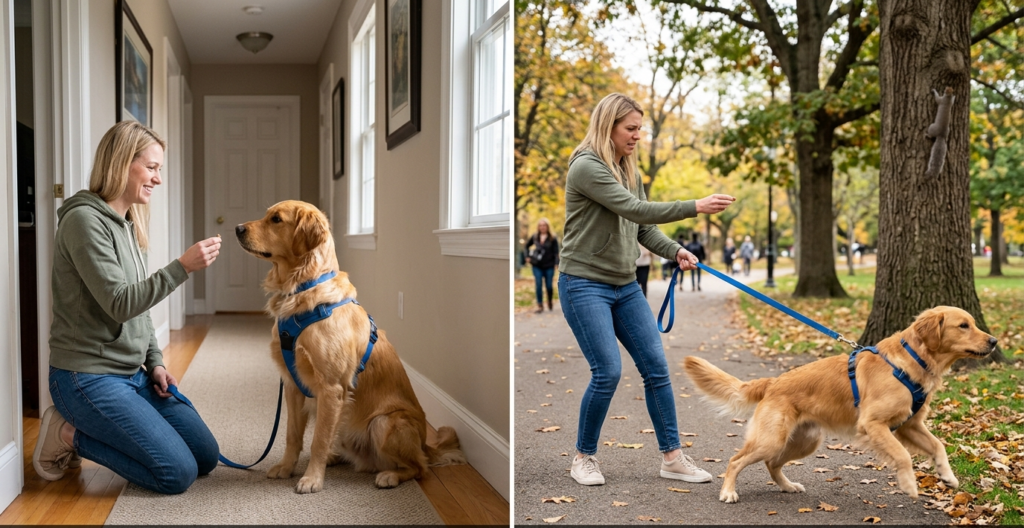
Leash walking is not a trick. It’s a structured behavior that needs to hold up in real-world environments filled with distractions. If your dog only walks properly when food is present, the training has not fully transferred.
That’s why a no-treat approach, when done correctly, often produces more reliable and lasting results.
How to Stop Leash Pulling Fast Without Treats
Stopping leash pulling quickly comes down to removing the reward for the wrong behavior and clearly reinforcing the right one. The process is straightforward, but it requires discipline.
1. Remove the Reward for Pulling
The first and most important step is to stop reinforcing the behavior. If your dog pulls and you keep moving, even slightly, you are teaching them that pulling works.
The rule needs to be consistent. The moment the leash becomes tight, forward movement stops. You can pause, reset your dog’s position, or change direction. What matters is that pulling no longer leads to progress.
This is where many owners see the first breakthrough. When the dog realizes that pulling no longer works, the behavior starts to lose its purpose.
2. Make the Walk Structured, Not Casual
Most dogs pull because the walk has no rules. It’s treated as free time, where the dog leads and the owner follows.
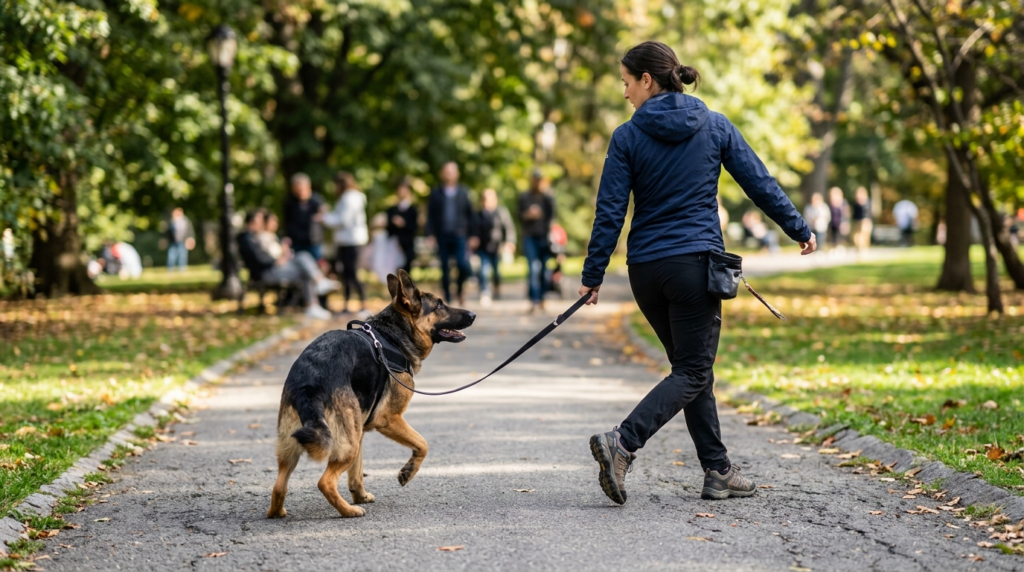
To fix this, the walk needs structure. Your dog should understand that the walk has a purpose and that you are setting the pace and direction. This does not mean making the walk rigid or stressful. It means making expectations clear.
When structure is introduced, dogs naturally begin to settle. They become more focused and less reactive to every distraction around them.
Programs like the dog training program in Monmouth County are built around this concept. Instead of relying on temporary fixes, they establish a consistent structure that carries into everyday life.
3. Teach Your Dog to Pay Attention to You
A dog that is constantly scanning the environment is more likely to pull. A dog that is tuned into you is far easier to control.
This does not require treats. It requires engagement.
Simple changes can make a big difference:
- Change direction unexpectedly so your dog learns to follow you
- Adjust your pace so your dog must stay aware
- Reinforce calm, attentive behavior by continuing the walk
Over time, your dog begins to understand that staying connected to you is what keeps the walk moving forward.
4. Stay Consistent Every Time You Walk
Consistency is what determines how fast you see results. If you enforce the rules one day but relax them the next, your dog will remain stuck in the same pattern.
Every walk matters. Even short walks reinforce behavior.
If pulling works even occasionally, your dog will continue to try it. But when the rule is consistent, the learning becomes clear, and progress speeds up.
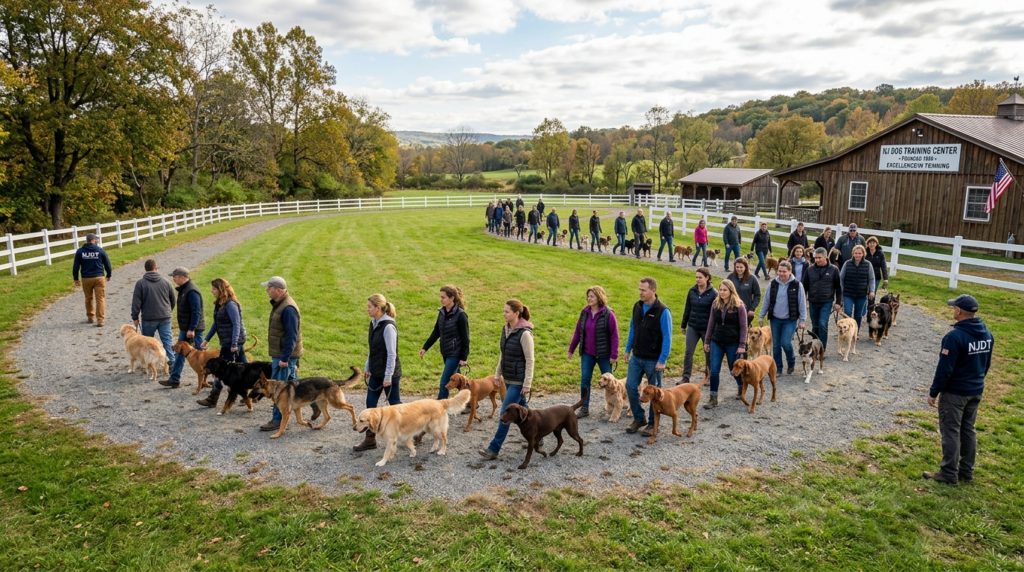
This is one of the main reasons professional environments like a dog training center in New Jersey are so effective. The structure is applied the same way every time, which eliminates confusion for the dog.
5. Address Energy and Mental State
A highly excited or overstimulated dog will struggle to walk calmly, no matter what technique you use.
Before expecting perfect leash behavior, consider your dog’s overall state. If they are overly energized, reactive, or unfocused, you may need to work on calming them before or during the walk.
This does not mean exhausting them physically. It means helping them shift into a calmer, more controlled mindset.
Structured routines and consistent expectations play a big role here. When a dog understands the pattern of the walk, their mental state begins to stabilize.
6. Know When You Need Help
Some dogs improve quickly with consistent effort. Others have deeper habits that are harder to break.
If your dog continues to pull despite your efforts, ignores you outside, or becomes more difficult in stimulating environments, it may be time to get professional help.
Structured programs provide a level of consistency and clarity that is difficult to replicate on your own. They also expose the dog to controlled distractions, which helps solidify the training.
You can see real examples of dogs that have gone through this process in these dog training testimonials, where owners share how structured training changed their dog’s behavior.
A Better Way to Think About Fast Results
When people say they want to fix leash pulling fast, they usually mean they want immediate results. But speed comes from clarity, not shortcuts.
The faster your dog understands that pulling does not work and calm walking does, the faster the behavior changes. There is no need for complicated techniques or constant food rewards. What matters is consistency and clear communication.
Frequently Asked Questions
Can I really stop leash pulling without treats?
Yes. Dogs do not need treats to learn structured behaviors like leash walking. They need consistent rules and clear outcomes. Treats can support training, but they are not required.
How fast can I see results?
Some dogs show improvement within a few walks once the rules are applied consistently. Others take a few weeks, especially if pulling has been reinforced for a long time.
What if my dog pulls even harder when I stop?
This is normal at first. Your dog is testing whether the old behavior still works. If you stay consistent, the behavior will begin to fade.
Is it okay to let my dog pull sometimes?
Allowing pulling occasionally creates confusion and slows progress. For faster results, the rule needs to be consistent every time.
Why does my dog only pull outside?
Outdoor environments are full of distractions. If your dog’s training is not strong enough, those distractions will override your commands.
Final Thoughts
Stopping leash pulling without treats is not only possible, it is often more effective in the long run. When your dog learns that behavior is guided by structure rather than rewards, the results become more reliable.
The key is simple but not always easy. Remove the reward for pulling, teach a clear alternative, and stay consistent. When those elements come together, even stubborn leash pulling can change faster than most owners expect.