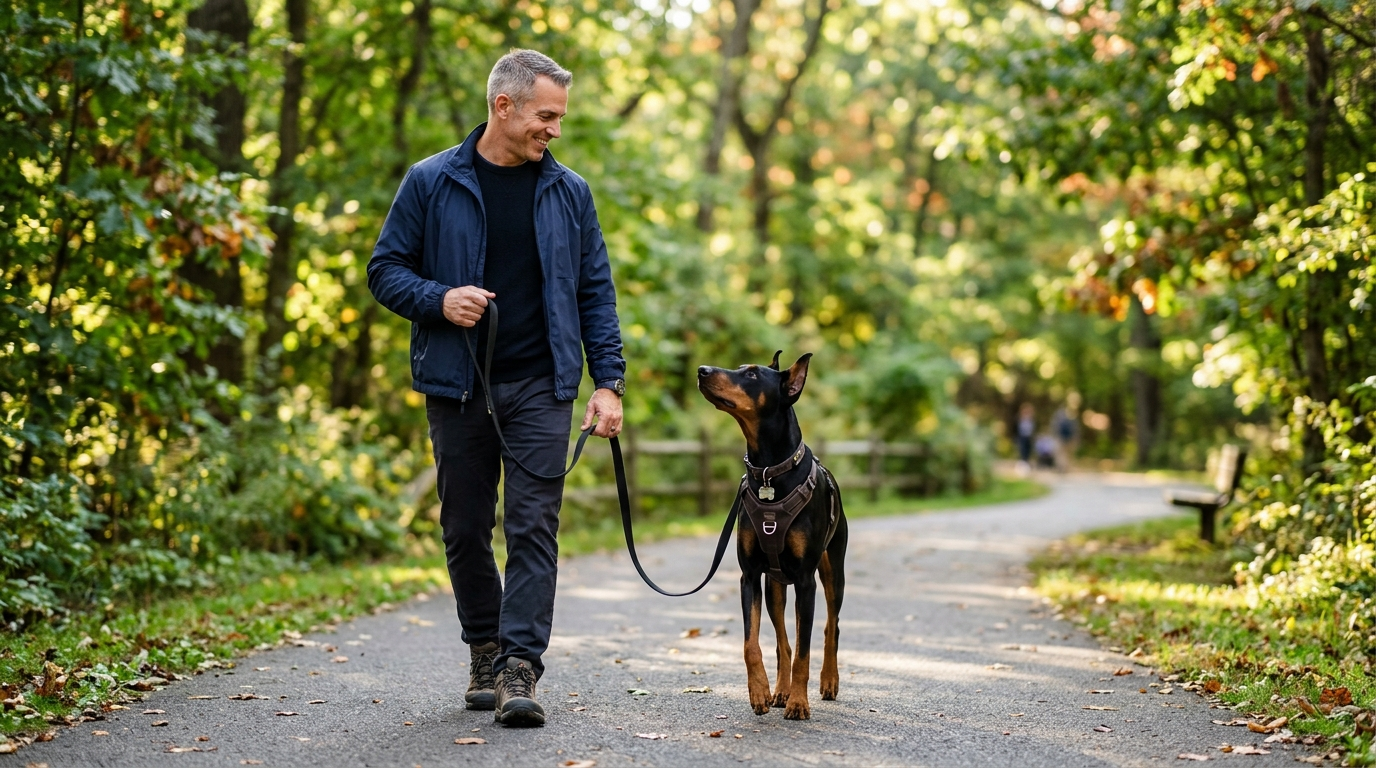
Why Does My Dog Pull on the Leash and How Do I Fix It?
Dogs pull on the leash because it gets them what they want. Movement. Exploration. Stimulation. Over time, that repeated success turns pulling into a habit. Add excitement, lack of structure, and inconsistent handling, and you end up with a dog that drags you instead of walking with you.
Fixing dog leash pulling isn’t about tricks or gadgets. It comes down to changing what your dog has learned and replacing it with a clear, consistent pattern.
Quick Overview
Leash pulling is not random behavior. It develops because the dog has learned that pulling leads to forward movement, which is exactly what they want during a walk. Most dogs are never actually taught how to walk properly, so they default to instinct, which includes following scents, rushing ahead, and reacting to their environment. When owners continue walking while the leash is tight, even unintentionally, they reinforce the behavior every single time.
The solution is rooted in structure. The dog must learn that pulling no longer works and that there is a specific position and pace expected during a walk. Consistency is what makes the difference. When the rules are clear and applied the same way every time, the dog begins to adjust quickly. Without that consistency, even the best techniques fail.
Why Dogs Pull on the Leash
Most people assume leash pulling is about stubbornness or a dog trying to take control. In reality, it’s much simpler than that.
1. Pulling has been reinforced
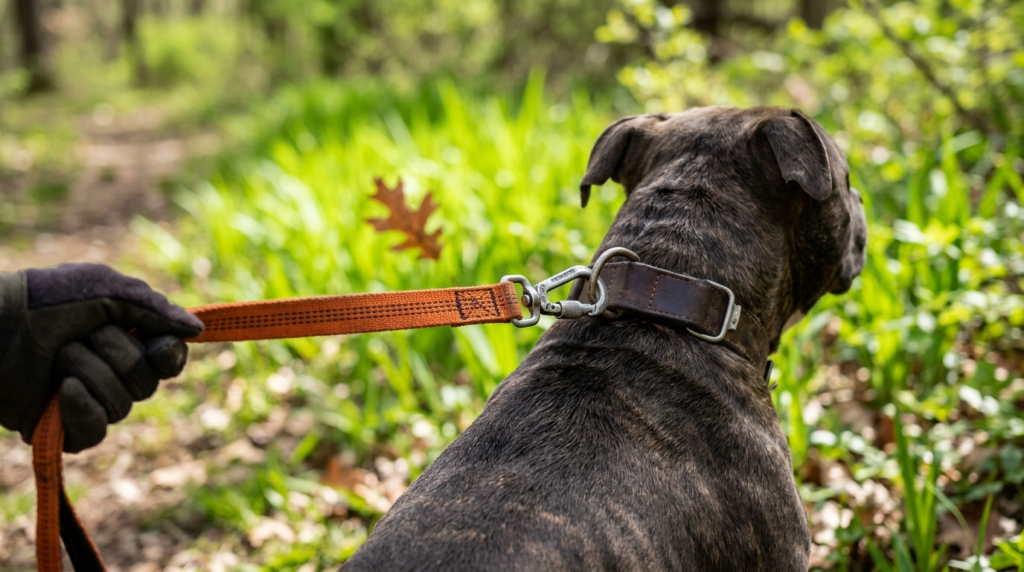
Every walk is a learning experience. If your dog pulls and you continue moving, even for a few steps, you’ve rewarded that behavior. From the dog’s perspective, pulling works. It gets them closer to smells, people, other dogs, and everything else that makes a walk exciting. Over time, that pattern becomes automatic.
2. The dog was never properly taught
Loose leash walking is a trained behavior. It does not come naturally to dogs. Left untrained, they will follow their instincts, which include moving ahead of you, scanning their surroundings, and reacting to stimuli without restraint. Without guidance, they simply do what feels natural.
3. Excitement takes over
For many dogs, the walk is the highlight of the day. The moment the leash comes out, their energy spikes. That excitement often overrides any level of control they might have indoors. This is especially common in younger dogs or those with higher energy levels.
4. Resistance makes it worse
When a dog feels tension on the leash, they instinctively pull in the opposite direction. This natural reflex turns many walks into a constant back-and-forth struggle, where both the dog and the owner are reinforcing the problem without realizing it.
5. Inconsistency creates confusion
If pulling is corrected sometimes but ignored at other times, the dog never learns a clear rule. Inconsistent handling leads to inconsistent results. From the dog’s point of view, pulling still works often enough to keep trying.
The Mistakes That Keep the Problem Going
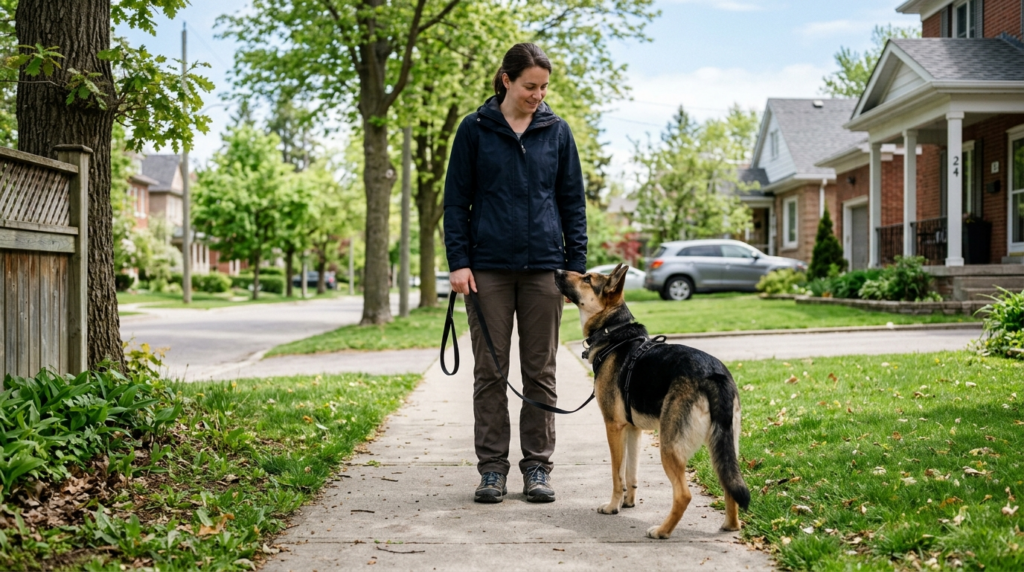
Many owners are unknowingly reinforcing leash pulling during everyday walks. One of the most common mistakes is continuing the walk while the leash is tight. Even a few steps forward while the dog is pulling sends the message that the behavior is acceptable.
Another issue is relying too heavily on treats without establishing structure. While rewards can be helpful, they don’t replace clear expectations. Without boundaries, the dog may respond temporarily but won’t develop consistent behavior.
Talking excessively is another overlooked problem. Repeating commands without follow-through teaches the dog to ignore those commands altogether. Over time, words lose meaning if they are not backed by action.
Finally, inconsistency undermines progress. Allowing pulling when you are in a hurry or too tired to correct it resets the learning process. Dogs thrive on patterns, and if the pattern is unclear, the behavior will not change.
How to Fix Dog Leash Pulling
Fixing leash pulling is not about overpowering your dog or relying on shortcuts. It’s about changing the pattern your dog has learned and replacing it with a clear, repeatable behavior. When done correctly, the results are not only visible but lasting.
1. Stop Rewarding the Pulling Behavior
The first shift you need to make is simple but powerful. If your dog pulls and you continue walking, even for a few steps, you are reinforcing the behavior. From your dog’s perspective, pulling is working.
To break this cycle, forward movement must stop the moment the leash becomes tight. This doesn’t mean you need to yank or correct harshly. It simply means the walk pauses. When the dog releases the tension and reorients, the walk resumes.
This teaches your dog one clear rule: pulling does not get you anywhere, but walking calmly does.
2. Teach a Clear Walking Position
Many dogs pull because they have never been shown what the correct behavior looks like. It’s not enough to stop the wrong behavior; you must also teach the right one.
Your dog needs to learn where to be in relation to you during a walk. That position should be consistent. Whether it’s beside you or slightly behind, the key is that your dog is following your movement rather than leading it.
This is where structured training becomes important. In a proper system, the dog learns not just to avoid pulling but to actively focus on the handler. Programs like the dog training program in Monmouth County are designed to build this kind of clarity, so the dog understands expectations instead of guessing.
3. Stay Consistent on Every Walk
Consistency is what turns short-term improvement into long-term behavior. If you enforce rules one day but relax them the next, your dog will remain stuck in the same cycle.
Dogs learn through repetition. If pulling occasionally works, they will continue to try it. That’s why every walk matters. Even quick trips outside reinforce habits, whether good or bad.
Consistency does not mean perfection, but it does mean being intentional. The clearer your pattern, the faster your dog adapts.
4. Address the Bigger Training Picture
Leash pulling is often a symptom of a larger issue. Dogs that struggle on the leash typically lack structure in other areas as well. This can include weak obedience, poor impulse control, or a lack of clear guidance from the owner.
If you only focus on the leash without addressing these underlying issues, progress tends to stall. That’s why more comprehensive training approaches are often more effective.
Working with a professional dog training center in New Jersey allows you to tackle the root of the problem, not just the surface behavior. Instead of patching one issue, you build a foundation that improves overall behavior.
5. Know When to Get Professional Help
Some dogs respond quickly to consistent training at home. Others do not. If your dog continues to pull despite your efforts, ignores you outside, or becomes more difficult in stimulating environments, it may be time to bring in professional guidance.
Structured programs provide controlled environments where dogs can learn without constant setbacks. They also ensure that training is applied consistently, which is often the missing piece for many owners.
If you want to see what that level of training looks like in practice, the dog training testimonials offer real examples of dogs that have gone through structured programs and achieved lasting results.

Rethinking the Purpose of a Dog Walk
Many people view walks purely as a way for their dog to burn energy. While exercise is important, a walk is also one of the best opportunities to reinforce structure and obedience.
When a dog understands that the walk has rules, their behavior begins to change. They become more attentive, more controlled, and easier to manage. Instead of chaos, the walk becomes a structured activity that strengthens the relationship between dog and owner.
Guidance from trusted sources like the American Kennel Club also emphasizes that leash manners are built through consistent training and repetition, not instinct.
Frequently Asked Questions
Why does my dog pull more at the beginning of the walk?
At the start of the walk, excitement is at its peak. Your dog has not yet settled into a calm state, which makes it harder for them to control their impulses.
Will a harness or special tool stop my dog from pulling?
Tools can help manage the behavior, but they do not fix the root cause. Without proper training and structure, the pulling will continue regardless of the equipment used.
Why does my dog listen indoors but not outside?
Outdoor environments are full of distractions. If your dog’s training is not strong enough, those distractions will override your commands.
Can older dogs still learn to stop pulling?
Yes, they can. Dogs of any age can learn new behaviors with the right approach and consistency.
How long does it take to fix leash pulling?
It depends on the dog and the level of consistency. Some dogs improve quickly, while others take a few weeks or longer if the behavior has been reinforced for a long time.
Final Thoughts
Leash pulling is one of the most common challenges dog owners face, but it is also one of the most fixable. The key is understanding that the behavior has been learned and can therefore be unlearned.
When you remove the reward for pulling, teach a clear alternative, and stay consistent, the results follow. And for those who want a more direct path to success, structured training provides the clarity and consistency most dogs need to truly change.