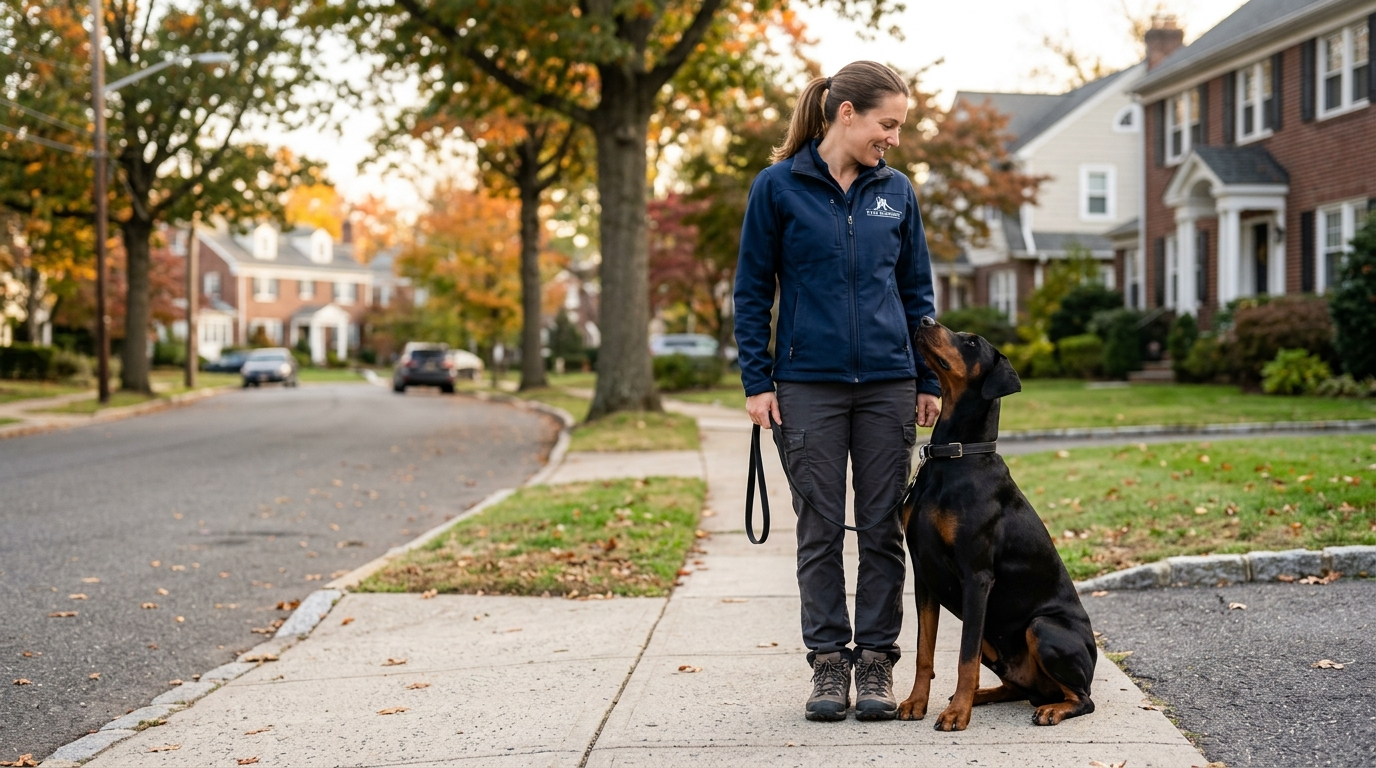
Why Won’t My Dog Listen to Me Outside but listen at Home?
It is a common point of frustration for many pet owners. Inside your house, your dog is the perfect companion. They sit when told, they stay when asked, and they come running the moment you call their name. However, the second that the front door opens, everything changes. You begin to wonder, “Why won’t my dog listen to me outside? The dog that was just a star pupil suddenly acts like they have never heard a command in their life. You call them, but they are glued to a scent on a tree or pulling toward a passing car. This isn’t necessarily because your dog is “bad” or “stubborn.” Instead, it is usually a breakdown in how the dog understands the world and a lack of proper proofing in high-pressure environments.
Quick Overview
The main reason a dog fails to listen outdoors is a lack of generalization. Dogs are situational learners, meaning they often associate a command with the specific room where they learned it rather than the command itself.
When you step outside, your dog is hit with a massive amount of sensory data: smells, sounds, and movements that are far more rewarding than a simple “good boy” or a piece of kibble. To fix this, you must systematically increase the difficulty of your training by starting in low-distraction areas like a driveway.
You can bridge the gap between indoor manners and outdoor reliability by using distance to keep the dog below their threshold of excitement and keeping training sessions very short and successful,
Main Reasons Why Your Dog Won’t Listen to You Outside
1. The World is Too Exciting
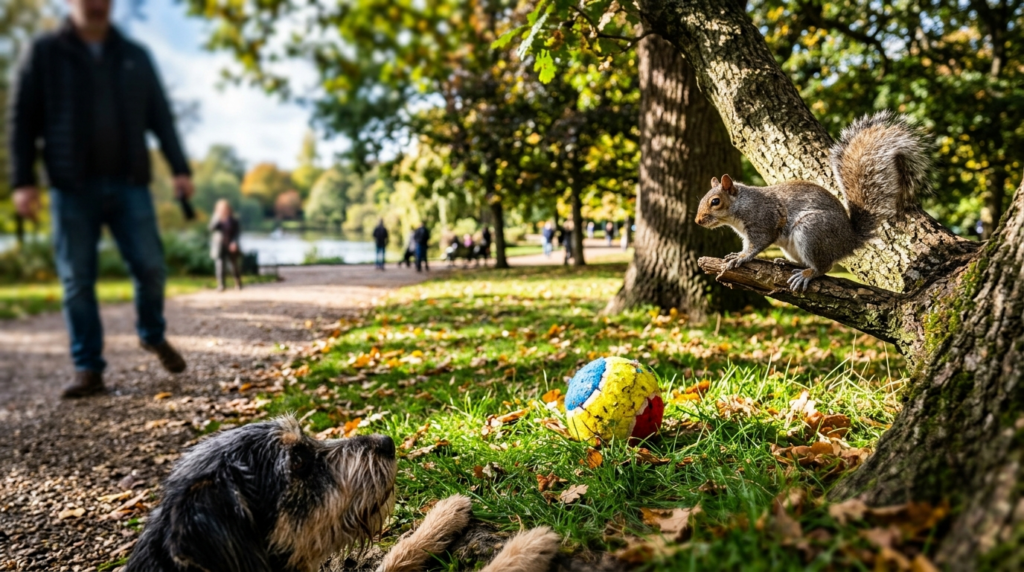
Imagine trying to do a complex math problem while standing in the middle of a loud rock concert. That is what it feels like for a dog to try to “Sit” or “Stay” in a busy park. Outside, their senses are on high alert.
Their noses are picking up thousands of scents, and their ears are tracking every bird and car. This sensory overload makes you, the owner, very easy to ignore. The environment provides a “natural reward” that is often much higher than whatever you are offering at that moment.
2. Dogs Are Situational Learners
This is the concept of generalization. A dog might think that “Sit” means “put my butt on the kitchen tile.” When you take them to a grassy field, the context has changed completely. To the dog, it is a brand new world with brand new rules. Unless you have practiced the same command in ten different locations, your dog likely doesn’t realize the command is universal. This is a core focus at our dog training center in New Jersey, where we teach dogs that “Sit” means “Sit” regardless of the zip code.
3. You Have Become “Background Noise.”
If you constantly repeat your dog’s name or shout commands while they are distracted, you are actually training them to ignore you. When a command is given and not followed, the dog learns that your voice is just another sound in the environment, like the wind or a distant lawnmower. Without a structured way to follow through and ensure the command is completed, the dog loses respect for the verbal cue.
How to Make Your Dog Listen to You Outside
Step 1: Start in a “Boring” Outdoor Spot
The biggest mistake owners make is trying to train in a high-traffic area too soon. Start in your backyard or a quiet driveway. These areas are technically “outside,” but they are familiar and less distracting. Once your dog is 100% reliable in the driveway, move to the sidewalk in front of your house. Gradual progression is the secret to lasting results.
Step 2: Use the Power of Distance
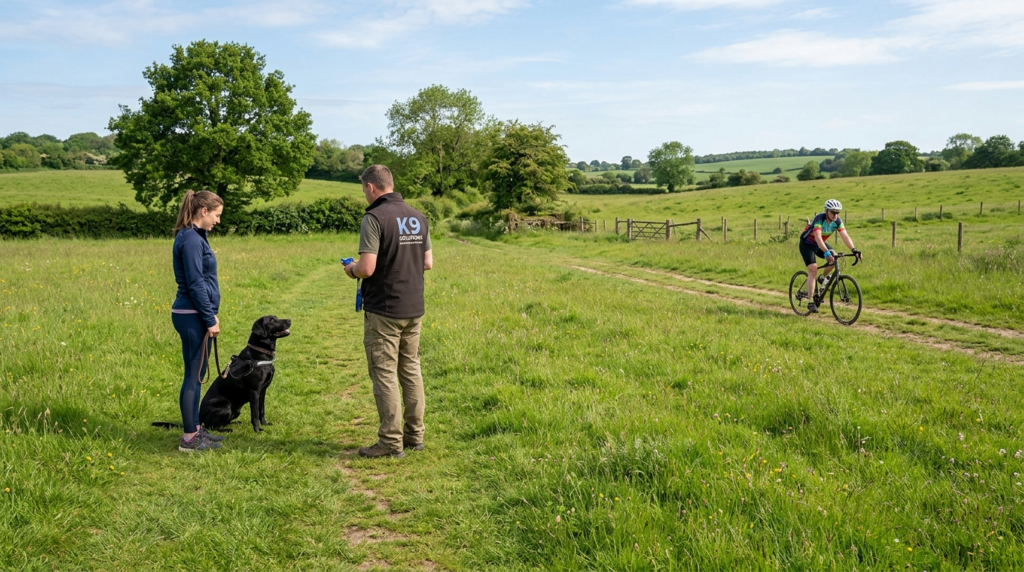
If your dog sees another dog and starts to lose focus, you are too close. Distance is your best friend in training. Move far enough away that your dog can see the distraction but still look back at you when called.
Over several days, you can slowly decrease that distance. This method ensures your dog stays in a “learning state” rather than an “excited state.” Our dog training program in Monmouth County utilizes these professional spacing techniques to build rock-solid focus.
Step 3: Keep Training Sessions Very Short
Training outdoors is exhausting for a dog’s brain. Instead of a thirty-minute walk where you struggle the whole time, try five minutes of intense, focused training in the yard. Success builds on success. If you end the session while the dog is still focused on you, they will be more eager to work the next time the leash comes out.
Step 4: Establish Real Accountability
At some point, the “bribery” with treats has to stop. Real-world obedience requires a relationship where the dog understands that listening is a requirement, not a suggestion. This is where structured training makes the difference. By providing clear, fair corrections when a known command is ignored, you show the dog that you are the leader of the walk. You can read our testimonials to see how this transition from “bribery” to “respect” has changed the lives of our clients.
Frequently Asked Questions
Is my dog being stubborn when they ignore me?
Most of the time, it is not stubbornness. It is either a lack of understanding or being over-threshold. If the dog hasn’t been trained to handle the specific distractions of the outdoors, they are simply reacting to their environment. True stubbornness only happens when a dog fully understands a command in that specific environment but chooses to ignore it, which is a sign that the leadership roles need to be clarified.
Should I use better treats when we go outside?
While high-value rewards like chicken or cheese can help in the very beginning, they are often a “band-aid” fix. If the dog only listens because you have a steak in your hand, you don’t have an obedient dog; you have a dog that is negotiating. We focus on building a mindset where the dog works for you because they respect your leadership and the structure you have provided.
How long does it take for a dog to generalize a command?
Every dog is different, but a good rule of thumb is that a dog needs to successfully perform a command in at least five to seven distinct environments before they truly “know” it. This takes consistency and daily practice. If you find yourself struggling to find the time, an immersive board and train program can handle this generalization process for you in a fraction of the time.
Can I fix this if my dog is already several years old?
Yes. Age is rarely the primary factor in a dog’s ability to learn. While an older dog might have more “practice” at ignoring you, they can still be taught new boundaries. The process is the same: go back to basics, establish structure, and slowly introduce the distractions of the outside world.
Get the Results You Deserve
Living with a dog that only listens when it’s convenient is stressful and potentially dangerous. You deserve to have a dog that looks to you for direction the moment you step outside. Whether you are dealing with a distracted puppy or a grown dog with “selective hearing,” we have the tools and the experience to help. Visit our Google Map location to find us and see how we can transform your dog into a focused, reliable companion in any setting.