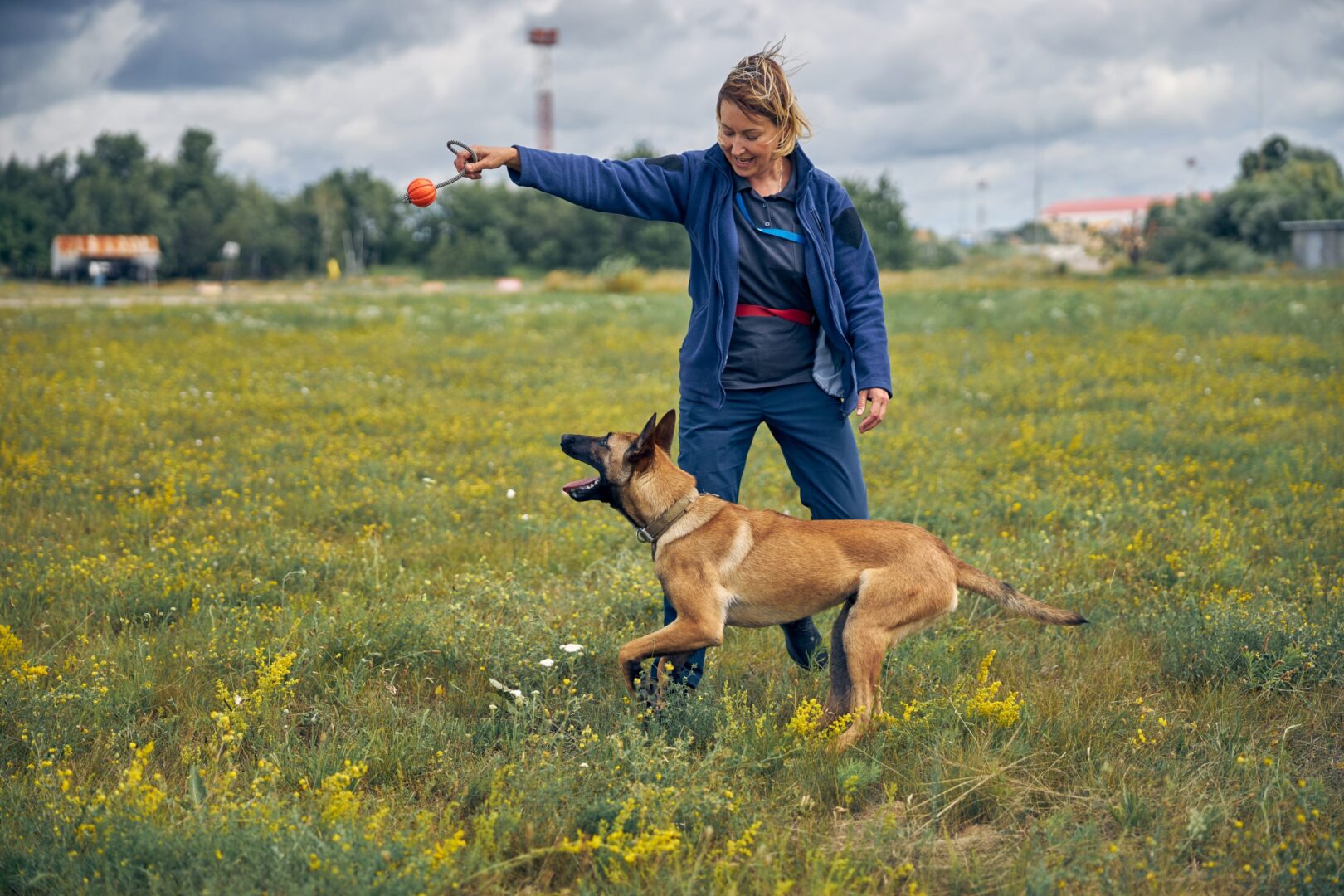
Are All Dogs Trainable: What You Need to Know
At some point, every dog owner faces a moment of frustration and wonders: Are all dogs trainable? But perhaps the more pressing question on your mind, especially after a long day of chewed slippers or pulled leashes, is: Are dogs easy to train? The short answer to both questions is “yes,” but the “ease” of training depends entirely on understanding your specific dog’s needs and using the right approach.
The Dan Gentile Dog Training Center understands that while some dogs pick up commands instantly, others require more patience and strategy. Our dog training services in Howell Township, NJ focus on customized canine education. We consider your dog’s breed, personality, and unique skills to determine not just if they can be trained, but how to make the process as smooth and successful as possible. Read on to learn more about how dogs learn and what factors might make training feel easy or challenging.
Quick Answer: Are Dogs Easy to Train?
Generally, yes, dogs are easy to train if you understand what motivates them. However, “ease” depends on three core factors:
Biddability: The dog’s natural desire to work with a human (e.g., Golden Retrievers).
Motivation: How much the dog wants the reward (food, toys, or praise).
Focus: The dog’s ability to ignore distractions.
While working breeds like German Shepherds learn commands quickly, independent breeds like Huskies or Hounds may require more patience and professional guidance.
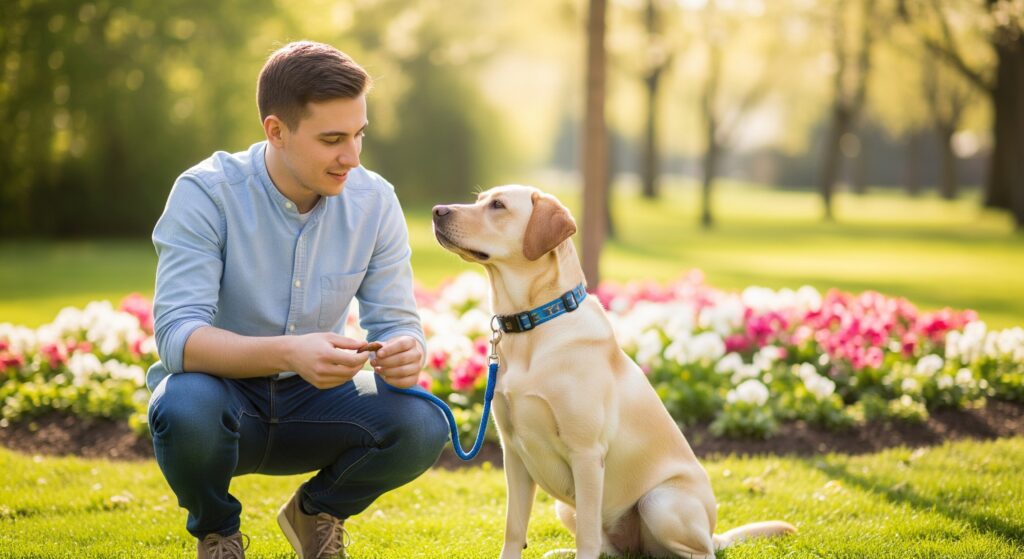
Your Dog’s Age
Regardless of your dog’s age, we are capable of learning just about anything. However, if the training you want with your older dog runs contrary to their long-term habits, you may have a difficult time.
A more immediate issue influencing an older dog’s trainability involves their medical health. Cognitive Dysfunction Syndrome (CDS) may develop in your dog as they age. This neurobehavioral disorder is very similar to dementia in humans and affects senior dogs in their daily lives, including training.
There are supplements and foods available that can help relieve CDS symptoms and improve cognitive function, including Senilife and Purina ProPlan Veterinary Diet NC Neurocare.
It is much easier to train a puppy than it is to retrain an adult dog, though there are particular challenges to puppy training as well. It is recommended to start training your new puppy as soon as you bring them home. Certain periods of puppy development can make training more complicated, so be careful during teething and fear periods.
Fear periods are times in your puppy’s life when they will be very sensitive to bad experiences and are more likely to be frightened by a variety of things. Fear periods are so significant for developing puppies that things that frighten them during these periods may scare them for the rest of their lives.
Your Dog’s Breed
Dogs have been selectively bred for hundreds of years, developing specific physical traits and enhancing working abilities to create specialized dogs that can learn some training and behaviors more quickly than others.
“Smart” dogs aren’t necessarily more trainable. Dogs that are considered above average in their intelligence, including Border Collies, Poodles, and German Shepherds, receive this designation because they are easy to train. This labeling, however, is more due to obedience and an innate need to look to their owners for direction.
Some truly intelligent dogs, such as the sighthounds, are notorious for being “dumb.” The Afghan Hound, for example, is often thought to be quite dim but actually possesses an almost human intellect.
The criticism of their intelligence stems from their still primitive nature and preference to work independently. Though they have minimal motivation to please humans, they can be persuaded to embrace training in other ways.

The Trainability Spectrum: Which Dogs Are Easiest?
When asking “are dogs easy to train,” it helps to look at genetics. Dogs were bred for different jobs. Some jobs required listening to humans constantly, while others required working alone.
Here is a breakdown of where common breeds fall on the ease-of-training spectrum.
Level 1: The “Pleasers” (Easiest to Train)
These dogs were bred to work closely with people. They are highly food-motivated and eager to learn.
Breeds: Labrador Retrievers, Golden Retrievers, Poodles, Border Collies, Papillons.
Why they are easy: They crave engagement and usually will work for simple kibble or praise.
Level 2: The “Workers” (Moderate Difficulty)
These dogs are incredibly smart but can be intense. They learn fast, but if you are not a strong leader, they might try to outsmart you.
Breeds: German Shepherds, Dobermans, Rottweilers, Boxers.
The Challenge: They need a “job.” If they get bored, they can become destructive.
Level 3: The “Independent Thinkers” (Most Challenging)
These dogs were often bred to work alone (hunting or guarding) without human commands. They are not “dumb.” They just don’t see the point in listening to you unless the reward is huge.
Breeds: Huskies, Beagles, Great Pyrenees, Shiba Inus.
The Challenge: You must convince them that obedience is their idea. Patience is required.
Why Your Environment Matters for Training.
When owners ask, “Are dogs easy to train?” the answer largely depends on the environment. Training a dog in a chaotic living room filled with daily distractions like ringing doorbells or passing cars is incredibly difficult. However, dogs become much easier to train when you remove them from those stressors and place them in a highly structured, professional setting.
At our veteran-owned business, we utilize a massive 12-acre country setting to create a psychological blank slate for your pet. Through our immersive Train While Boarding boot camps, your dog learns to focus and build profound impulse control away from home. You do not have to guess if your dog is trainable because you are relying on Dan Gentile’s 40+ years of professional expertise.
Furthermore, true trainability requires a concept known as generalization. Because dogs struggle to automatically apply rules learned in one location to a new environment, all our programs include Owner Training at the conclusion of their stay. We teach you exactly how to maintain those newly established boundaries so your dog remains easy to manage the moment they return home.
So, Are Dogs Easy to Train? The Human Factor
When owners ask, “Are dogs easy to train?” they often focus on the dog’s intelligence. However, the ease of training often depends just as much on the consistency and clarity of the handler.
Training becomes “hard” when communication is unclear. If a dog is rewarded for jumping on the couch one day but scolded for it the next, they become confused, and learning stalls.
Training becomes “easy” when you master the Three C’s of Leadership:
Clarity: Do not use full sentences like “Fido, please sit down now.” Use single-word commands like “Sit.” Dogs understand distinct sounds, not English grammar.
Consistency: If you do not want the dog on the couch, never let them on the couch. If you let them slide “just this once,” you have made training 10 times harder.
Currency: You must pay your dog. If your dog loves cheese, do not try to train them with dry kibble. Find their “currency” to make learning easy.
If you feel like you are hitting a wall, it doesn’t mean your dog is untrainable. It often means you need a professional environment to reset the foundation. This is why our New Jersey dog board and train programs are so effective; we do the “hard” work of establishing consistency, making it easy for you to maintain the results at home.
Many owners falsely label their dogs as untrainable or “stubborn” when the dog is actually just confused. Dogs are incredibly contextual learners. If your dog performs a perfect “sit” in the kitchen but ignores you at the park, they are not being stubborn; they simply have not been proofed against distractions. This is exactly why attempting to train a highly energetic breed in a distracting environment often fails. Our 12-acre private campus removes these chaotic variables, allowing us to build a foundation of crystal-clear communication before introducing real-world distractions.
Dogs With Disabilities
When you ask, “are all dogs trainable?” you have to consider how much training your dog may have been exposed to and how responsive they have been to it. If your dog has a physical or mental disability, it can be more challenging to train them. CDS is a problem that may develop with age, but other physical and mental disabilities can hinder a dog’s ability to learn at any age.
Deafness
Obviously, a dog with a hearing impairment will not be able to respond appropriately to verbal commands. You can, however, adjust your training techniques to accommodate their disability, such as using hand signals instead of verbal commands.
The most challenging part of training a dog with a hearing impairment is getting their attention. Therefore, breeds more focused on humans will have a more accessible time training with a hearing deficit than an independent type of dog would have.
Blindness
Visual impairment will not hinder a dog from hearing your verbal commands, but body language will be impossible depending on the degree of blindness. Patience and the proper training techniques can help dogs learn basic rules and behavioral orders with little to no sight.
Physical Disabilities
Physical disabilities, such as arthritis or missing limbs, can make it more difficult for your dog to respond to commands quickly, but it won’t keep them from learning. If your dog has any physical limitations like this, you will have to adjust your training to make it easier for them to obey commands and learn.
Emotional Disabilities
Anxiety, fear, and extreme stress can keep dogs from thinking clearly, forcing them to respond instinctively. When dogs are in this mode, it is almost impossible to train them successfully. In order to train them, you have to bring them out of that mode of fear and stress and into a more relaxed frame of mind.

Training Methods
All dogs can be trained, but the method for teaching them will vary from dog to dog. Sometimes when a dog is not responding to training, you just need to try a different training style.
Training trends have varied over the years, moving from methods based on compulsion to techniques using positive reinforcement. Both types of training work with some dogs, but most dogs respond the best to training methods somewhere in the middle.
The biggest challenge when it comes to training your dog is finding the suitable method for them. Some dogs do well in a classroom environment, while others shine with a private trainer. In any case, the best trainers will be familiar with various methods and have the experience to work with your dog in the best way for them to learn and grow.
Training Assistance
Are all dogs trainable? Absolutely! If you are struggling with your dog’s behavior or if you’re ready to start training your puppy, call us at The Dan Gentile Dog Training Center. We offer a wide range of training programs, including an inboard training program for dogs–it’s like “summer camp” for dogs!
Trainer’s Note from Dan Gentile: “I often hear clients say, ‘My dog is stubborn.’ Usually, the dog isn’t stubborn; the dog is just confused or bored. If you feel like training is hard, stop repeating the command. Take a step back. Lower the distractions. Increase the value of the reward. If you make it fun for the dog to win, the training becomes easy for both of you.”
Expert Dog Training in Monmouth County, NJ
If you’re searching for reliable dog training in Monmouth County, The Dan Gentile Dog Training Center is a top choice for local pet owners. Located in Howell Township, we’ve provided professional dog training services for over 40 years, serving communities across Freehold, Marlboro, Red Bank, and the surrounding areas.
We specialize in customized obedience training programs for dogs of all breeds, ages, and behavior levels. Whether your dog struggles with aggression, reactivity, or basic manners, our structured board and train program helps dogs achieve lasting results in a controlled, supportive environment. Our approach blends positive reinforcement with decades of experience to help even the most challenging dogs become well-behaved companions.
Our services include:
Puppy training foundations
Advanced obedience and off-leash control
Behavior modification for anxiety and aggression
Support for senior dogs and dogs with disabilities
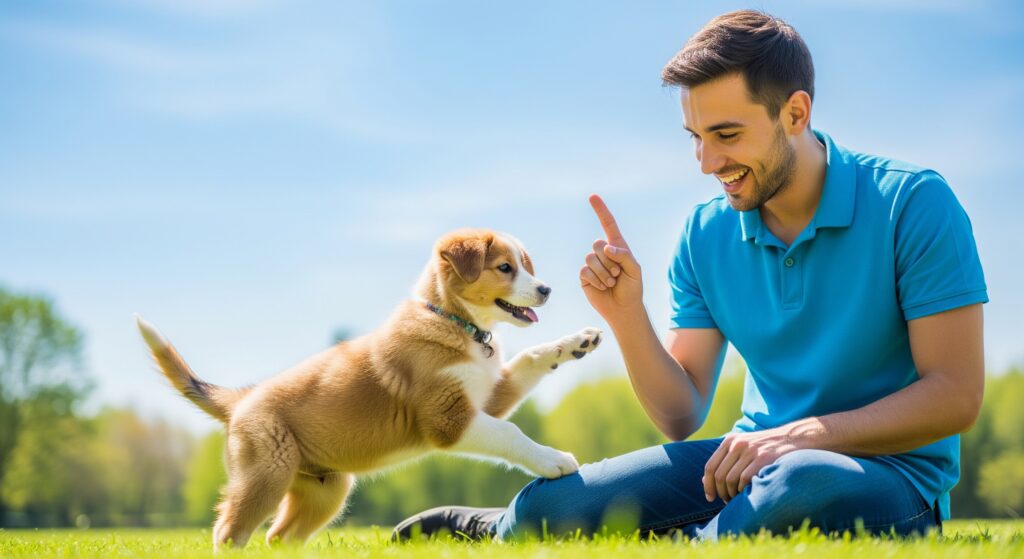
Why are we the answer for dog training near me in Monmouth County?
- Local Expertise, Global Standards: Our decades of experience aren’t just limited to New Jersey; Dan Gentile has mentored trainers across the tri-state area. This deep understanding of canine behavior, combined with our strong Monmouth County presence, means your dog receives top-tier, relevant training.
- Tailored Programs for Monmouth County Dogs: We know every dog is an individual. Whether you’re in Freehold, Colts Neck, Red Bank, or Manalapan, our customized training programs, especially our popular board-and-train, address specific issues like aggression, reactivity, leash pulling, or basic obedience, providing real solutions for Monmouth County families.
- Answers for Your Dog’s Needs:
- “My dog is aggressive in Monmouth County, can you help?” Unfortunately, we do not currently train aggressive dogs. We specialize in habit correction training for issues like dog obedience training, anxiety and fear, offering a structured environment that leads to lasting change.
- “Do you offer puppy training near me in Monmouth County?” Absolutely! Our puppy foundation program builds confidence and manners for young dogs, ensuring a great start for your new companion.
- “What makes your board-and-train in Monmouth County effective?” Our immersive, 2-week board-and-train at our Howell Township facility provides consistent, professional guidance, handling everything from housebreaking to advanced off-leash commands. We include owner hand-off sessions and continued support to ensure success back in your Monmouth County home.
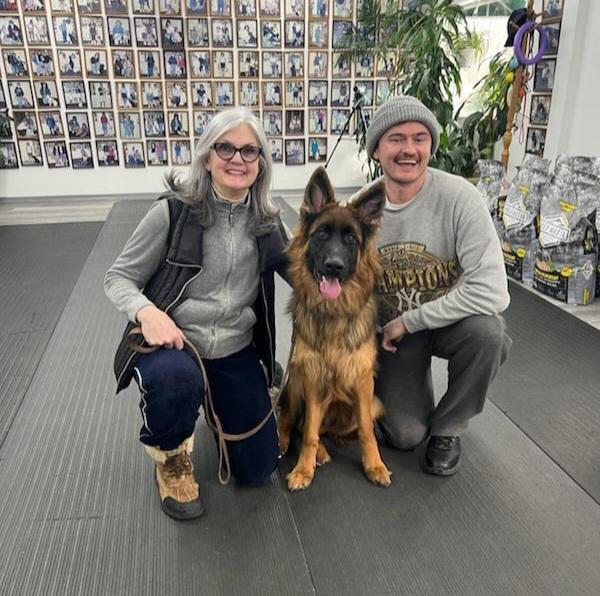
As a veteran-owned, licensed facility dedicated to Monmouth County dog training, we pride ourselves on providing a safe, structured, and highly effective environment for your beloved companion. Don’t settle for less when it comes to your dog’s education. If you’re looking for the best dog trainers in Monmouth County to help your dog become a well-behaved family member, contact us today for a consultation. Let us show you why we are the go-to resource for comprehensive dog training solutions in Monmouth County, NJ.
Frequently Asked Questions About Dog Training
Which dog breeds are the easiest to train?
Generally, breeds that were developed to work closely with humans are considered the easiest to train. This includes Border Collies, German Shepherds, Golden Retrievers, and Poodles. These dogs have a high “biddability,” meaning they have a strong desire to please their handlers. However, even “easy” breeds need structure to prevent them from learning bad habits just as quickly as good ones.
Are dogs easy to train if they are older?
Yes, older dogs are often easier to train than puppies in terms of focus. Senior dogs usually have better bladder control and longer attention spans than high-energy puppies. While you may have to work to break old habits (unlearning bad behaviors), the widespread myth that “you can’t teach an old dog new tricks” is false.
Why is my dog so hard to train?
If your dog seems difficult to train, it is rarely because they are “dumb.” Common reasons for difficulty include undiagnosed anxiety, a lack of motivation (you haven’t found the right reward), or a mismatch in training style. For example, an independent breed like a Husky won’t respond to the same repetition that a Labrador might enjoy. Professional evaluation can identify these roadblocks.
Is it easy to train a dog at home by myself?
Training at home can be easy for basic commands if you are disciplined and patient. However, it becomes difficult when trying to address complex behavioral issues like reactivity, or when your home environment is full of distractions. Professional board-and-train programs are designed to make the process easier by immersing the dog in a learning-first environment.
How long does it take to train a stubborn or reactive dog?
There is no set timeline, as training is a lifelong process. However, for basic obedience commands (sit, stay, heel), most dogs can learn the fundamentals in a few weeks of consistent practice. Our structured 2-week boot camp is designed to significantly accelerate this timeline, establishing a foundation that might take months to achieve on your own.
Here are the corresponding H3 questions for those FAQ answers:
Are some dog breeds easier to train than others?
Yes, breed genetics and working history play a role in how quickly a dog picks up commands. However, the handler’s environment and consistency are far more important than the breed. A structured professional program makes any dog, regardless of its breed, significantly easier to manage by installing clear, universal rules.
Why does my dog listen to a professional trainer but ignore me?
Dogs are incredibly poor generalizers. They learn to respect the structured, distraction-free environment of a 12-acre training campus, but will immediately go back to testing boundaries in your living room. This is exactly why we include mandatory owner instruction to ensure the behavioral rules transfer successfully to your home.
Does operant conditioning make dogs easier to train at home?
Yes. Operant conditioning relies on clear, black-and-white communication rewarding desired behaviors and correcting unwanted ones. When owners learn how to apply this scientific method consistently, it removes the confusion that causes dogs to act out, making them much easier to handle.
Can a Train While Boarding program fix a dog that refuses to listen?
Absolutely. Stubborn dogs have often learned exactly how to manipulate their specific home environment. Removing them to our specialized campus completely disrupts their routine, allowing our trainers to instill strict obedience without the interference of their normal daily triggers.
Looking for dog training in Monmouth County that actually works? Contact us today to learn more about our proven programs or to schedule a free evaluation.
Give us a call at (732) 938-5040 and start today!
Enjoy This Article? You May Also Like:
- Trusted Puppy Training in Monmouth County, NJ – Dan Gentile Dog Training Center
- Build a Lasting Bond with Your Dog with Dan Gentile Dog Training Center
- The Best Dog Trainer in New Jersey: Why Dan Gentile Dog Training Center Is #1 for Obedience, Behavior & Results
- How to Stop Excessive Dog Barking: What Every NJ Dog Owner Needs to Know