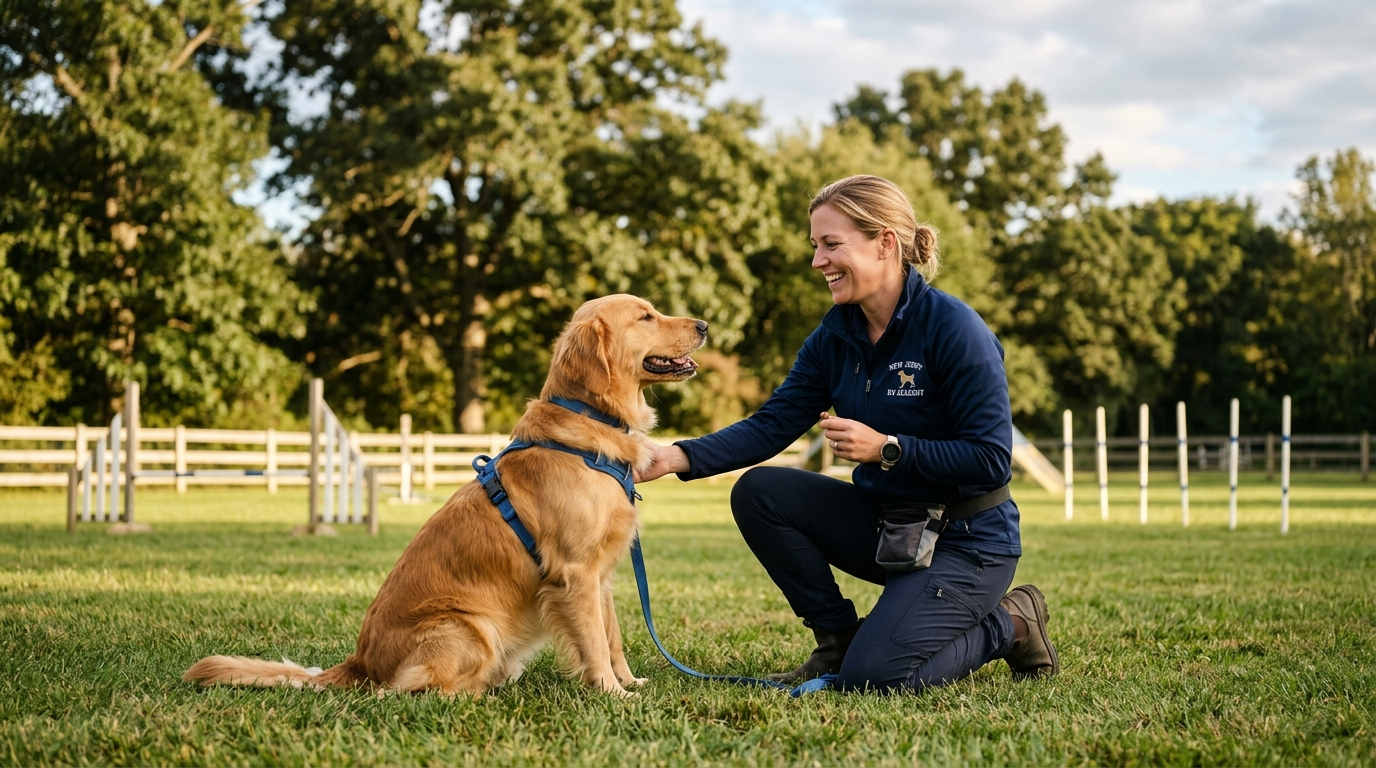
Board and Train for Dogs in Monmouth County, NJ: The Complete Buyer’s Guide
Choosing the right training path for your dog is one of the most important decisions you will make as a pet owner. If you have been researching board and train for dogs, you are probably asking yourself a handful of critical questions: Is this right for my dog? How much does it cost? What results can I genuinely expect? And how do I know a program is legitimate?
This buyer’s guide answers every one of those questions. Whether you live in Monmouth County, elsewhere in New Jersey, or across the tri-state area in New York, Pennsylvania, or Delaware, the information here will help you make a confident, informed purchasing decision and avoid the costly mistakes that come from choosing the wrong program.
At Dan Gentile Dog Training Center in Howell Township, NJ, we have spent over 40 years guiding families through this exact decision. Our two-week dog training program is built on decades of proven methodology, a private 12-acre campus, and a genuine commitment to every dog that walks through our doors. By the end of this article, you will know exactly what board and train for dogs involves, who it is best suited for, and what separates a great program from one that wastes your time and money.
What Board and Train for Dogs Actually Means
Before you can evaluate whether board and train for dogs is right for your situation, you need to understand exactly what the term means because not every program that calls itself a board and train delivers the same thing.
In a legitimate board and train program, your dog lives at the training facility for a set period typically a two-week dog training program and receives daily, structured, hands-on training from professional trainers. The dog is immersed in an environment designed specifically for learning. According to the American Kennel Club, board and train facilities function like intensive learning environments where dogs work with skilled trainers to build reliable obedience skills, good manners, and appropriate social behavior.
The key distinction is immersion. Unlike weekly group classes or private lessons where your dog trains for an hour and then returns to an unstructured home environment, board and train for dogs places your pet in a consistent, professional setting where every interaction reinforces the training goals. Meals, exercise, socialization, and rest periods all work together as part of a unified curriculum.
This immersion approach is why the board and train cost for dogs is higher than weekly lessons you are not paying for isolated sessions, you are paying for a complete behavioral transformation delivered around the clock by professionals who do this every single day.
Is Board and Train for Dogs Right for Your Dog?
Not every dog needs to board and train, and not every owner’s situation calls for it. Understanding which dogs benefit most and which scenarios make it the smartest investment is the first step in your decision.
Dogs That Benefit Most from Board and Train
The dogs that see the greatest transformation from a board and train for dogs program share certain characteristics. If your dog matches any of the following profiles, board and train is likely an excellent fit:
- Adolescent dogs (6 months to 2 years) that have outgrown basic puppy training and are testing boundaries. This is the age where problem behaviors like pulling on the leash, ignoring recall commands, and jumping on guests become deeply ingrained without professional intervention.
- Dogs with multiple behavioral issues happening simultaneously. If your dog pulls on walks, does not come when called, jumps on visitors, and counter-surfs, weekly lessons addressing one problem at a time can take months. A two-week dog training program addresses all of these issues in a concentrated, cohesive format.
- Rescue and shelter dogs adjusting to a new home. Dogs from shelters often arrive with an unknown behavioral history. Boarding and training for dogs gives them a structured foundation, teaching them how to succeed in a home environment before bad habits have a chance to form.
- Dogs whose owners have demanding schedules. If your work or family commitments make it difficult to attend weekly classes or practice consistently between lessons, board and train delivers the professional training your dog needs without requiring hours of your time each week.
- Dogs that need reliable off-leash obedience. Achieving dependable recall and off-leash manners requires an environment with controlled distractions and expert timing that most home settings simply cannot replicate.
When Board and Train May Not Be the Best Fit
Honesty about when boarding and training for dogs is not ideal is the mark of a trustworthy program. Here are situations where a different approach might serve you better:
- Very young puppies under 4 months. Puppies this young are still developing their immune systems and social confidence. A puppy-specific program, like those offered at Dan Gentile Dog Training Center, may be more appropriate before transitioning to board and train.
- Dogs with severe separation anxiety triggered specifically by being away from their owner. While many dogs adjust beautifully to the board and train environment, dogs with clinically diagnosed separation anxiety may need preliminary behavioral work before they are ready for a residential program.
- Owners who are unwilling to continue training at home after the program ends. Board and train for dogs delivers a trained dog, but maintaining those skills requires owner follow-through. If you are not committed to reinforcing what your dog learned, the results will fade over time regardless of the program’s quality.
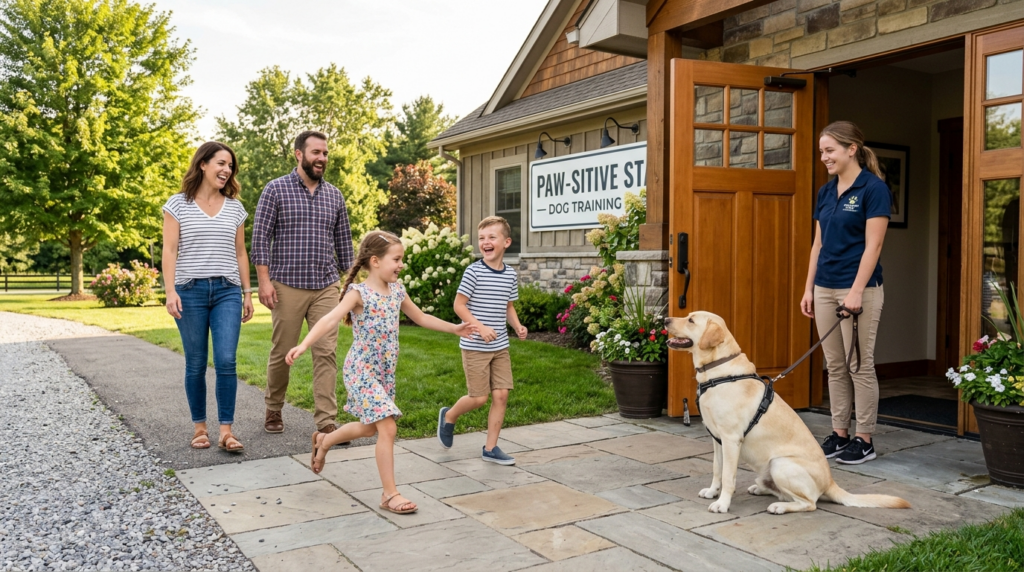
Understanding Board and Train Cost for Dogs
One of the most common questions families ask is about the board and train cost for dogs. Understanding what drives pricing and how to evaluate whether the investment is worthwhile is essential to making a smart decision.
What Influences Pricing
The board and train cost for dogs varies based on several important factors:
- Program duration: Most quality programs run two to four weeks. Dan Gentile Dog Training Center’s two-week dog training program is structured to deliver lasting results within 14 days, making it one of the most efficient options available.
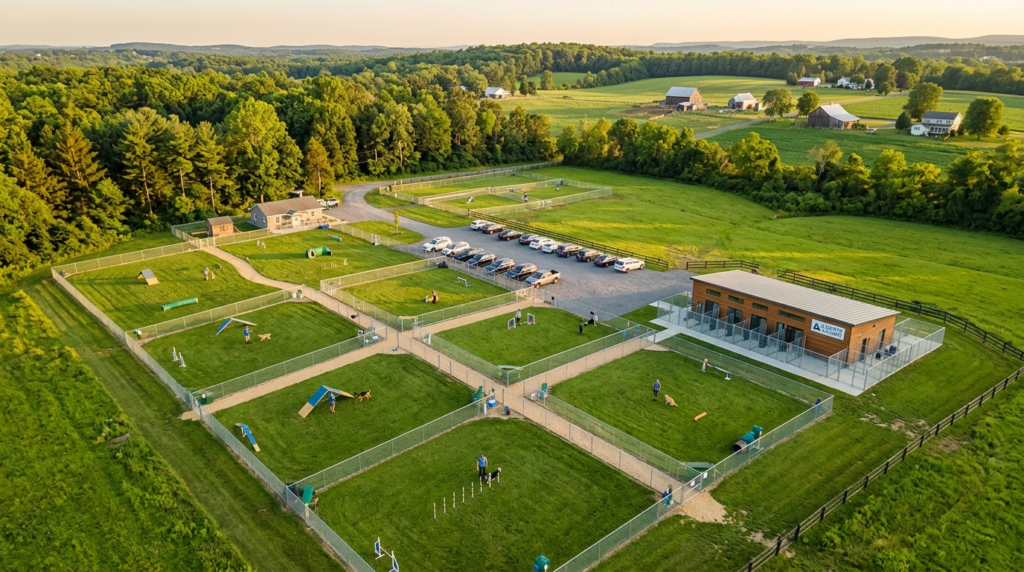
- Facility quality: Programs run on dedicated training campuses with professional infrastructure like our 12-acre property in Howell Township cost more than trainers working out of their homes, but deliver a dramatically different experience and level of safety.
- Trainer experience and credentials: Trainers with decades of experience and a proven methodology command higher fees, but they also deliver more consistent and reliable board and train results and expectations.
- Included services: Premium programs include not just daily training sessions, but also structured socialization, exercise, health monitoring, climate-controlled housing, and owner transition sessions all of which should be factored into the total value.
- Geographic market: The board and train cost for dogs in the Northeast particularly in a dog training investment NJ market reflects the higher cost of operating a professional facility with experienced staff in a competitive region.
Cost Versus Value: The Real Math
When evaluating the board and train cost for dogs, the question is not simply ‘how much does it cost?’ but rather ‘what is the cost of NOT doing it?’ Consider the expenses that accumulate when a dog remains untrained: damaged furniture and belongings, veterinary bills from altercations at dog parks, dog walker fees because your pet cannot be trusted off-leash, and the emotional toll of living with a dog you cannot control in public. Many families who contact Dan Gentile Dog Training Center tell us they have already spent hundreds of dollars on weekly group classes and private lessons that produced minimal lasting change. The board and train cost for dogs, viewed in this context, is often the most cost-effective path to a genuinely well-trained companion.
A quality board and train program is a dog training investment NJ families make once. The skills your dog learns in a properly structured two-week dog training program reliable recall, polite leash behavior, solid place command, impulse control are skills they carry for life when reinforced at home.
How to Choose a Dog Training Facility
Choosing a dog training facility is arguably the most important part of the board and train process. The program is only as good as the people, property, and philosophy behind it. Here is what to look for and what to avoid.
The Dog Training Evaluation Checklist
Use this dog training evaluation checklist when researching and visiting any board and train program:
1. Visit the Facility in Person
Any legitimate program will welcome and encourage an in-person visit before enrollment. Walk the property. Look at where the dogs sleep, train, and play. At Dan Gentile Dog Training Center, we invite families to tour our 12-acre Howell Township campus and see exactly where their dog will live and learn. If a program discourages facility visits, that is a serious red flag.
2. Ask About Training Methodology
Understand exactly how the trainers will work with your dog. The ASPCA recommends positive reinforcement-based training as the most effective and humane approach. Ask whether the program uses reward-based methods, what tools are involved, and whether they can explain their philosophy clearly. A good trainer will be transparent about their approach and happy to answer detailed questions.
3. Verify Experience and Track Record
How long has the facility been operating? How many dogs have they trained? A program like Dan Gentile Dog Training Center, with over 40 years of experience and hundreds of satisfied client reviews, has a demonstrated track record. Newer trainers can be competent, but longevity in this industry is a powerful indicator of quality and reliability.
4. Understand the Daily Schedule
Ask for a detailed breakdown of what a typical training day looks like. How many training sessions does each dog receive? What happens between sessions? How much exercise and socialization is included? Programs that are vague about their daily structure may be cutting corners warehousing dogs rather than genuinely training them.
5. Evaluate Housing and Safety Standards
Where will your dog sleep? Is the facility climate-controlled? Is there 24-hour supervision or surveillance? Dan Gentile Dog Training Center features indoor, climate-controlled housing with advanced dual-sanitization HVAC systems and 24-hour surveillance monitoring. These details matter for your dog’s health, comfort, and your peace of mind.
6. Ask About the Owner Transition Process
The handoff from trainer to owner is one of the most critical elements of any board and train for dogs program. Ask how the program handles this transition. Do they offer go-home lessons? Do they teach you the commands and handling techniques your dog has learned? A program that trains your dog brilliantly but fails to transfer that knowledge to you is a program that will produce short-lived results.
Red Flags When Choosing a Dog Training Facility
Equally important as knowing what to look for is knowing what should send you running in the other direction. Watch for these warning signs during your dog training evaluation checklist process:
- Guaranteed results with no caveats. Any trainer who promises your dog will be ‘perfect’ after the program is either dishonest or inexperienced. Legitimate programs set realistic expectations and explain that owner follow-through is essential to maintaining results.
- No facility tour offered or allowed. If you cannot see where your dog will live and train, do not enroll.
- Vague or evasive answers about training methods. Transparency is non-negotiable. You have a right to know exactly how your dog will be trained.
- No owner education or transition sessions. Programs that hand you back your dog without teaching you how to maintain the training are setting you up for failure.
- Unusually low pricing. Extremely cheap board and train programs often reflect understaffing, inadequate facilities, or a lack of genuine daily training. The board and train cost for dogs should reflect the level of professional service your pet receives.
- No references or reviews available. Established programs have a track record of satisfied clients willing to share their experiences.
Board and Train Results and Expectations: What You Should Realistically Expect
Setting proper board and train results and expectations before enrolling your dog is essential. Understanding what a quality program can and cannot accomplish in a two-week dog training program helps you make a clear-eyed decision.
What a Quality Program Will Deliver
A well-run board and train for dogs program will produce measurable, observable changes in your dog’s behavior. At Dan Gentile Dog Training Center, families can expect their dog to return home with:
- Reliable obedience commands: sit, down, place, come, and heel performed consistently, even with distractions present.
- Polished leash manners: walking without pulling, lunging, or dragging you down the sidewalk.
- Improved impulse control: waiting at doors, not jumping on people, and settling calmly when asked.
- Stronger recall: coming when called, which is one of the most important safety skills any dog can learn.
- Social confidence: appropriate behavior around other dogs, people, and novel environments.
What Board and Train Cannot Do
Honest board and train results and expectations also include understanding limitations:
- Board and train does not replace ongoing owner responsibility. Your dog will come home trained, but you need to practice and reinforce the commands. Think of it as graduating from a school the education is real, but you still need to apply it.
- Two weeks is not enough to address every issue a dog has ever developed. The program focuses on the most impactful behaviors that improve daily life. Some dogs may benefit from follow-up lessons for specialized needs.
- No reputable program changes a dog’s fundamental temperament. A naturally energetic breed will still be energetic but they will channel that energy appropriately rather than destructively.
The most successful board and train outcomes happen when families commit to the follow-through. Programs that include comprehensive owner education like the go-home transition sessions at Dan Gentile Dog Training Center set you up for long-term success by ensuring the skills transfer cleanly from the training environment to your home.
Preparing Your Dog for Board and Train
Once you have decided that board and train for dogs is the right choice, preparing your dog for board and train properly can significantly improve their experience and outcomes. Here is what to do in the days and weeks leading up to drop-off.
Health and Documentation
Before enrolling in any board and train program, ensure your dog’s vaccinations are current. Most reputable programs, including Dan Gentile Dog Training Center, require proof of up-to-date vaccinations including rabies, distemper, and bordetella. Schedule a veterinary checkup to confirm your dog is healthy and fit for an active two-week dog training program.
Gather all relevant medical records, including any medications your dog takes, known allergies, and dietary requirements. The more information you provide, the better the training team can tailor their approach to your dog’s individual needs.
What to Bring and What to Leave at Home
Preparing your dog for board and train also means packing wisely:
- Bring your dog’s regular food. Switching food during training adds unnecessary digestive stress. A quality facility will feed your dog their normal diet on their usual schedule.
- Bring any medications with clear dosage instructions.
- A familiar blanket or toy can help some dogs settle into their new environment, though many facilities will advise on what is appropriate to bring.
- Leave anxiety-inducing items at home. Items that trigger over-attachment or possessive behavior should stay behind.
The Drop-Off: Setting the Right Tone
How you handle the drop-off matters more than most owners realize. Preparing your dog for board and train includes preparing yourself emotionally. Keep the goodbye brief and upbeat. Dogs are extraordinarily sensitive to their owner’s emotional state a long, tearful goodbye can create unnecessary stress and make the transition harder for your pet.
Trust the process and the professionals. At Dan Gentile Dog Training Center, our team begins working with your dog immediately upon arrival, establishing routine and building rapport. Most dogs settle in within the first 24 hours. You can always contact us to check on your dog’s progress during the program.
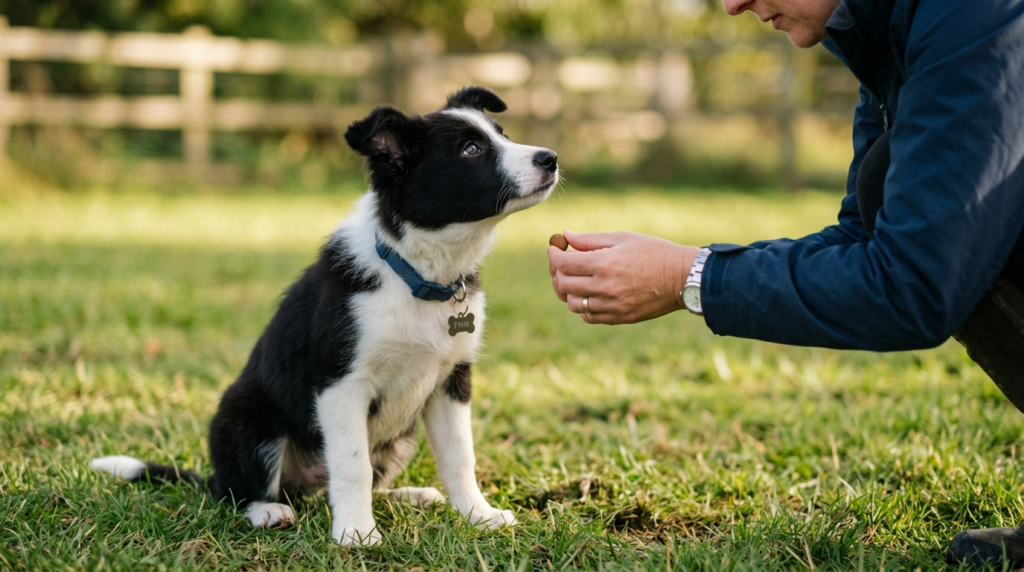
The Handoff Process: From Trained Dog to Trained Owner
The handoff the moment you pick up your dog after the program is where many board and train programs succeed or fail. A properly managed handoff is not just a reunion; it is a comprehensive knowledge transfer.
What a Quality Go-Home Session Looks Like
At Dan Gentile Dog Training Center, the go-home session is a structured training appointment where our team walks you through every command and technique your dog has learned. You will:
- Watch your dog demonstrate each trained behavior with their trainer.
- Practice every command yourself with the trainer coaching you in real time.
- Learn the specific verbal cues, hand signals, and timing your dog responds to.
- Receive guidance on how to maintain training in your home environment, including common pitfalls to avoid.
- Ask questions about your dog’s personality, preferences, and any behaviors the trainers noticed during the program.
This transition session is critical to achieving lasting board and train results and expectations. The goal is not just a trained dog it is a trained partnership between you and your dog. How to choose a dog trainer often comes down to how well they handle this exact moment: the transfer of skills from professional to owner.
The First Two Weeks at Home
The 14 days immediately following your dog’s return home are the most important period for cementing their new skills. Here is how to set your dog up for continued success:
- Practice commands daily in short, focused sessions of 10 to 15 minutes. Consistency matters more than duration.
- Maintain the structure your dog experienced during training. Consistent meal times, exercise schedules, and clear expectations help your dog understand that the rules have not changed just because they are home.
- Gradually introduce more challenging environments. Start reinforcing commands at home, then move to the backyard, then to the neighborhood, and eventually to busier public settings.
- Use the same reward system the trainers used. Your go-home session will cover exactly what motivates your dog and how to use rewards effectively.
- Reach out to your training team if questions arise. Choosing a dog training facility that offers post-program support like Dan Gentile Dog Training Center means you always have expert guidance available when you need it.
How to Choose a Dog Trainer in New Jersey
If you live in New Jersey or in the broader tri-state area including New York, Pennsylvania, and Delaware choosing a dog training facility requires evaluating the specific programs available in this region. The NJ market has a wide range of options, from individual trainers working out of their homes to large commercial facilities. Here is how to narrow your search and how to choose a dog trainer who will genuinely deliver results.
Questions to Ask Every Program
When speaking with prospective programs, use this dog training evaluation checklist of essential questions:
- How long have you been training dogs professionally?
- Can I visit your facility before enrolling my dog?
- What is included in the board and train cost for dogs at your facility training, housing, meals, exercise, and transition sessions?
- What training methods do you use, and can you explain them in detail?
- How many dogs do you train at once, and what is the trainer-to-dog ratio?
- What does your go-home or owner transition process look like?
- Do you offer any follow-up support after the program ends?
- Can you provide references from recent clients?
A program that answers every one of these questions confidently and transparently is worth your serious consideration. Dan Gentile Dog Training Center has built its reputation over four decades by welcoming exactly these kinds of questions. We encourage every family to schedule a free consultation and visit our Howell Township campus before making their decision. A dog training investment NJ families deserve should be backed by transparency, experience, and a willingness to let you see everything firsthand.
Why Location Matters for Board and Train
Choosing a dog training facility close enough for convenient drop-off and pick-up matters, but proximity alone should never be the deciding factor. Families regularly travel from across Monmouth County, Ocean County, Middlesex County, and even from New York and Pennsylvania to train with Dan Gentile because the quality of the program outweighs the convenience of choosing the nearest option. A short drive for a great two-week dog training program is a far better investment than a long-term commitment to a mediocre one down the street.
Why Dan Gentile Dog Training Center Stands Apart
After reading this buyer’s guide, you know exactly what to look for in a board and train for dogs program. Here is how Dan Gentile Dog Training Center measures up against every criterion on your dog training evaluation checklist:
- 40+ years of professional dog training experience with thousands of dogs trained successfully.
- A private, 12-acre campus in Howell Township, Monmouth County purpose-built for dog training, with dedicated training areas, exercise fields, and indoor climate-controlled housing.
- A proven two-week dog training program that delivers reliable obedience, polished manners, and confident social behavior in 14 days.
- 24-hour surveillance and advanced dual-sanitization HVAC systems for your dog’s health and safety.
- Comprehensive go-home transition sessions that teach YOU how to maintain your dog’s new skills.
- Transparent methodology with facility tours available and encouraged for every prospective client.
We serve families across New Jersey, New York, Pennsylvania, and Delaware from our Howell Township location. Whether you are searching for the right board and train for dogs or trying to understand the board and train cost for dogs in the NJ market, we are here to give you clear, honest answers. Contact Dan Gentile Dog Training Center at (732) 938-5040 to schedule your free consultation and tour. Our office is open Monday through Saturday, 9 AM to 5 PM.
Frequently Asked Questions About Board and Train for Dogs
How long is a typical board and train program?
Most quality programs run between two and four weeks. Dan Gentile Dog Training Center offers a focused two-week dog training program 14 days that delivers comprehensive obedience training and behavior improvement. This duration provides enough time for consistent skill-building without unnecessarily extending the time your dog is away from home.
What is the board and train cost for dogs?
The board and train cost for dogs varies depending on the facility, program length, and included services. Pricing in the New Jersey market reflects the professional infrastructure and experienced trainers required to deliver quality results. For specific pricing information, contact Dan Gentile Dog Training Center directly at (732) 938-5040 for a free consultation where we can discuss your dog’s specific needs and provide transparent pricing.
Will my dog remember the training after coming home?
Yes when the program includes proper owner education and you commit to reinforcing the skills at home. Board and train results and expectations are strongest when the go-home transition is thorough and the owner practices daily. Dan Gentile Dog Training Center’s comprehensive handoff sessions ensure you know exactly how to maintain every behavior your dog learned during their two-week dog training program.
How do I prepare my dog for board and train?
Preparing your dog for board and train involves ensuring vaccinations are current, gathering medical records, packing their regular food and any medications, and keeping the drop-off brief and positive. A pre-enrollment veterinary checkup is also recommended to confirm your dog is healthy and ready for an active training experience.
What training methods does Dan Gentile use?
Dan Gentile Dog Training Center uses a balanced, reward-based training approach refined over 40+ years. Our methodology focuses on building a clear communication system between dog and handler using positive reinforcement, structured repetition, and real-world distraction training on our 12-acre campus. We are transparent about our methods and encourage you to ask detailed questions during your free consultation.
Can older dogs benefit from board and train?
Absolutely. While puppies and adolescent dogs are common candidates, adult and senior dogs can also benefit significantly from board and train for dogs. Older dogs that have developed entrenched bad habits often respond well to the structured, immersive environment of a professional training program. The key is matching the intensity and approach to the individual dog’s needs and physical capabilities.
How do I choose the best board and train program near me?
Use a thorough dog training evaluation checklist: visit the facility in person, ask about training methods and daily schedules, verify the trainer’s experience and track record, evaluate housing and safety standards, and confirm the program includes comprehensive owner transition sessions. Knowing how to choose a dog trainer means prioritizing transparency, facility quality, and proven results over convenience or price alone.
What happens if my dog does not adjust well?
Reputable programs have protocols for dogs that need extra time to settle in. At Dan Gentile Dog Training Center, our experienced team monitors every dog closely during the first 24 to 48 hours. Most dogs adjust quickly to the routine and structure. In the rare event a dog genuinely struggles, we communicate with the owner promptly and collaboratively determine the best path forward.
Do you offer support after the program ends?
Yes. Choosing a dog training facility that provides post-program support is critical for long-term success. Dan Gentile Dog Training Center offers follow-up guidance and is always available by phone at (732) 938-5040 to help you work through any questions or challenges that arise after your dog returns home. We view our relationship with you as ongoing, not transactional. Visit our contact page to reach our team.
What areas do you serve?
Dan Gentile Dog Training Center is located in Howell Township, Monmouth County, New Jersey, and serves dog owners throughout the tri-state area.
Families travel from across New Jersey, New York, Pennsylvania, and Delaware for our board and train for dogs program. Our central location on Lakewood Farmingdale Road in Howell Township makes us accessible from major highways and the Garden State Parkway.
Enjoy This Article?
- Board and Train Dog Training in NJ
- Dog Training Boot Camp in Monmouth County
- Dog Obedience Training in Monmouth County
- Puppy Board and Train in Monmouth County
- Read Client Testimonials
- Contact Dan Gentile Dog Training
Serving Monmouth County
Our 12 acre training campus is in Howell Township, so families across Monmouth County, including Freehold, Manalapan, Marlboro, Wall, Colts Neck and Middletown, can drop off and pick up their dog with an easy drive.