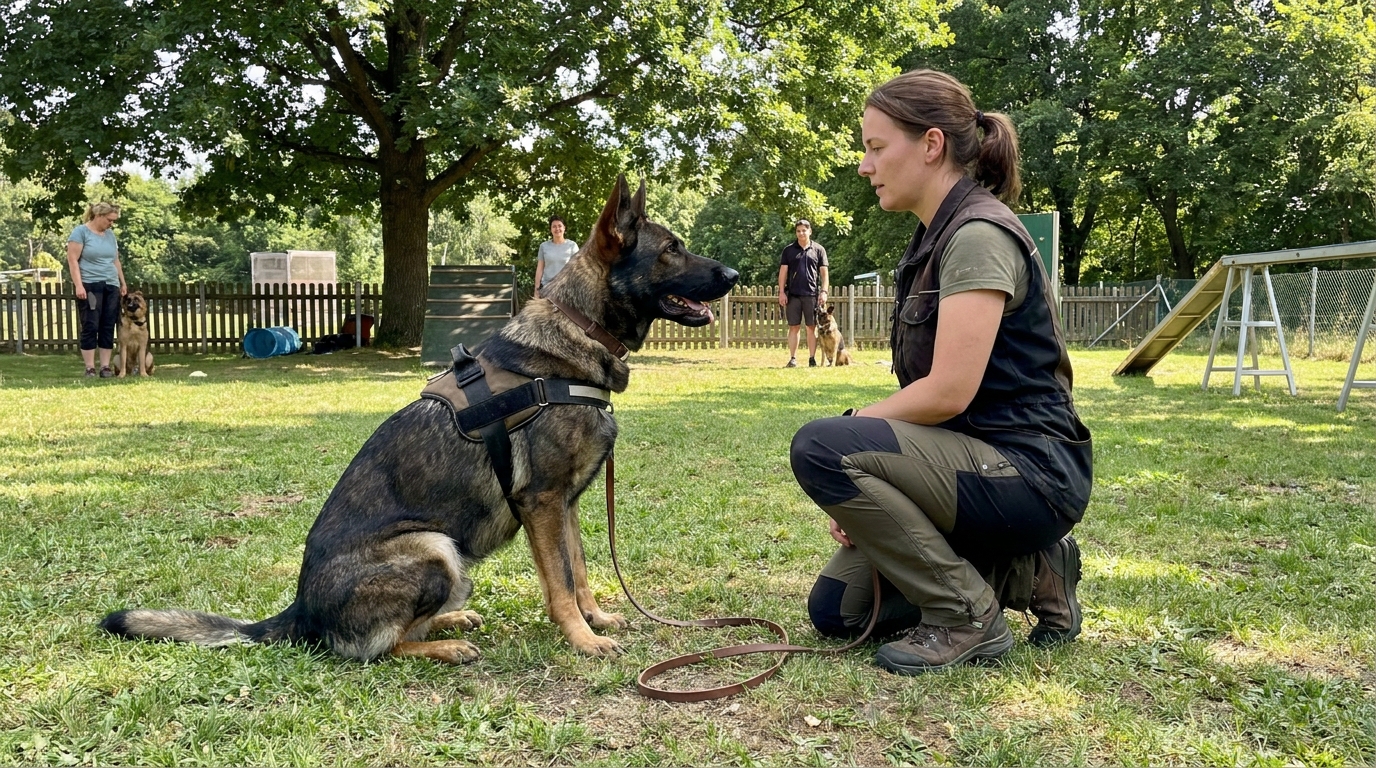
Training a Dominant Dog: The Leadership Reset That Changes Everything
That word gets thrown around a lot. It sounds like a diagnosis, and it feels like one too. A dominant dog. An alpha. A dog that has decided it runs the household and will not give up the throne without a fight.
Here is the truth, and it is backed by decades of behavioral science: dominance theory, as most dog owners understand it, is a myth. Your dog is not plotting a hostile takeover of your living room. Your dog is not challenging you for pack leader status. What your dog IS doing is filling a vacuum.
When structure, boundaries, and consistent expectations are missing, dogs do what any intelligent animal does. They make their own rules. And those rules tend to look a lot like pushing, pulling, ignoring, and general chaos.
Training a dominant dog is not about winning a power struggle. It is about creating a leadership framework so clear and so consistent that your dog never has to guess what you expect. That is the reset we deliver at Dan Gentile Dog Training, and it is the approach that has transformed over 2,500 dogs across more than 40 years of professional training in New Jersey.
At a Glance: It Starts With You, Not the Dog
So-called dominant dog behavior is almost never about rank. It is about a lack of structure, inconsistent rules, and a dog that has learned to make its own decisions because nobody taught it otherwise. The old alpha dog theory has been debunked by every major veterinary behavior organization in the world.
What actually works is clear leadership through obedience training, impulse control drills, consistent household rules, and calm, confident handling.
The fastest path to a respectful, responsive dog is not confrontation. It is structured training that teaches your dog to look to you for direction instead of making its own calls. That is exactly what our board-and-train program accomplishes in two focused weeks.
The Alpha Dog Myth and Why It Still Misleads Owners
The idea that dogs form rigid dominance hierarchies and that owners must establish themselves as the “alpha” traces back to a study of captive wolves conducted by Rudolph Schenkel in the 1940s.
That research observed wolves fighting for rank inside zoo enclosures, and it concluded that wolf packs are governed by a constant struggle for dominance. From there, the concept jumped to dogs. Television trainers popularized it. Books sold millions of copies on the premise.
And for decades, well-meaning owners have been told to eat before their dog, never let the dog on the bed, and alpha-roll any animal that pushes back.
There is one problem with all of it. The original research was wrong.
L. David Mech, the very wolf biologist whose early work helped cement alpha wolf terminology, spent years correcting the record. Wild wolf packs, he explained, are not dominance hierarchies at all. They are family units led by a breeding pair, much closer to a human family than to a corporate org chart. The American Veterinary Society of Animal Behavior released a formal position statement warning against dominance-based training, stating that it leads to confrontational techniques, increased fear, and a higher risk of problem behaviors getting worse.
A landmark University of Pennsylvania study surveyed dog owners using confrontational training methods and found that techniques like alpha rolls provoked an aggressive response in 31% of dogs on which they were attempted. Staring dogs down triggered aggression in 30%. Hitting or kicking a dog for misbehavior prompted aggression in 43% of cases. The conclusion was straightforward: force-based corrections rooted in dominance theory do not reduce problem behavior. They amplify it.
None of this means your dog does not have real behavior problems. It means labeling those problems “dominance” sends you chasing the wrong solution. The dog that steals food off the counter is not asserting rank. It learned that counters have food and nobody stopped it. The dog that ignores recall is not defying your authority.
It was never taught that coming when called is non-negotiable. Reframing the problem is the first and most important step toward fixing it.
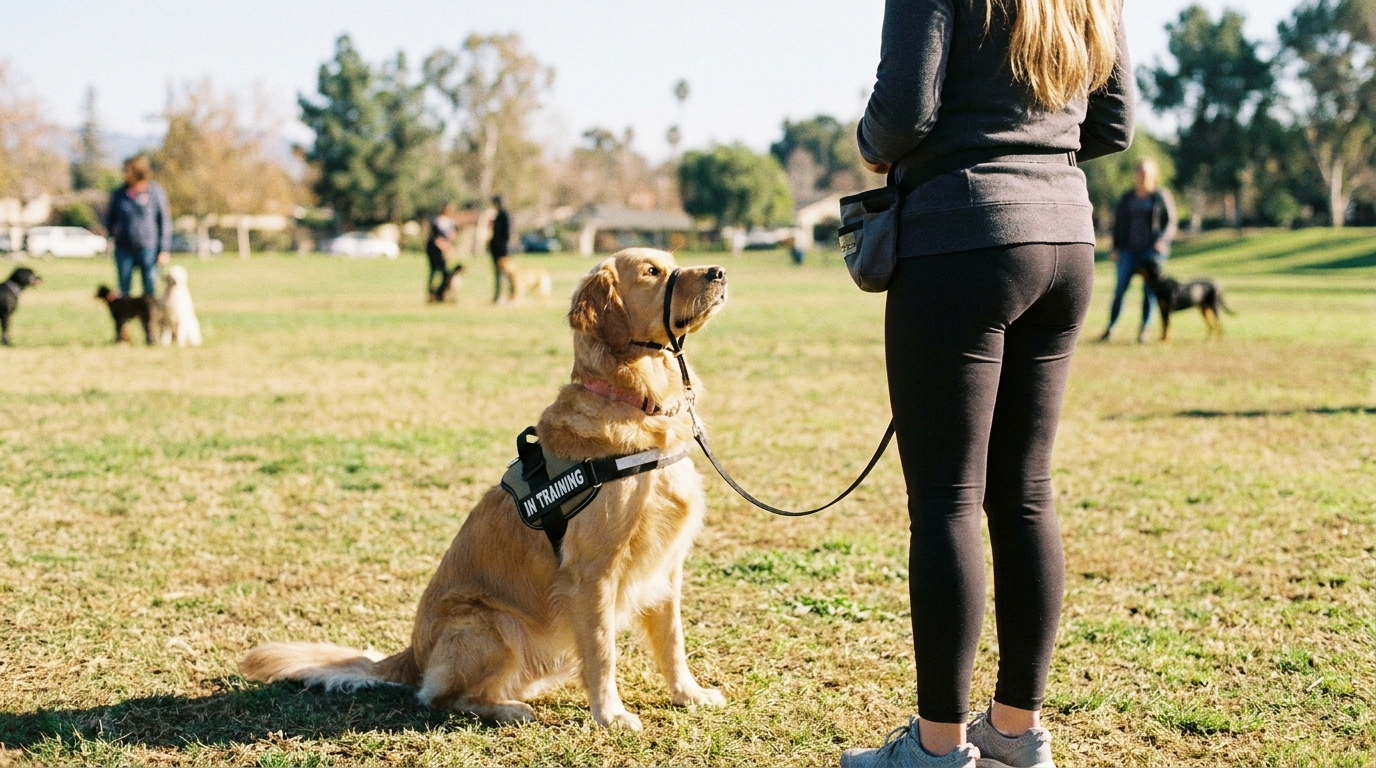
What Owners Call Dominant Behavior and What Is Actually Happening
When an owner says “my dog is dominant,” they are usually describing a collection of specific, identifiable behaviors. Each one has a clear cause, and not a single one requires you to become an alpha to fix it.
Pulling Hard on the Leash
A dog that drags you on walks has learned that pulling works. It gets them where they want to go faster. That is operant conditioning, not a power grab. The fix is structured leash training with clear expectations and consistent consequences for pulling. We teach this as part of every program, and a dog that arrives here dragging its owner typically walks on a loose leash within the first few days.
Ignoring Commands
A dog that blows off “sit” or “come” has not decided you are beneath its station. That dog either never learned the command reliably, learned it only in low-distraction settings, or learned that ignoring it carries no real consequence.
Reliable obedience requires proofing, which means practicing commands under progressively more challenging conditions until compliance becomes the default regardless of what is happening around the dog.
Jumping on People
Jumping is usually a greeting behavior that gets reinforced early. Puppies jump, people lean down and pet them, and the puppy learns that launching itself at humans earns affection. Stopping it means teaching an incompatible behavior, like a solid sit for greetings, and making sure every person the dog meets enforces the same expectation. It is a consistency problem, not a dominance problem.
Charging Through Doorways
Old-school trainers will tell you a dog that pushes through a door first is trying to establish rank. The reality is simpler. The dog is excited, the door is opening, and nobody ever taught it to wait. Threshold manners are one of the earliest impulse control exercises we teach, and most dogs pick them up quickly once the expectation is set and held.
Growling Over Food, Toys, or Resting Spots
A dog that growls when you approach its food bowl or chew toy is not claiming territory. That reaction has its roots in anxiety, not ambition. The dog is communicating insecurity about losing something it values.
This kind of possessive behavior exists on a spectrum, and the early stages respond well to structured training that teaches the dog good things happen when a human approaches. We address possessiveness through our obedience and impulse control curriculum as part of our programs.
Refusing to Move Off Furniture
A dog that plants itself on the couch and will not budge has simply learned the couch is comfortable and there is no real reason to move. Teaching a reliable “off” command and enforcing consistent furniture rules solves this without any need for physical confrontation or dominance displays.
The Leadership Framework That Replaces Dominance Training
If dominance theory is the wrong lens, what is the right one? The answer is leadership through structure. Real leadership in dog training has nothing to do with eating first, walking through doors first, or pinning your dog on its back. It has everything to do with clarity, consistency, and follow-through.
Obedience as the Foundation
Every behavioral issue we see in dogs labeled “dominant” traces back to a gap in obedience training. Reliable sit, down, stay, come, heel, and place commands give you a communication system that replaces chaos with predictability. When a dog understands what is expected and knows that expectations are consistent, the pushy behaviors that owners mistake for dominance start to dissolve on their own.
This is not casual obedience. Casual obedience is a dog that sits in the kitchen when it feels like it. Reliable obedience is a dog that sits the first time it is asked, in any environment, around any distraction, without negotiation. That level of reliability is what we build during our board-and-train program, and it is the foundation for everything else.
Impulse Control Changes the Dog From the Inside Out
Impulse control is the piece most DIY training plans miss entirely. Teaching a dog to sit is useful. Teaching a dog to control its own impulses is transformational. Place command work, threshold manners, waiting for food, holding a stay while distractions move around the dog.
These exercises rewire how a dog processes excitement and frustration. A dog with strong impulse control does not need to be physically managed through every situation. It manages itself.
We train impulse control the same way we train obedience: through repetition, progressive difficulty, and real-world proofing. The dog that arrived here blowing through doors and jumping on people leaves here pausing at thresholds and holding a calm sit while strangers approach.
Consistent Household Rules Prevent Backsliding
The most perfectly trained dog will regress if it goes home to a household with no rules. Every person in the family needs to enforce the same expectations. The dog does not get on the couch with Dad but gets told “off” by Mom. The dog does not pull one family member down the street and walk politely beside another. Inconsistency is confusing to dogs, and confused dogs fall back on old habits.
This is why owner education is a core part of what we do. When you pick up your dog after our program, we spend time walking you through every command, every expectation, and every tool you need to maintain the training at home. The reset only sticks if the entire household commits to it.
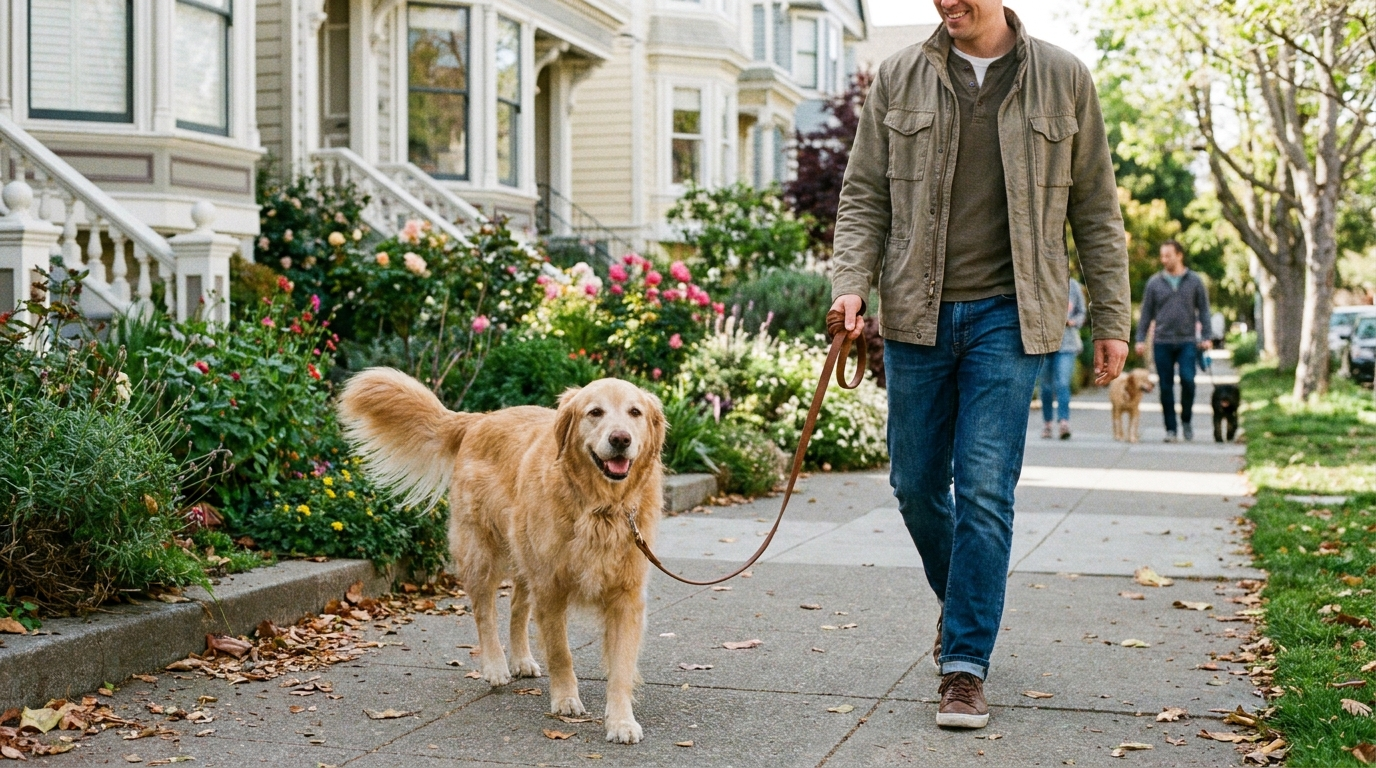
How Our Board-and-Train Program Resets a “Dominant” Dog
Our board-and-train program is designed for exactly the kind of dog most owners call dominant. The dog that has been running the house, ignoring commands, and making its own decisions for months or years. Two weeks of immersive, professional training does what months of inconsistent at-home work cannot.
The First Few Days: Assessment and Foundation
When your dog arrives, we do not jump straight into command drills. We observe. We learn how your dog processes new environments, how it responds to structure, where its gaps are, and what motivates it. Every dog is different, and a cookie-cutter program misses the nuances that make training stick.
Those first few days establish the relationship between your dog and our trainers, and they set the tone for everything that follows.
Daily Training: Building Reliable Responses
Training happens every day, multiple sessions, in varied environments and under escalating levels of distraction. Sit, down, stay, come, heel, place. These are not tricks. They are the communication backbone between you and your dog.
We train each one to reliability, meaning your dog responds correctly the first time regardless of what is happening around it. The result is a dog that defers to its handler not because it has been forced into submission, but because the rules are clear and following them has become second nature.
Real-World Proofing: Training That Holds Outside the Facility
A dog that sits perfectly in a quiet training room and falls apart at the park has not actually been trained. Proofing is what separates a well-drilled dog from a genuinely reliable one.
We expose dogs to real-world distractions, novel environments, other animals, strangers, traffic, and unpredictable situations so that obedience holds under pressure.
This is where the “dominant” behaviors disappear for good, because the dog has practiced deferring to its handler in the exact situations where it used to make its own calls.
The Handoff: Setting You Up for Long-Term Success
Pickup day is not the finish line. It is the start of the next phase. We walk you through every command your dog learned, demonstrate the handling techniques, and answer every question until you feel confident. You leave with a trained dog and the knowledge to keep it that way. And if you hit a snag down the road, our lifetime support means you are never on your own.
Breeds That Get Labeled “Dominant” and What They Actually Need
Certain breeds carry the dominant label more than others, and it is almost always undeserved. Rottweilers, German Shepherds, Pit Bulls, Akitas, Huskies, Cane Corsos, Dobermans. These are strong, intelligent, driven dogs. They were bred for jobs that demanded confidence, independence, and physical power.
When that drive has no outlet and no structure, it manifests as exactly the kind of pushy behavior owners interpret as dominance.
The solution is not suppression. It is direction. These dogs thrive when they have a job, clear rules, and consistent expectations. Our training programs accept all breeds, from the most energetic working breeds to the most stubborn terriers. The common thread is always the same: structure replaces chaos, obedience replaces guesswork, and a dog that seemed unmanageable transforms into one that is a genuine pleasure to live with.
Five Mistakes Owners Make When Training a Dominant Dog on Their Own
Using Force to Establish Rank
Alpha rolls, scruff shakes, leash corrections timed to “show the dog who is boss.” These techniques are still all over the internet, and they backfire more often than they work. A dog that is already pushy and confident does not become compliant when pinned to the ground. It becomes stressed, defensive, and less trusting.
The University of Pennsylvania research confirmed this: confrontational methods provoke problem behaviors in a significant percentage of dogs. Force is not leadership. It is a shortcut that leads to a dead end.
Inconsistent Enforcement Across the Family
One family member enforces the rules. Another lets the dog do whatever it wants. The dog learns quickly that rules only apply sometimes, with some people, in some situations. This is the fastest way to undo any progress you make with training. If you are going to set a rule, everyone in the household must hold the line every single time.
Skipping Impulse Control Entirely
Most at-home training focuses exclusively on commands. Sit. Down. Come. Those matter, but they are only half the equation. A dog with no impulse control knows what “sit” means but cannot bring itself to do it when something exciting is happening. Impulse control drills teach the dog to manage its own arousal, and without them, obedience falls apart in exactly the moments when you need it most.
Waiting Too Long to Start
Pushy behavior in a four-month-old puppy is cute. In an eighty-pound adult, it is dangerous. Every day a dog practices a behavior, that behavior gets more entrenched. Owners who wait until the problem has escalated face a longer training road than those who address it early. The best time to start training was months ago. The second-best time is right now.
Relying on Treats as the Only Motivator
Treats have their place in training. But a dog that only listens when food is visible is not obedient. It is negotiating. Reliable obedience means the dog responds because the command carries weight, not because it spotted a biscuit in your hand. We use a balanced approach that builds genuine compliance, not treat-dependent trick performance.
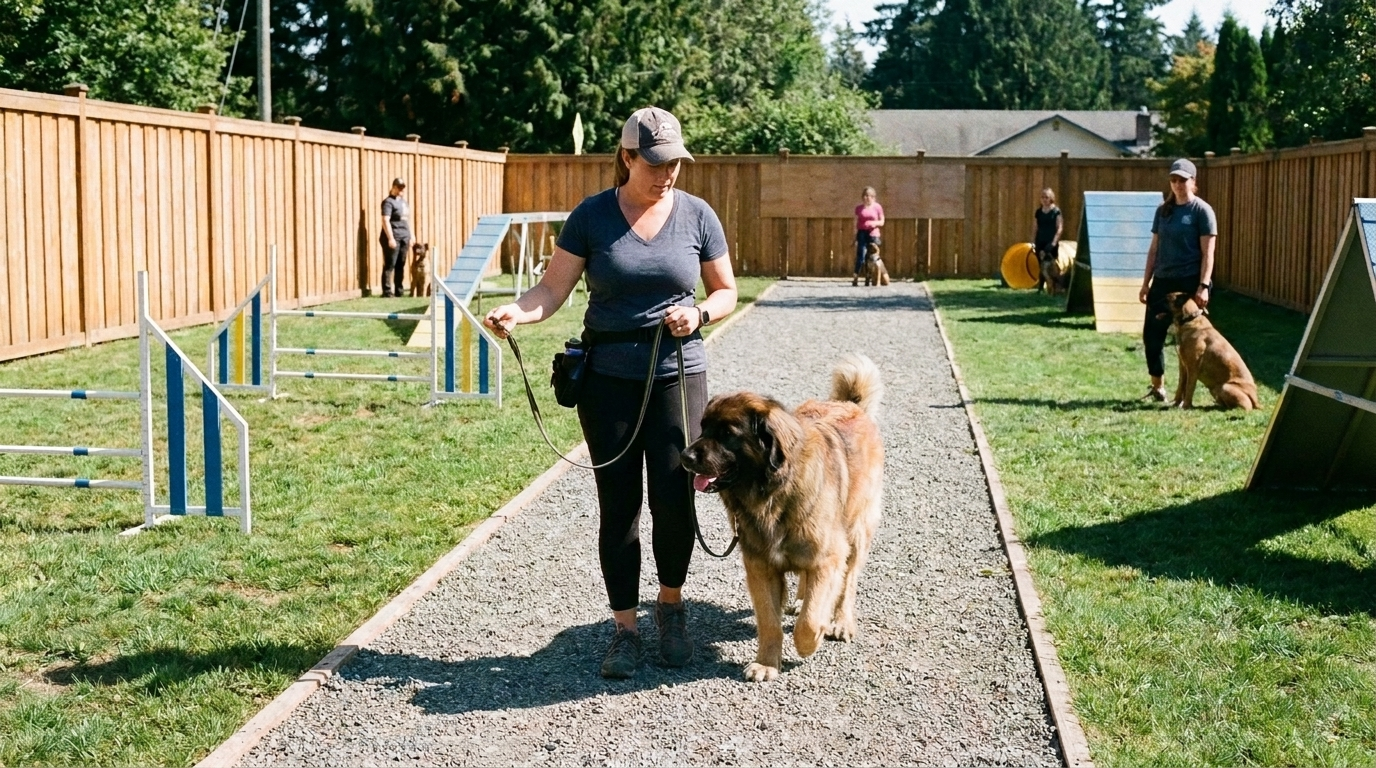
When It Is Time to Call a Professional Trainer
Not every pushy dog needs professional intervention. Some owners have the time, patience, and consistency to implement a structured training plan at home. But there are clear signs that the situation has outgrown DIY methods.
Your dog ignores basic commands even in calm, low-distraction settings. The pulling, jumping, and door-charging have been going on for months with no improvement. You have tried multiple approaches from YouTube videos and books and nothing has stuck. Multiple family members handle the dog differently and cannot agree on rules. The behaviors are getting worse, not better, over time.
If any of those sound familiar, professional training is not an admission of failure. It is the most efficient path to the result you want. Our board-and-train program is specifically built for dogs that need a full reset, and most owners tell us they wish they had made the call sooner.
Why New Jersey Families Trust Dan Gentile Dog Training
Training a dominant dog is not something you hand off to just any trainer. The person and the facility matter. Here is what sets us apart and why families across New Jersey keep choosing us.
Over 40 Years of Professional Experience
Four decades. That is not a marketing claim. It is 40-plus years of working with every breed, every temperament, and every behavioral challenge that walks through our doors. We have trained over 2,500 dogs in that time, and we have seen every version of “dominant” behavior an owner can describe. That depth of experience means we do not guess. We know what works because we have done it thousands of times.
A 4.3-Star Google Rating That Speaks for Itself
Our reputation is not built on advertising. It is built on results. A 4.3-star Google rating reflects what our clients consistently report: they got their dog back. The pulling stopped. The jumping stopped. The ignoring stopped. And the relationship between owner and dog changed in ways they did not expect. Read the reviews and you will see the same themes repeated by family after family.
A Facility Designed for Real Training
Our training center is not a converted garage or a rented field. It is a purpose-built facility with indoor and outdoor training areas, individual kennels, and the infrastructure to deliver the kind of immersive, daily training that produces lasting results. We welcome facility tours because we want you to see where your dog will be living and learning.
Owner Education and Lifetime Support
A trained dog without a trained owner is a temporary fix. We invest heavily in the handoff, making sure you understand every command, every tool, and every expectation before you leave with your dog. And our lifetime support guarantee means if a question comes up six months or six years from now, we are one phone call away. That is not a policy. It is a promise.
Serving All of New Jersey
Our facility is located in Monmouth County, and we work with families from across the state. , Ocean County, Middlesex County, Essex County, Mercer County, Bergen County, and beyond. If your dog needs a leadership reset, we are worth the drive. Our Monday through Saturday, 9 AM to 5 PM schedule makes it easy to coordinate drop-off and pickup around your week.
Your Questions About Training a Dominant Dog, Answered
Is my dog really dominant, or is something else going on?
Almost certainly something else. Most behaviors labeled “dominant” are really the result of inconsistent rules, insufficient training, and a dog that has learned to make its own decisions. True social dominance as a fixed personality trait is not how dogs operate, according to the current scientific consensus. What you are seeing is a dog that needs structure, not submission.
Will training break my dog’s spirit or personality?
The opposite. Dogs that live without structure are often more stressed and anxious than dogs that have clear rules. Think of it the way you would think of a child in a household with no boundaries versus one with consistent, fair expectations. Structure creates security. The confident, happy personality stays intact. The chaos and pushiness fade away because they were never part of who your dog actually is.
How long does it take to see results with a pushy, strong-willed dog?
In our board-and-train program, owners typically see dramatic changes within the two-week program. The dog that arrived pulling, jumping, and ignoring commands leaves walking on a loose leash, responding to commands reliably, and deferring to its handler in situations that used to be a free-for-all.
Long-term maintenance depends on you enforcing the same expectations at home, which is why our owner education component is so thorough.
Do you use punishment-based or dominance-based training methods?
No. We do not use alpha rolls, leash pops designed to intimidate, or any technique rooted in outdated dominance theory. Our approach is structured, balanced, and designed to build a cooperative relationship between dog and handler. The goal is a dog that listens because the expectations are clear and following them makes sense, not because it is afraid of what happens if it does not.
Can an older dog that has been “dominant” for years still change?
Yes. Older dogs may take slightly longer to break deeply ingrained habits, but they are absolutely capable of learning new patterns. We regularly work with adult and senior dogs whose owners assumed the window for training had closed. It has not. The brain remains plastic, and a structured training environment creates change at any age.
What breeds do you work with?
All of them. We train everything from Chihuahuas to Great Danes, including the breeds most often labeled dominant: Rottweilers, German Shepherds, Pit Bulls, Huskies, Akitas, Dobermans, Cane Corsos, and more. The training principles are the same regardless of breed. The application adjusts to each dog individually.
What happens if the training does not stick after my dog comes home?
Our lifetime support guarantee means you are never stuck. If behaviors start to slip, reach out and we will help you troubleshoot. In most cases, regression happens because of inconsistency in the home environment, and a quick refresher on handling techniques gets things back on track. We are invested in your dog’s long-term success, not just the two weeks it spends with us.
Stop Fighting Your Dog. Start Leading It.
Training a dominant dog is not about winning a battle. There is no battle. There is a dog that needs clear leadership, consistent structure, and the kind of professional training that turns chaos into calm. The alpha myth has wasted decades of owners’ time and damaged countless relationships between dogs and the people who love them. The science is settled. The results speak for themselves.
Your dog is not your adversary. Your dog is waiting for someone to make the rules make sense. We have been doing exactly that for over 40 years, and we are ready to do it for your dog. Contact us today to schedule a consultation and take the first step toward the calm, respectful, responsive dog you have been looking for.
Enjoy This Article? You May Also Like:
- Hardest Dog Breeds to Train: What Makes Them Difficult and What Actually Works
- Dog Board and Train vs Private Lessons: An Honest Comparison to Help You Choose
- 5 Signs of an Overstimulated Dog (And How to Reset Their Brain)
- Monmouth County Puppy Training: We Train Your Puppy So You Get a Dog You Actually Enjoy