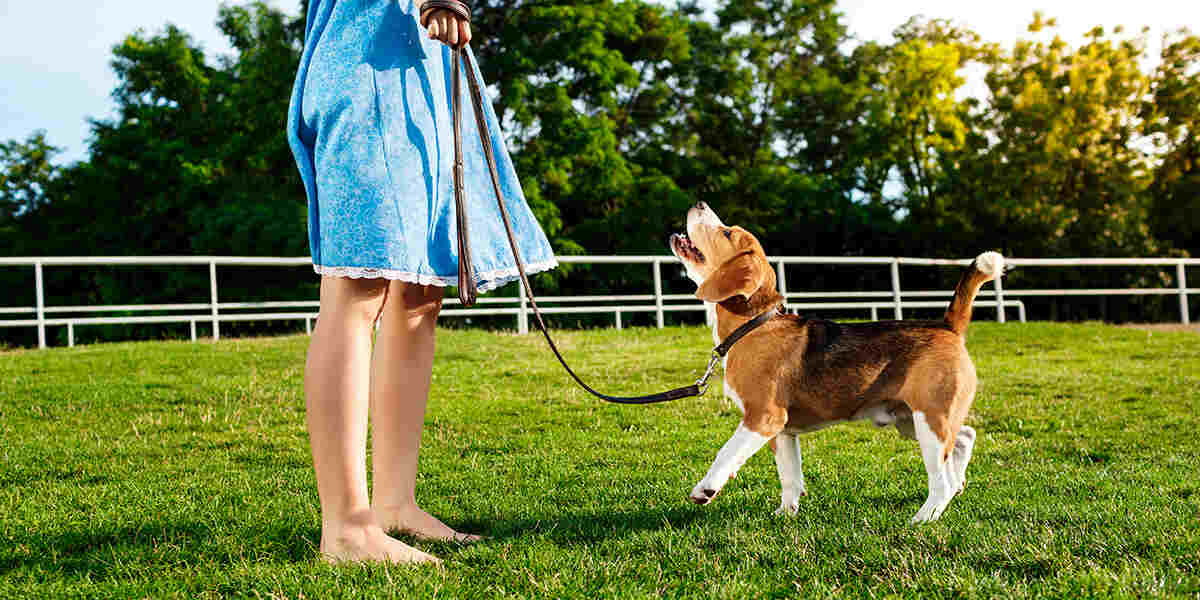
How to Assert Dominance Over a Dog: 5 Pack Leader Tips
Does your dog act pushy around you? Do they ignore your commands or demand attention on their terms? They aren’t necessarily trying to conquer the world, but they are lacking structure. When a dog doesn’t have a clear leader, they create their own rules, and that often looks like “dominance.”
In this guide, you’ll receive helpful tips from the experts at The Dan Gentile Dog Training Center, the leading dog training center in New Jersey. Discover the signs of pushy behavior in dogs and what you can do to teach your dog that you’re the leader through calm, consistent guidance.
Quick Answer: How to Assert Dominance Over a Dog Safely
To assert dominance over a dog effectively, you do not need physical force. Instead, adopt a strategy of Resource Control (often called “Nothing in Life is Free”). This involves three key steps:
Control the Food: Make your dog sit and wait for eye contact before putting their bowl down.
Manage Space: Do not let your dog block hallways or rush through doors ahead of you.
Ignore Demands: If your dog nudges you for affection, ignore them until they settle, then invite them over on your terms.
By controlling access to food, space, and attention, you establish yourself as the leader psychologically rather than physically.
Understanding Dog Dominance (vs. Leadership)
Dogs may be man’s best friend, but they can quickly assume the role of pack leader if their owner doesn’t. Taking care of your dog goes beyond feeding and walking them; you must also recognize harmful behaviors and correct them with consistent training.
Your dog may exhibit behaviors that show a lack of leadership, including:
Not following commands.
Showing hostility with eye contact or after being reprimanded.
Resource guarding their food or toys.
Inappropriate mounting.
Note: Aggressive behavior toward children is often rooted in fear, not dominance. Punishing a fearful dog can make it worse. If you see this, contact a professional immediately.
Start a consistent training program to shift your dog’s thinking and show them that you’re the benevolent leader they can trust.
4 Steps to Establish Dominance (Leadership) Today
If your dog is pushing boundaries, implementing these four non-confrontational habits will shift the dynamic immediately:
1. The “Wait” at the Door In a pack, the leader assesses the environment first. Never let your dog pull you through a doorway. Make them sit and wait. You step through first, then give a release command (like “Okay”) for them to follow.
2. The “Terms of Affection” Rule Pushy dogs often demand petting by pawing or leaning on you. If you pet them, they have successfully commanded you. To assert leadership, simply lean back and ignore the behavior. Once the dog stops and sits, then you can call them over for affection.
3. Claiming Personal Space If your dog is lying in a hallway or on the couch and growls when moved, they are claiming territory. Use your body language to “claim” the space. Stand tall and walk calmly toward the spot without stepping on or touching the dog. Using a “Place” command is highly effective here to move the dog to their designated bed.
4. The Work-to-Eat Protocol Your dog should perform a task for every meal. This can be as simple as a “Sit,” “Down,” or “Look at Me.” This reinforces that you hold the resources, and they must look to you for guidance.
One of the most common mistakes owners make is assuming a dog that lunges and barks on a leash is trying to be dominant. In reality, this behavior is almost always caused by barrier frustration or fear. The leash traps the dog, elevating their stress levels and triggering a fight-or-flight response. Treating a reactive dog as if they are trying to be the “alpha” will only increase their anxiety and worsen the behavior. True leadership involves advocating for your dog’s space and teaching them to remain neutral around triggers.
The Myth of the “Alpha” vs. Modern Reality
Many owners believe they need to be physically dominant to get respect. This is outdated. Here is the difference between old-school “Dominance” and modern “Leadership.”
| The Old “Alpha” Way (Avoid) | The Modern Leadership Way (Do This) |
| Alpha Rolling: Pinning the dog to the ground. | De-escalation: Removing attention until the dog is calm. |
| Physical Force: Pushing a dog into a sit. | Luring: Using food to guide the dog into a sit. |
| Intimidation: Staring the dog down. | Focus: Teaching the “Look at Me” command. |
| Punishment: Yelling when they pull. | Consequence: Stopping the walk (or turning around) when they pull. |
The Dominance Myth: What It Gets Wrong
The dominance myth assumes that everyday behaviors like pushing through a doorway first, claiming the couch, or pulling ahead on a walk are bids for status. In reality, these are almost always learned habits. A dog bolts through the door because the door is exciting and no one has taught him to wait. He pulls on the leash because pulling has always moved him toward the interesting smell up ahead. None of it is a statement about who is in charge.
The myth also rests on shaky science. It grew out of a 1940s study of captive wolves that described a rigid pecking order led by a so called alpha. The researcher who popularized that idea, David Mech, spent later decades studying wolves in the wild and asked his own publisher to stop printing the old book. Wild wolf packs are usually just families, a mother and father and their offspring, not a battlefield of rivals fighting for the top spot. Since dogs are not wolves and the original research was flawed, the alpha dog idea never had solid footing.
The deeper problem is that the dominance myth answers the wrong question. It asks how to defeat your dog when the real question is how to teach him. Training built on winning a power struggle spends its energy on a contest that was never happening, and it misses the simple, effective work of showing a dog what to do instead. That is why calm, consistent leadership, the kind built on structure and clear rules rather than force, produces a dog who trusts you and chooses to listen.
Tips for Asserting Dominance Over Your Dog
Ask various trainers how to assert dominance over a dog and they’ll likely give you the same set of steps. Use the tips below to show alpha leadership over your dog.
Practice Calm Assertiveness
Use assertive body language with your dog to show that you’re the leader but avoid shouting and using physical aggression. You want to remain calm yet assertive in order to prevent the dog from being fearful of you or continuing to see you as passive.
Use Positive Reinforcement
Dogs respond best to positive reinforcement rather than harsh punishments. When they show any signs of good behavior, reward them for it with treats, verbal praise, and friendly playtime. This enhances your bond with them and shows that they can trust you as a leader.
Enforce Clear Boundaries
When a dog believes they’re the alpha leader, it will often test you when you try to assert dominance. Letting your guard down won’t teach the dog any different, so it’s essential to stick to your boundaries. If your dog has a lot of new behaviors to learn, focus on small goals first and gradually increase your training.
Stimulate Your Dog
Many dogs exhibit bad, dominant behavior out of boredom. Make sure you give your dog plenty of exercise throughout the day with walks and playtime, as well as letting them use puzzle-based toys when you’re not around.

How to Establish Dominance Over a Dog Through Resource Control
When owners ask how to establish dominance over a dog, they often imagine physical confrontations. However, in modern dog psychology, true dominance is about resource control. The most effective way to establish your status is by controlling the things your dog wants—food, affection, and freedom.
Professional trainers often refer to this as the “Nothing in Life is Free” (NILIF) method. By implementing these simple protocols, you passively prove you are the leader without ever raising your voice.
Earn Your Meals: Never put a food bowl down for a dog that is jumping or barking. Wait for calm. Ask your dog to “sit” and look at you before you lower the bowl. If they break the sit, lift the bowl back up.
Threshold Management: In the wild, the leader leads. When going through doors, gates, or entering a new room, make your dog wait. You go first. This subtle cue establishes that you are the one assessing the safety of the environment.
Permission for Affection: If your dog nudges your hand or jumps on you demanding pets, and you comply, they have effectively “trained” you. To establish leadership, ignore the demand. Wait until they settle, ask for a command, and then offer affection.
Common Handler Mistakes That Undermine Leadership
At Dan Gentile Dog Training, we recognize that establishing effective leadership is crucial in understanding how to show dominance to a dog. However, certain handler behaviors can inadvertently undermine this goal:
- Inconsistent Rules: Allowing behaviors like jumping on guests one day and scolding the next confuses your dog, weakening your leadership position.
- Emotional Responses: Reacting with frustration or anger can erode trust. Maintaining calm and assertive behavior is essential.
- Lack of Boundaries: Failing to set clear boundaries can lead to your dog assuming a leadership role, which may result in behavioral issues.
You reinforce your role as a consistent and confident leader in your dog’s eyes by avoiding these common mistakes
Interpreting Growling: Not Always a Sign of Anger
Understanding canine communication is vital. Growling is often misunderstood as mere aggression, but it serves as a warning signal indicating discomfort or stress.
Punishing a dog for growling removes their warning system, potentially leading to unexpected bites. Instead, observe the context of the growl and address the underlying cause, whether it’s fear, pain, or resource guarding.
Structured Control: Guiding Your Dog’s Daily Activities
Implementing structured control over your dog’s daily activities is a practical method in demonstrating how to show dominance to a dog. This doesn’t imply authoritarian control but rather providing consistent guidance and boundaries:
- Scheduled Feeding: Feeding your dog at set times reinforces routine and your role as the provider.
- Controlled Playtime: Initiating and ending play sessions on your terms teaches your dog to look to you for cues.
- Managed Social Interactions: Guiding your dog’s interactions with others ensures they understand acceptable behaviors.
Through these practices, you establish a leadership role that your dog respects and trusts.
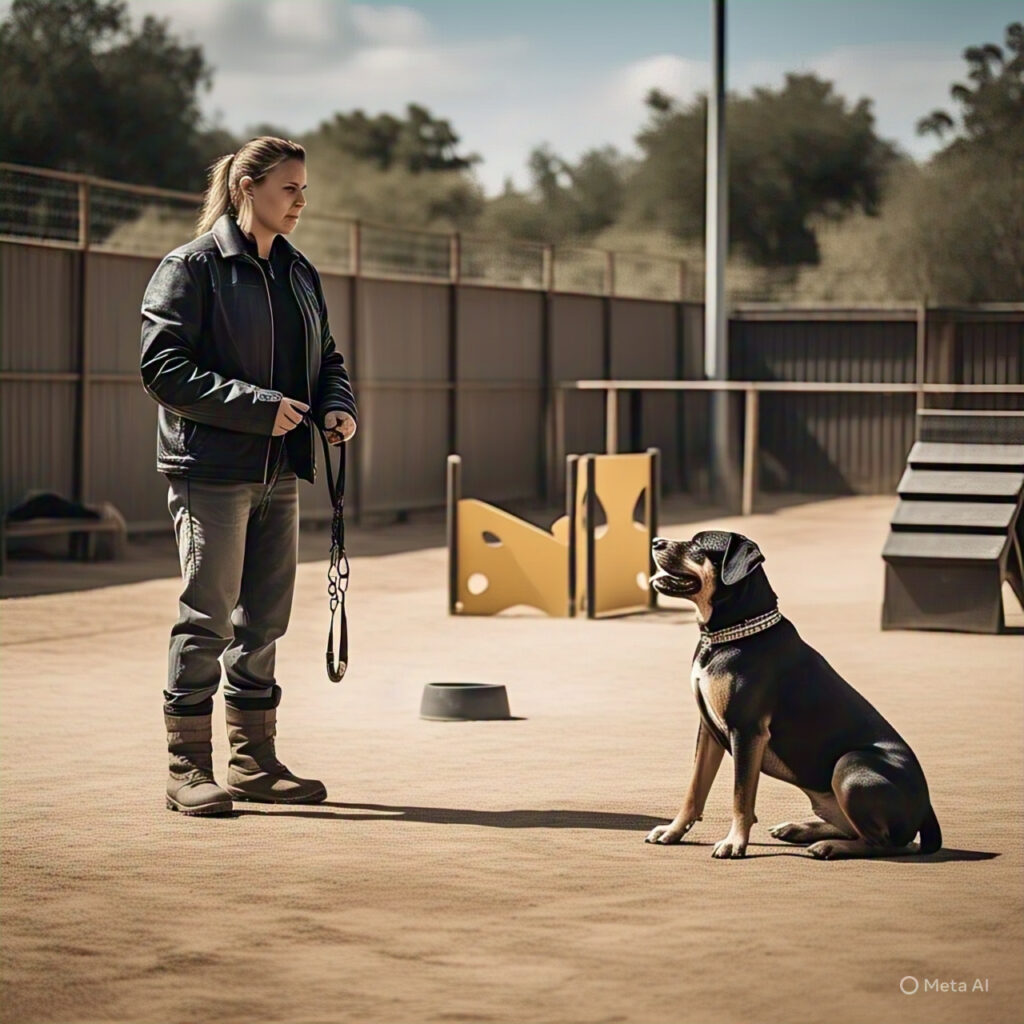
Addressing Food Bowl Aggression with Positive Reinforcement
Food bowl aggression, or resource guarding, is a common issue that can be addressed by understanding how to show leadership through trust:
Avoid Confrontation: Do not forcibly remove food or punish your dog during meals, as this can escalate aggression.
Desensitization Techniques: Gradually acclimate your dog to your presence during feeding times by standing at a distance and tossing high-value treats into the bowl.
Positive Associations: Teach your dog that a human approaching the bowl means better food is coming, not that their food is being taken away.
Dominance and Alpha Behavior in Dogs: Quick Answers
Is my dog trying to be the alpha?
Most behavior labeled dominance is really a dog acting on an inconsistent routine, unclear boundaries, or learned habits that got them what they wanted. Clear structure changes it far more reliably than trying to out-alpha the dog.
How do I fix dominant or pushy dog behavior?
Set consistent rules, control access to resources, and reward the behavior you want until it becomes the default. When the patterns are hardened into daily conflict, a structured board and train resets the routine faster than at-home fixes.
Does board and train help with dominance issues?
Yes, for obedience and manners. A two-week board and train rebuilds structure and impulse control with daily reps from a professional trainer. Note that dogs with a history of aggression are a separate case and are not accepted into the program.
If the dominance patterns have hardened into daily conflict, structure fixes faster than theory. A dog board and train in New Jersey program resets the routine and rebuilds obedience in two weeks.
Frequently Asked Questions on How to Establish Dominance Over a Dog
1. How to establish consistent leadership with a reactive dog?
To establish leadership with a reactive dog, you must become their safe anchor. This means anticipating triggers before your dog reacts. When you see a trigger (such as another dog), calmly change direction or block your dog’s line of sight before they lunge.
By advocating for their space and managing the environment so they don’t feel the need to defend themselves, you prove that you are in control of the situation. Consistently keeping your dog below their reaction threshold builds trust in your leadership.
2. Positive reinforcement techniques to gain dog compliance
Compliance starts with identifying what motivates your dog, high-value treats, toys, or praise. Use a marker word like “Yes!” or a clicker to mark the exact moment your dog performs the correct behavior, followed immediately by a reward.
For example, to stop jumping, ignore the jump, wait for four paws on the floor, mark the behavior, and reward. This teaches your dog that compliance earns access to resources, while unwanted behavior earns nothing.
3. How to set boundaries without using force with a dog?
Setting boundaries is about managing space and access, not physical punishment. Use body blocking to claim space by calmly stepping into your dog’s path without touching them.
Leashes can also be used indoors to prevent access to furniture or guests. If a boundary is crossed, remove the reward or briefly remove the dog from the activity. This approach is far more effective than using force.
4. Signs my training is making my dog fearful
If you are trying to establish dominance and notice behaviors such as cowering, tail tucking, frequent lip licking, or visible whites of the eyes (whale eye), your training methods may be too harsh.
Additional signs include submissive urination or excessive rolling onto the back. Healthy leadership produces a confident, engaged dog—not one that avoids interaction out of fear.
5. How to replace dominance methods with leadership strategies?
Replacing dominance-based techniques requires a mindset shift from conquering to guiding. Instead of forcing a dog into position, use lures and rewards to guide behavior.
Rather than yelling when a dog pulls on the leash, stop moving until the dog returns to your side. Leadership focuses on controlling outcomes and consequences, not physically controlling the dog.
6. Should I stare my dog in the eyes to show dominance?
No. While eye contact is important for communication, an aggressive “stare down” can be perceived as a threat by a dominant dog and may trigger a bite. Instead, look at your dog’s forehead or ears to maintain focus without issuing a challenge.
7. Does the ‘Alpha Roll’ work to assert dominance?
We strongly advise against the “alpha roll” (forcibly pinning a dog to the ground). This technique often causes fear and defensive aggression, breaking the trust between you and your dog. Modern resource control is safer and more effective.
8. My dog sits on my feet. Is this a dominance move?
Not necessarily. While some dogs do this to claim space, many dogs sit on their owner’s feet simply for security or comfort. Context matters—if the dog growls when you try to move your feet, it is dominance. If they are relaxed, it is affection.
9. Where did the dominance myth come from?
The dominance myth grew out of a 1940s study of captive wolves that described a strict alpha hierarchy. The scientist behind it later rejected those conclusions after studying wild wolves, who live mostly in family groups. Because dogs are not wolves and the research was flawed, the alpha idea never had solid footing.
10. If I stop using dominance, will my dog walk all over me?
No. Letting go of the dominance myth does not mean letting go of rules. It means you lead through structure and consistency rather than confrontation. Dogs actually respect calm, reliable leadership far more than they respond to intimidation.
Enroll Your Dog in Professional Training Sessions
If you’re a new dog owner or struggling to train a pooch on your own, contact The Dan Gentile Dog Training Center. Our dedicated training team works with you and your dog to teach them important behavioral skills. Learn how to assert dominance over a dog, address impulse control, teach basic obedience training, and more. Our Board & Train Program provides the structured environment these dogs need. Our intensive dog training boot camp provides the structured reset that pushy dogs need to learn respect.
For personalized guidance on establishing effective leadership and addressing behavioral issues, visit Dan Gentile Dog Training.
To sign up for a training session, contact us today at (732) 938-5040 or follow us on Facebook
Enjoy This Article? You May Also Like:
- Best Dog Trainers in Monmouth County
- Professional Dog Obedience Training in Monmouth County, New Jersey
- Dog Training in Monmouth County, NJ: Expert Canine Skills
- Training Your Dog for Traveling: A Complete Guide to Stress-Free Trips