
Why Is My Dog Suddenly Ignoring Me? Understanding Adolescent Dog Behavior Regression
You did everything exactly right. You brought home a sweet puppy and spent weeks teaching them the basics. They learned how to sit on command. They walked politely by your side. You felt an incredible sense of accomplishment. But suddenly, right around six to eight months of age, it feels like an alien abducted your perfect puppy and replaced them with a stubborn, rebellious teenager.
They stare blankly at you when you call their name. They pull on the leash as if they have never seen one before. They test every single boundary in your home. You are exhausted, frustrated, and wondering where you went wrong.
Take a deep breath. You did not break your dog. Welcome to adolescent dog behavior regression. This is a very real, highly challenging developmental stage that almost every single dog owner must face. However, navigating this phase incorrectly can lead to a lifetime of behavioral struggles. If your teenage dog is driving you crazy, it is time to look at the psychology behind their behavior and take action to regain your leadership.
Quick Answer: What is Adolescent Dog Behavior Regression?
Adolescent dog behavior regression is a developmental phase where a young dog’s brain undergoes significant hormonal and structural changes. This causes them to temporarily forget previous training, become easily distracted, and actively test boundaries. This teenage phase typically begins around six months of age and requires consistent, structured leadership to correct.
The Science Behind the Teenage Dog Phase
To truly fix the problem, you first have to understand what is happening inside your dog’s head. Your dog is not ignoring you because they are spiteful. They are ignoring you because their brain is physically changing.
Hormonal Surges and Brain Development
Just like human teenagers, adolescent dogs experience a massive surge of hormones. Even if your dog has been spayed or neutered, their brain is still transitioning from a puppy mindset to an adult mindset. During this time, the environment suddenly becomes much more interesting to them than you are. A leaf blowing across the street or the scent of another dog on a fire hydrant suddenly commands their absolute attention.
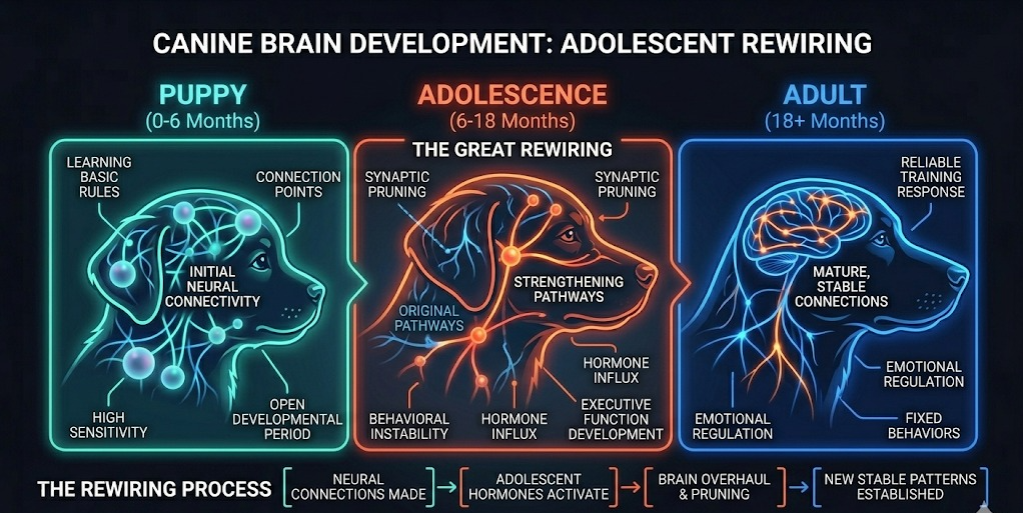
According to veterinary behavior experts at the American Kennel Club (AKC), the adolescent phase is accompanied by a restructuring of the canine brain. The neural pathways associated with learning and impulse control are being rewired. Because of this structural chaos, a command they knew perfectly last month might take them ten full seconds to process today.
The Second Fear Impact Period
During adolescence, many dogs also enter a secondary fear impact period. A trash can that has sat on the corner for six months might suddenly terrify them. This fear can quickly morph into defensive barking or lunging. If you coddle them or allow them to avoid the things that scare them, this temporary fear will solidify into permanent reactivity. You must guide them through these moments with calm, confident leadership.
Common Signs of Adolescent Dog Behavior Regression
How do you know if you are dealing with a teenage rebel or a deeper behavioral problem? Adolescent regression presents itself through very specific, highly frustrating changes in behavior. Owners dealing with 8-month-old dog behavior changes typically notice the following:
- Sudden Leash Pulling and Reactivity: Forgetting loose-leash walking skills and lunging at distractions.
- Ignoring the Recall Command: Refusing to come when called, even if they used to do it perfectly.
- Testing Boundaries and Impulse Control: Jumping on furniture, counter-surfing, or mouthing hands.
Here is a closer look at these common issues.
Sudden Leash Pulling and Reactivity
Your dog used to trot happily next to you. Now, taking them for a walk feels like you are entering a wrestling match. Teenage dogs have an intense desire to explore the world. If they see a squirrel or another dog, their impulse control vanishes, and they will drag you down the street to get to it. This lack of focus is exactly why professional dog behavior modification in Monmouth County is critical. We teach the dog that they must engage with the handler, regardless of how exciting the environment is.
Ignoring the Recall Command
The single most common complaint we hear from owners of teenage dogs is that their dog stopped coming when called. When they were small puppies, they stayed close because they relied on you for safety. As they grow older and more confident, they realize that running away and ignoring you is actually a very fun game. Without a reliable recall command, your dog can never safely be off a leash.
Testing Boundaries and Impulse Control
Adolescent dogs are notorious for pushing boundaries to see what they can get away with. If you previously taught them not to jump on the couch, they will suddenly jump on the couch while staring right at you. They might start jumping on guests again, mouthing your hands aggressively during play, or stealing items off the counter. They are asking a very clear question to see if the rules still apply. If you give in, they learn that they are in charge of the house.
The teenage phase is difficult for any dog, but it is magnified tenfold in high-drive working breeds like German Shepherds, Belgian Malinois, Huskies, and Pitbull mixes. Dealing with an adolescent working breed requires a firm, confident handler.
Actionable Tips: What You Can Do at Home Right Now
Before you consider professional training, there are a few immediate steps you can take at home to manage your dog’s behavior and regain control:
- Go Back to Basics: Treat your teenager like an eight-week-old puppy. Reintroduce high-value treats and reward them heavily for simple commands like “sit” and “stay” to rebuild their focus on you. Going back to structured obedience training fundamentals is the fastest way to re-establish your leadership during this phase.
- Manage Their Environment: If your dog is counter-surfing or destroying furniture, restrict their access. Use baby gates or a crate when you cannot directly supervise them.
- Use a Long Line for Recall: Never let your teenage dog off-leash in an open area until their recall is perfect. Practice calling them back to you using a 15-foot or 30-foot long training leash so you can safely enforce the command.
- Practice Impulse Control Games: Require your dog to sit and wait before eating their food or walking out the front door. This forces them to engage their brain and look to you for permission.
Why You Cannot Ignore the Teenage Phase
Many owners make the critical mistake of assuming their dog will simply “grow out of it.” They stop enforcing rules and decide to just wait for the dog to mature. This is a massive trap.
Dogs do not automatically grow out of bad habits. In fact, practice makes permanent. Every time your dog successfully pulls you toward a distraction, they learn that pulling works. Every time they ignore your command to “come,” they learn that your words do not matter. If you allow them to practice these rebellious behaviors during their teenage months, those behaviors will harden into permanent adult traits.
Shelters across New Jersey and the entire country are filled with dogs between the ages of 8 months and 2 years old. Owners surrender these dogs because the cute puppy turned into a strong, uncontrollable teenager. Early intervention is the only way to save your sanity and secure your dog’s future.
The Solution: Hitting the Reset Button
When you are exhausted from fighting with your dog every single day, trying to teach them obedience in your living room simply will not work. Both you and the dog are frustrated. The fastest and most effective way to solve adolescent regression is a complete change of environment.
How Train While Boarding Fixes the Problem
Instead of struggling for months with weekly hourly classes that fail to produce results, our immersive dog board and train program in Monmouth County takes the burden completely off your shoulders.
By removing your teenager from their normal environment, we instantly strip away their established bad habits. They step onto our campus and realize their old tricks do not work here. During our immersive two-week Train While Boarding program, we provide the strict structure your dog desperately craves. Our intensive dog training boot camp is specifically designed for adolescent dogs who need a hard reset on their behavior.
Our expert trainers work one-on-one with your dog every single day. We install foundational commands like “Heel,” “Sit,” “Stay,” and a highly reliable recall. We enforce the rules with absolute consistency, putting in the hundreds of daily repetitions required to build permanent impulse control.
The 12-Acre Advantage
You cannot properly train a highly distracted teenager in a cramped indoor warehouse. Our state of the art facility is located on a massive 12-acre private campus in Howell Township. This expansive space allows your dog to train on real grass and walk on quiet nature trails.
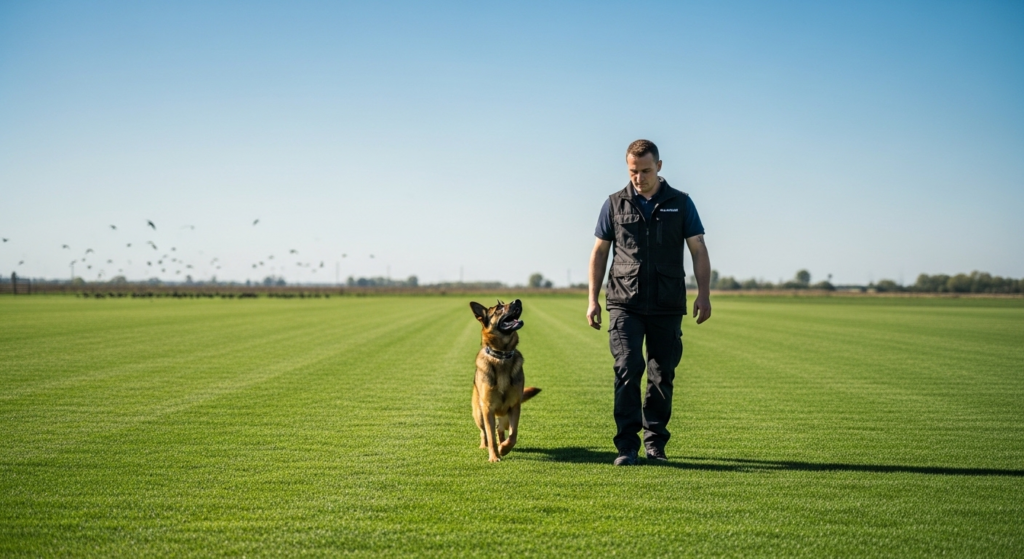
We have the ability to safely introduce real-world distractions like other dogs and people at a massive distance. We systematically teach your dog to ignore those distractions and focus entirely on the handler, ensuring they are ready for the real world when they go home.
Transferring Leadership Back to You
A professionally trained dog is useless if they do not listen to you in your own house. We know that teenage dogs will immediately try to test you the moment they return home. That is why our job is not finished until you are fully trained.
At the conclusion of the two-week program, we conduct a comprehensive owner turnover session. We take you out on our field and teach you exactly how to handle your dog. We show you how to communicate clearly, how to enforce boundaries, and how to maintain the leadership role. We empower you to take back control of your home.
Because we stand behind our results, we also provide a free lifetime consultation guarantee. If your dog tries to test the rules a few months down the road, you are never alone. You simply pick up the phone, and our experts will guide you through the solution.

Frequently Asked Questions About Teenage Dogs
When does the teenage dog phase start and end?
The adolescent phase typically begins around six months of age and can last until the dog is eighteen to twenty four months old. The exact timeline depends heavily on the breed. Smaller breeds tend to mature faster, while large working breeds mature much slower and require extended boundary enforcement.
Should I just wait for my dog to grow out of this phase?
No, waiting for a dog to outgrow bad behavior is a massive mistake that leads to permanent issues. Dogs learn through repetition. If you allow them to practice jumping, pulling, and ignoring commands during their teenage months, those behaviors will become permanent adult habits. Consistent professional training is required.
Will an immersive program work for my stubborn teenager?
Yes, an immersive program is highly effective because it removes the dog from the environment where they currently get away with bad behavior. Our Train While Boarding model provides the necessary structure, consistency, and daily repetitions that a stubborn adolescent needs to fundamentally change their mindset.
What if my dog is younger than six months?
If you have a young puppy, starting their education early is the best way to prevent the severe teenage rebellion. We offer dedicated expert puppy training in Monmouth County to establish clear communication and impulse control before those bad habits ever have a chance to take root.
Ready to Get Your Good Dog Back?
You do not have to live with a dog that drags you down the street and ignores your voice. The teenage phase is incredibly difficult, but with the right professional intervention, you can safely guide your dog into becoming a calm, confident, and reliable adult companion. Do not wait until their rebellious behavior becomes a permanent lifestyle.
With over 40 years of proven success, Master Trainer Dan Gentile and his dedicated team have transformed thousands of stubborn adolescent dogs. We use science based psychology, clear communication, and a distraction free environment to deliver results you can actually trust.
If you are ready to remind your dog exactly who is in charge and get your peaceful home back, please Contact Us Today or call us directly at (732) 938-5040 to schedule your evaluation.
You can also explore our facility, get driving directions, and read reviews from other local owners who successfully survived the teenage phase by visiting our Google Maps Listing. Let our expert team do the heavy lifting so you can finally enjoy a well-mannered best friend!