What Is Desensitization Dog Training and How Does It Fix Canine Anxiety?
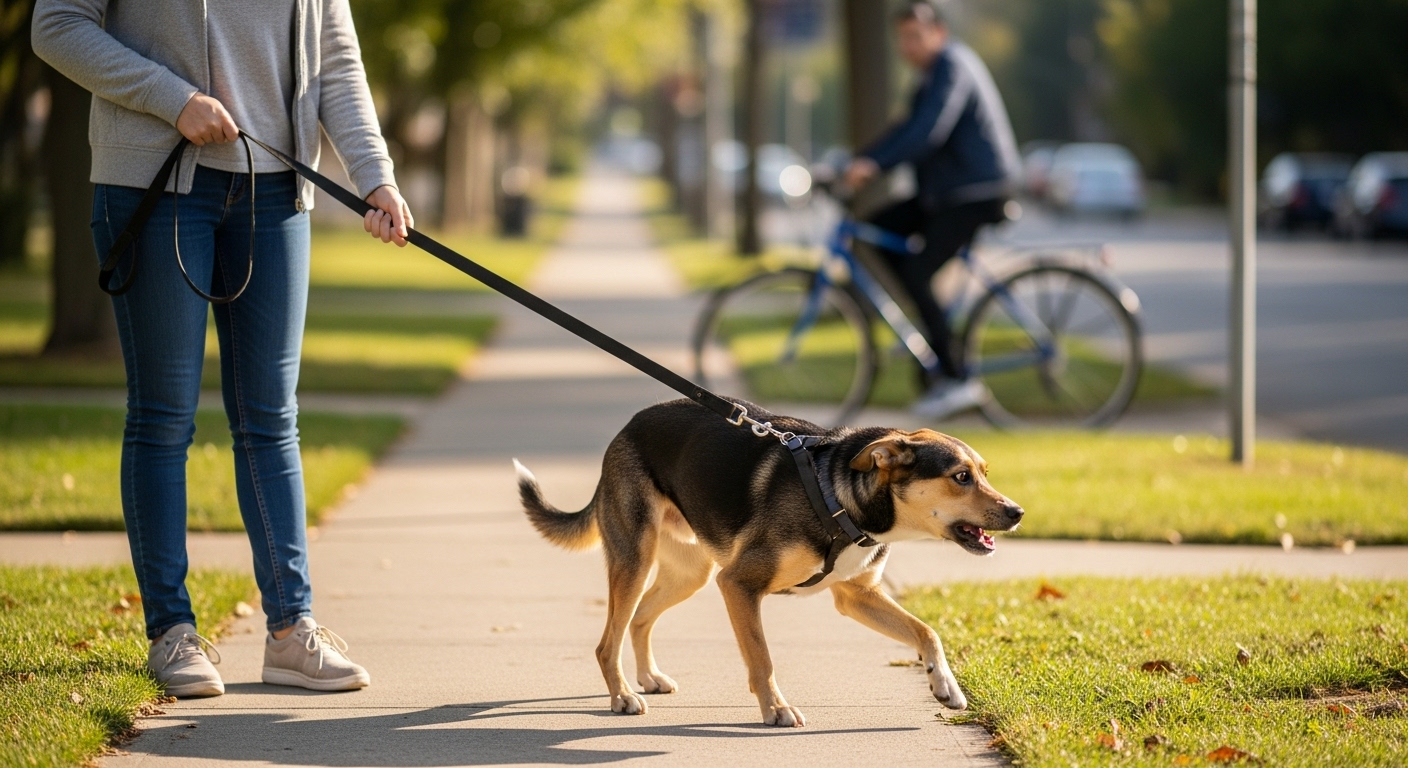
Taking your dog for a walk should be a relaxing, enjoyable experience. But for many owners, stepping outside feels like navigating a dangerous minefield. The moment your dog spots a bicycle, hears a loud delivery truck, or sees another dog across the street, they completely panic. They might freeze in their tracks, tuck their tail, or explode into a terrifying fit of barking and lunging on the end of the leash.
Living with a fearful or highly reactive dog is completely exhausting. You find yourself constantly scanning the environment, hiding behind parked cars, and apologizing to your neighbors. When your dog is trapped in a state of high anxiety, basic obedience commands simply will not work. Telling a terrified dog to sit is like telling someone with a fear of heights to calm down while standing on the edge of a cliff. To truly help your dog, you need a highly targeted psychological approach. This is exactly where professional dog desensitization training comes in.
Quick Answer: What is Desensitization Dog Training?
Dog desensitization training is a psychological process that gradually exposes a dog to their specific fears at a very low intensity, teaching them to remain calm. Instead of forcing a dog into a terrifying situation, professionals introduce the trigger from a safe distance where the dog does not feel threatened. When combined with counter conditioning, this method permanently changes the dog’s emotional response from panic to positive anticipation.
The Root Cause of Dog Fear or Anxiety
Before you can fix the problem, you must first understand why your dog is reacting so intensely. Most aggressive displays on a leash are actually rooted in pure fear and frustration. Dogs that lunge and bark are usually experiencing a severe fight or flight response. Because the leash restricts their movement and prevents them from running away, they feel entirely trapped. They choose to fight by barking loudly and lunging to scare the terrifying object away.
Sometimes it seems like a dog explodes out of nowhere, but in reality, they are suffering from trigger stacking. This happens when multiple small stressors build up over hours or days until the dog simply cannot cope anymore. For example, your dog might hear a loud thunderclap in the morning, have a delivery driver knock on the door at noon, and then see a skateboarder on their evening walk. The skateboarder causes an explosive reaction because their cortisol levels were already maxed out. Desensitization lowers their baseline stress so they can handle multiple triggers without overflowing.
Because desensitization and counter-conditioning require a certain level of mental maturity and focus, we strictly only accept dogs starting at 3.5 to 4 months old for our behavioral programs. We do not offer puppy classes or house training guarantees, allowing us to focus 100% of our expertise on rehabilitating severe anxiety, fear, and leash reactivity without the distraction of basic housebreaking.
The Importance of the Threshold Concept
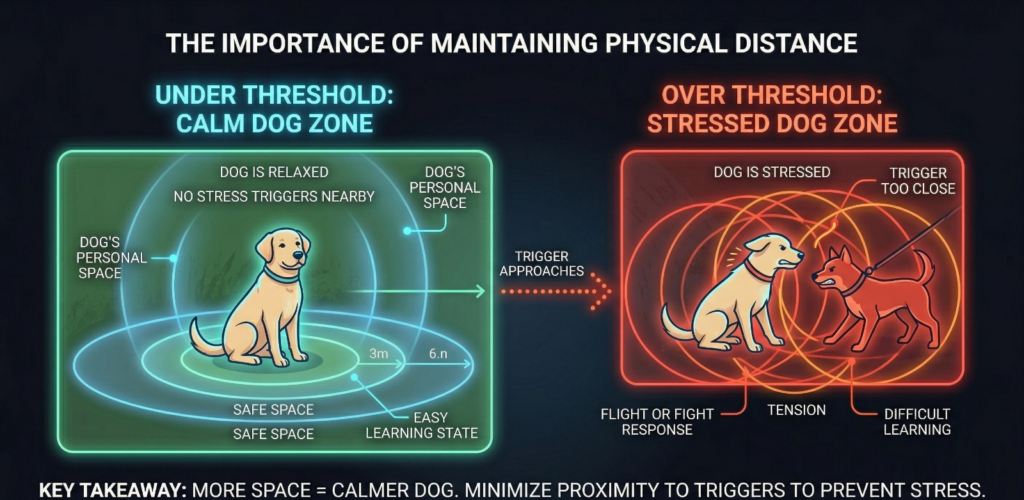
Every single dog has an invisible psychological boundary called a threshold. When your dog is at home resting on the couch, they are under threshold. They are calm, relaxed, and fully capable of listening to your voice. The moment they see their trigger outside and their heart rate spikes, they have crossed their threshold.
Once a dog crosses this invisible line, their brain enters pure survival mode. You cannot teach a dog anything new when they are fighting for survival. Dog desensitization training is entirely focused on keeping your dog under their threshold while slowly introducing the things that scare them.
The Science of Dog Desensitization Training
Systematic desensitization for dogs is a highly structured approach to overcoming environmental phobias. It is widely used in both human psychology and canine behavior modification. The ultimate goal is to repeatedly expose the dog to a severely weakened version of their trigger until they realize there is no danger and no longer care about it.
Why Distance is Your Best Friend
The easiest and most effective way to weaken a trigger is by increasing the physical distance between the dog and the scary object. If your dog is terrified of other dogs, standing ten feet away will cause a massive meltdown. However, if that other dog is a full football field away, your dog might notice them but remain completely calm. That massive distance is your starting point for dog desensitization training. Over a period of weeks and months, that distance is carefully reduced by just a few steps at a time. The dog is never pushed to the point of a reaction.
Counter Conditioning and Desensitization: The Perfect Pair
While desensitization teaches the dog to simply tolerate a scary trigger, counter conditioning teaches them to actually love it. These two techniques are almost always used together by professional behaviorists to guarantee maximum success.
Changing the Emotional Blueprint
Counter conditioning and desensitization work seamlessly by linking the scary trigger to a highly valuable reward. Think about a dog that absolutely hates the vacuum cleaner. If the vacuum appears in the room and the dog immediately receives a premium piece of steak, their brain starts to make a brand new connection. They learn that the appearance of the scary object directly predicts amazing things. Their emotional blueprint slowly changes from panic to happy anticipation.
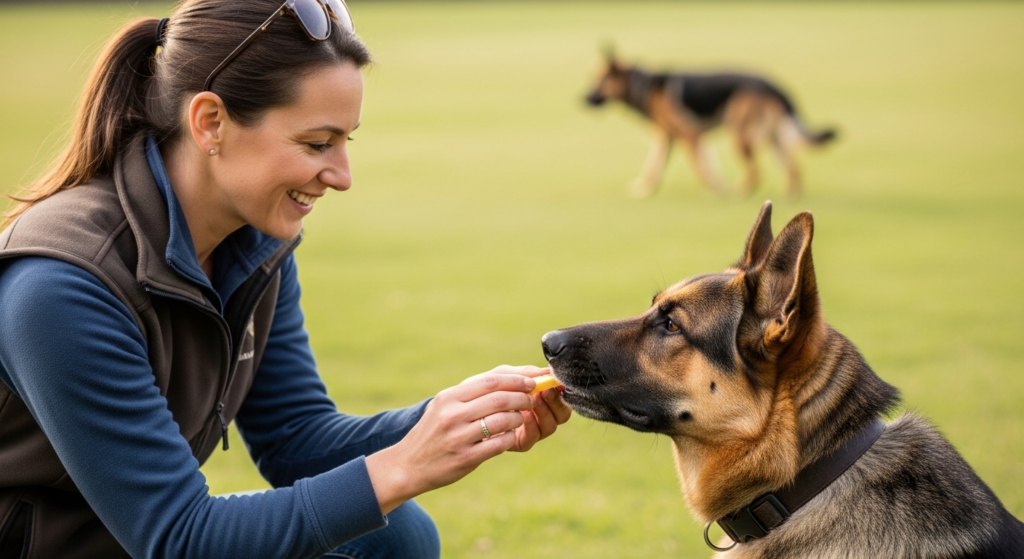
According to the American Veterinary Medical Association (AVMA) guidelines on animal behavior, proper gradual exposure combined with positive reinforcement is the most effective and humane way to prevent and treat behavioral fears. You are not just masking the fear with a physical command; you are completely rewiring how the canine brain processes the environment around them.
The Role of High Value Rewards
To make counter conditioning work, standard dry kibble will not cut it. You are competing with a highly stressful environment. You must use extremely high-value rewards that the dog only gets during these specific training sessions. Plain boiled chicken, small pieces of hot dog, or real cheese are powerful motivators. The reward must be so incredible that it overrides the dog’s instinct to panic.
How to Practice Desensitization Training Safely
If you want to try these methods at home, you must be incredibly patient. Rushing the process will ruin your progress and permanently break your dog’s trust in your leadership. Here is a basic overview of how we structure our professional rehabilitation sessions.
Step 1: Identify the Specific Triggers
Make a detailed list of exactly what causes your dog to panic. Is it men wearing large hats? Is it the hissing sound of air brakes on a garbage truck? Are they terrified of small, fluffy dogs but fine with large breeds? You need to know exactly what you are working with to create a highly controlled setup.
Step 2: Find the Starting Distance
Take your dog to an open area and find the exact distance where they first notice the trigger, but do not react. They should be able to look at the trigger and easily look back at your face. If they refuse to take a high-value treat, or if their body is stiff and they are staring intensely, you are way too close. Move further away until their body language completely relaxes.
Step 3: Mark and Reward
The moment your dog looks at the trigger from a safe distance, say a clear marker word like “Yes,” and immediately feed them the high-value reward. Repeat this process constantly. The dog looks at the scary object, you mark the behavior, and you deliver the reward. Over time, the dog will see the trigger and immediately look up at you, expecting their prize.
Step 4: Decrease the Distance Slowly
Once your dog is completely relaxed and eagerly anticipating treats at the starting distance, take two steps closer and repeat the entire process. If the dog reacts, you moved too close too fast. Back up to the previous successful distance and try again another day. Patience is the ultimate key to success.
Why Environment Dictates Success (The Dan Gentile Advantage)
Attempting counter conditioning and desensitization in a crowded city or a highly unpredictable suburban neighborhood is incredibly difficult. You might be practicing at a perfect safe distance when an off-leash dog suddenly runs up to you out of nowhere, completely ruining months of hard work. This is exactly why highly anxious dogs require a highly controlled setting to heal properly.
The Benefit of a 12 Acre Private Campus
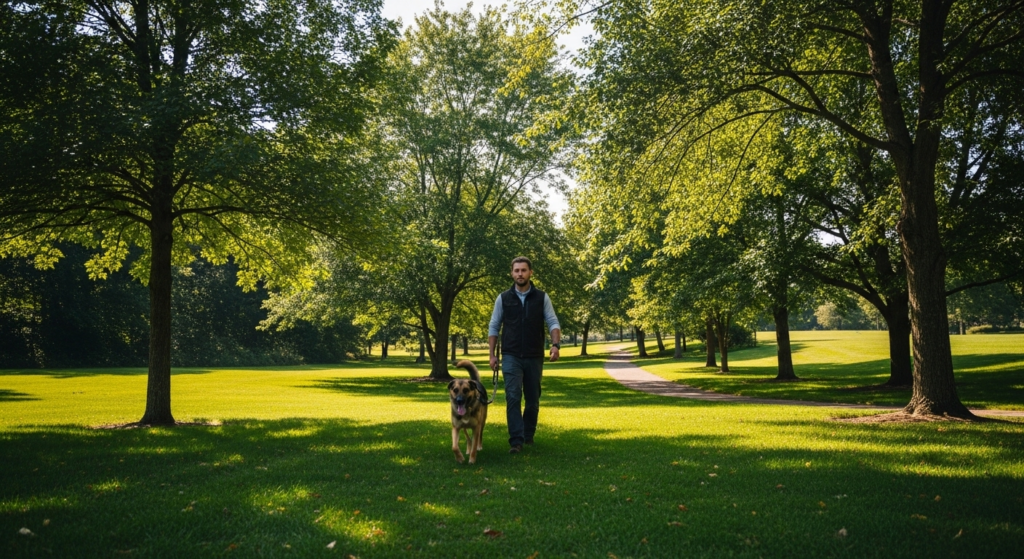
At the Dan Gentile Dog Training Center, we provide the ultimate environment for successful rehabilitation. Our massive 12-acre private campus in Howell Township gives your dog the physical space they desperately need to safely decompress. We control every single variable. We can introduce specific triggers at the exact distance your dog needs to feel safe. By practicing on quiet, secluded nature trails and real grass, we significantly lower your dog’s cortisol levels before the training even begins.
The Train While Boarding Solution
For dogs suffering from deep-rooted anxiety, standard weekly group classes are highly ineffective. Throwing a fearful dog into a tiny pet store room with ten other barking dogs will instantly push them into a state of pure panic. Instead, our immersive Train While Boarding model provides a much safer and highly structured alternative.
Your dog temporarily moves into our secure facility, where they receive daily, one-on-one instruction from behavioral experts with over 40 years of hands-on experience. We do the incredibly heavy lifting of professional dog habit correction training in Monmouth County for you. Once we successfully reset the dog’s emotional state and build their impulse control, we conduct a comprehensive turnover session to teach you exactly how to maintain their newfound confidence at home.
What Our Clients Say About Our Anxiety Rehabilitation:
My dog was absolutely terrified of everything outside, making walks impossible. The immersive program at Dan Gentile completely changed his life. He is so much more confident now, and the trainers showed me exactly how to keep him calm in stressful situations. Highly recommend!
Tammy, (Google Review)
Frequently Asked Questions About Desensitization
How long does dog desensitization training take?
The timeline for successful desensitization depends entirely on how deeply rooted the fear is and how long the dog has been practicing the bad behavior. Mild fears can be resolved in a few weeks of consistent work. Severe trauma or deep-rooted leash reactivity can take months of careful, daily practice to completely rewire the dog’s emotional response.
Can I use this method for loud noises like fireworks?
Yes, you can absolutely use dog noise desensitization techniques for loud sounds using audio recordings on your phone or television. You start by playing the sound of fireworks or thunderstorms at the absolute lowest volume setting while feeding your dog high-value treats. Over several weeks, you gradually increase the volume by one notch at a time as long as the dog remains totally relaxed. This type of canine anxiety desensitization is highly effective for building confidence during storm season.
Does desensitization work for older dogs?
Yes, you can absolutely change an older dog’s state of mind using these psychological techniques. While senior dogs have had more years to practice their fearful habits, their brains are still fully capable of learning new, positive associations through patient counter conditioning.
What is the difference between this and basic obedience?
Basic obedience teaches a dog a physical action like sitting or staying, whereas desensitization changes the underlying negative emotion causing the bad behavior. If a dog is terrified of a passing car, telling them to sit does not stop the internal fear. Desensitization stops the fear first so the dog can actually focus clearly on your obedience commands.
Ready to Help Your Dog Build True Confidence?
You do not have to spend the next ten years managing your dog’s anxiety and avoiding the outside world. Fearful behaviors rarely fix themselves. In fact, without proper professional intervention, reactivity usually gets much worse over time. If you are exhausted from trying to navigate stressful walks and limiting your lifestyle, it is time to trust the local experts.
With over four decades of proven success, Dan Gentile and his dedicated team have successfully rehabilitated thousands of highly reactive dogs across New Jersey, New York, and Pennsylvania. Our science-based methods build true confidence without ever relying on trendy internet gimmicks. We offer unparalleled support, including a free lifetime consultation guarantee, so you are never left to figure things out alone once your dog returns home.
If you are ready to get your peaceful life back, please Contact Us Today or call us directly at (732) 938-5040 to schedule a personal behavioral consultation at our Howell Township facility.
You can also view our exact location, get driving directions, and read community reviews directly on our Google Maps Listing. Let our team evaluate your dog and build a custom rehabilitation plan for a happier, healthier companion!