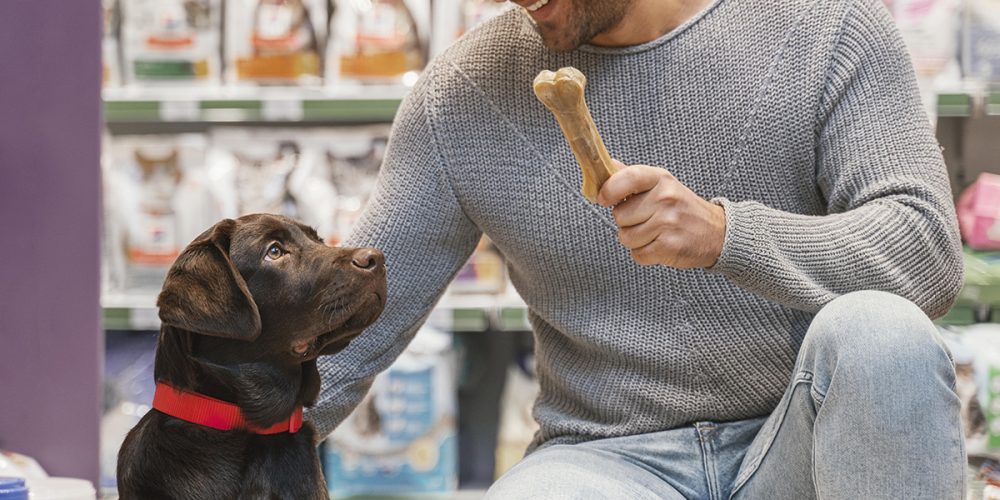
How to Use Dog Training Treats the Right Way
Training your dog requires work, patience, and clear communication on both your part and your dog’s part. During the learning phase, using dog training treats correctly can make your canine companion significantly more attentive, motivated, and happy.
However, many owners fall into the trap of accidentally teaching their dogs to only listen when there is food present. If your dog has “selective hearing” and ignores your commands unless you are holding a piece of cheese, you are likely misusing your rewards. Knowing how to use dog training treats the right way makes training far more effective and ensures that your dog respects you as a leader, rather than just viewing you as a food dispenser.
Quick Answer: Using Training Treats Effectively
When used correctly, dog training treats are powerful tools for positive reinforcement. The key is to use them to reward good behavior immediately after it occurs, rather than using them to bribe the dog into obeying. To prevent your dog from only listening when food is present, you must gradually fade the treats out by concealing them and varying the reward frequency once the command is learned.
Choosing the Right Dog Training Treats
Before you begin a training session, you must ensure you are using the right currency. Not all treats hold the same value in your dog’s mind. Knowing how to buy the right dog training treats ensures your dog stays healthy, focused, and highly motivated.
Always check ingredient labels for natural options and look for low-calorie treats, as you will be dispensing many of them during a single session. If you are practicing in a highly distracting environment (like a park or near other dogs), standard dry kibble usually will not work. Instead, opt for “high-value” rewards. Small pieces of cooked chicken, cheese, hot dogs, or liver serve as excellent choices when your dog seems less motivated by their normal, everyday treats. Just remember to give your dog all things in moderation and carefully monitor their daily calorie intake.
The Difference Between Luring and Bribery
The most common mistake owners make when using dog training treats is crossing the line from luring into bribery. Understanding this distinction is critical for long-term obedience.
Luring means using the treat to guide the dog into a new physical motion. For example, holding a treat in your hand and moving it from in front of the dog’s nose to behind its head naturally causes them to point their snout upwards, resulting in a “sit”. This technique is fantastic for teaching new tricks like jumping, rolling over, and lying down because it guides your dog into motion and makes the movement feel natural.
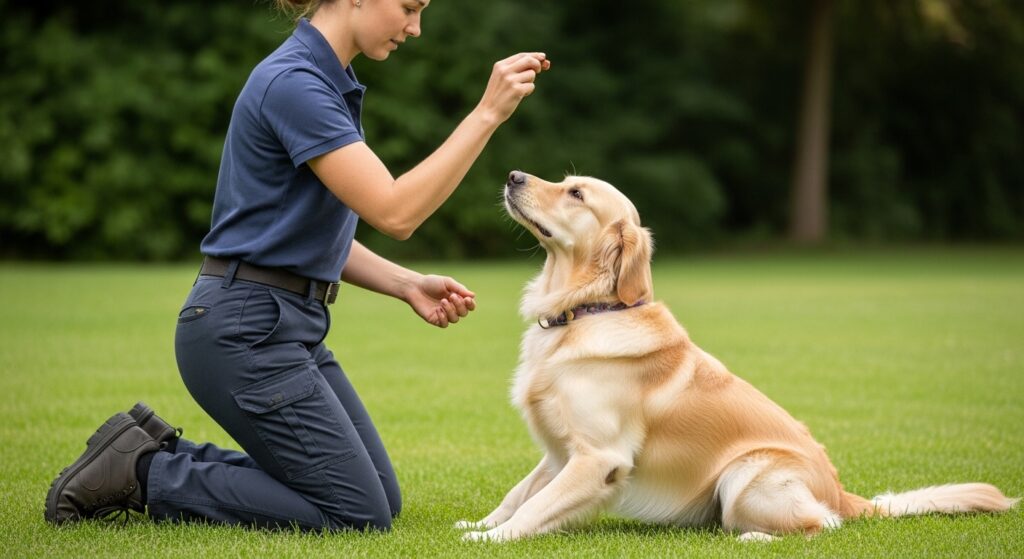
Bribery, on the other hand, happens when the dog already knows the command, refuses to do it, and the owner pulls out a treat to convince them. To ensure your dog respects your leadership, the treat must always be the payoff for obedience, never the negotiation tool.
Giving Treats as a Reward
To build a highly responsive dog, you must use treats strictly as a reward for good behavior. This creates positive reinforcement and motivates your dog to listen to your voice.
Timing is everything. You must provide the dog training treat immediately following the desired action so your dog can develop a clear psychological association between their behavior and the reward. If you ask your dog to sit, but you take ten seconds to fumble around in your pocket for the treat, the dog may think they are being rewarded for whatever they were doing at that exact ten-second mark, rather than the initial sit.
Concealing Treats and Phasing Them Out
During training, concealing the treats is a crucial step. Keeping the treats in plain view means your dog may only behave when they can visually confirm you have food. Try to hide the treats and keep them completely concealed in your hand or pocket until the dog successfully performs the action.
Once your dog has a firm grasp on the commands and behaviors, you must begin to phase out the use of treats. You do this by moving to a “variable reinforcement schedule.” Instead of rewarding every single successful command, you only provide a treat occasionally. This keeps the dog guessing and eager to please, much like how a slot machine keeps a person engaged.
Clear Expectations for Professional Training
While dog training treats are excellent for teaching basic commands at home, severe behavioral issues and deep-rooted reactivity require a professional, psychological approach. If you are considering professional help, it is important to understand our operational parameters at the Dan Gentile Dog Training Center.
We do not offer general puppy training classes. Our immersive Train While Boarding programs strictly accept dogs starting at 3.5 to 4 months old. Additionally, because our focus is on advanced obedience, impulse control, and behavioral modification, we do not guarantee house training or housebreaking. For younger puppies struggling with basic indoor habits, we provide a comprehensive house training guide for owners to follow at home until their dog is old enough to begin formal behavior modification.
Ready to Transform Your Dog’s Behavior?
You do not have to live with the stress of an uncontrollable or anxious dog, and you shouldn’t have to carry a pocket full of hot dogs just to get your dog’s attention. Professional intervention is the fastest, safest way to restore peace to your household. With over 40 years of hands-on experience, Master Trainer Dan Gentile and his dedicated team have the expertise to rehabilitate even the most stubborn behavioral issues using our immersive Train While Boarding program.
If you are ready to finally get the well-mannered companion you deserve, please Contact Us Today or call us directly at (732) 938-5040 to schedule your personalized evaluation.
Want to see where your dog will be learning to listen without the need for constant food bribes? Take a virtual tour of our massive 12-acre training campus and read hundreds of success stories on our Google profile right here. Let us help you build a lifelong bond of trust and respect with your dog!