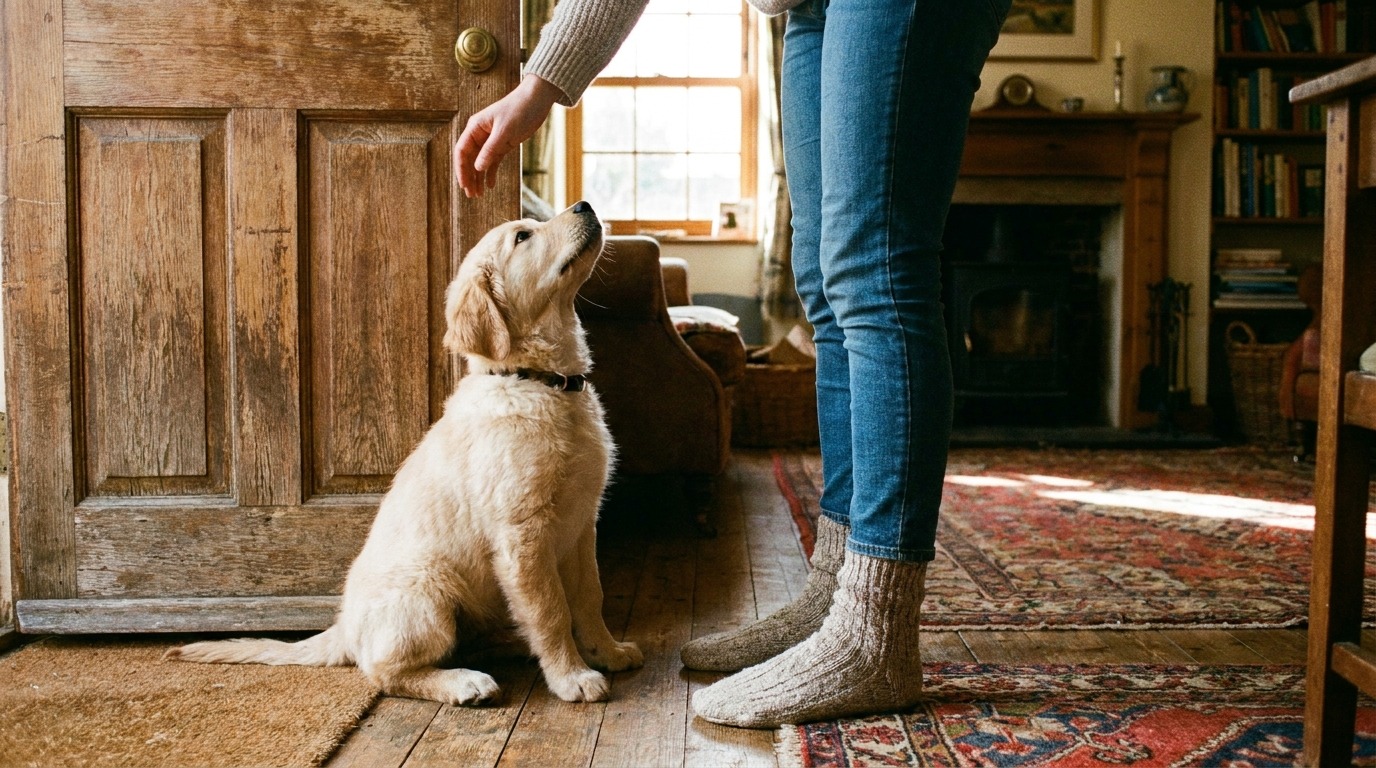
Puppy Potty Training Regression: Causes, Fixes, and How to Get Back on Track
You did everything right. The crate training was consistent, the schedule was airtight, and your puppy finally seemed to understand that outside is the bathroom. Then, out of nowhere, there is a puddle on the kitchen floor. And another one by the couch. And suddenly you are right back where you started.
Puppy potty training regression is one of the most frustrating experiences for dog owners, and it is far more common than most people realize. According to a community survey from Sniffspot, over 50% of dog owners reported experiencing at least one potty training regression with their pup. The good news? It is almost always temporary, and the solution is usually simpler than you think.
This guide covers every cause of puppy potty training regression, walks you through how to diagnose the real problem, and gives you a step-by-step plan to fix it. If your house-trained puppy has started having accidents again, you are in the right place.
Quick Overview: Puppy Potty Training Regression at a Glance
Puppy potty training regression happens when a previously house-trained puppy starts having indoor accidents again. It is not a sign of defiance or disobedience. It is a normal developmental hiccup that most puppies go through at some point between 4 and 12 months of age.
The most common triggers include developmental changes (growth spurts, teething, adolescence), medical issues like urinary tract infections, environmental stress, schedule disruptions, and giving a puppy too much unsupervised freedom too quickly.
Most cases resolve within one to two weeks when owners go back to basics: tighter supervision, more frequent potty breaks, consistent rewards for outdoor elimination, and a quick vet check to rule out anything medical. Punishment never helps and often makes regression worse.
What Is Puppy Potty Training Regression?
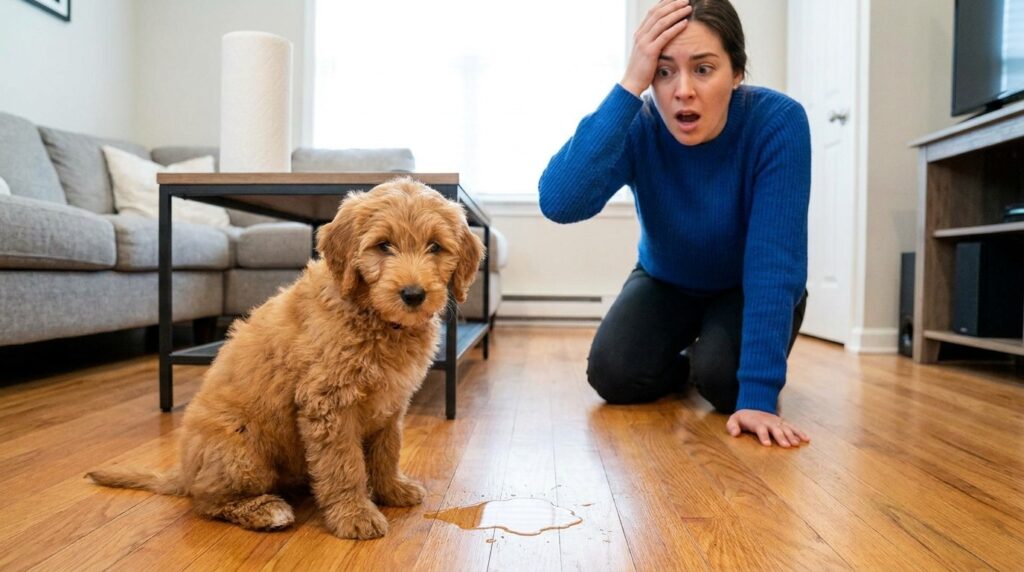
Potty training regression is a return to indoor accidents after a period of reliable house-training success. Your puppy knew the routine, followed the rules, and then stopped. It can look like peeing in the house after weeks of clean floors, pooping in corners your puppy never touched before, or suddenly refusing to eliminate outside.
This is different from a puppy who was never fully trained. Regression specifically means there was a period of success followed by a backslide. And that distinction matters, because the fix depends on understanding what changed.
One important thing to know: regression does not mean your training failed. It means your puppy’s brain, body, or environment shifted, and the habits that were forming got disrupted. Think of it the same way a child might start wetting the bed again during a stressful period. The skill was there. Something just knocked it off course.
When Does Puppy Potty Training Regression Typically Happen?
Regression can technically happen at any age, but certain windows are especially common.
4 to 5 Months Old
This is one of the most frequent regression windows. Puppies at this age are going through rapid growth, losing baby teeth, and processing a lot of new sensory information. Their brains are busy, and house-training habits that seemed solid can temporarily slip. Many owners notice a spike in accidents right around the time they thought the problem was solved.
6 to 8 Months Old (Adolescence)
Puppy adolescence is a major trigger for regression. Hormonal changes, including rising testosterone and estrogen levels, can throw off bladder control and increase territorial marking behavior. The AKC notes that full house-training reliability often takes 4 to 6 months of consistent work, and adolescence can reset part of that progress overnight.
9 to 12 Months Old
Some puppies hit a second regression wave during late adolescence, especially larger breeds that mature more slowly. Hormonal changes associated with sexual maturity peak during this window, and dogs who have not been spayed or neutered may exhibit increased marking behavior that looks like a house-training failure but is actually driven by biology.
After a Major Life Change (Any Age)
Moving to a new home, adding a new pet, a new baby, a change in the owner’s work schedule, boarding, travel: all of these can trigger regression regardless of age. Rescue dogs and rehomed dogs are especially susceptible because they are already navigating unfamiliar territory.
All the Causes of Puppy Potty Training Regression
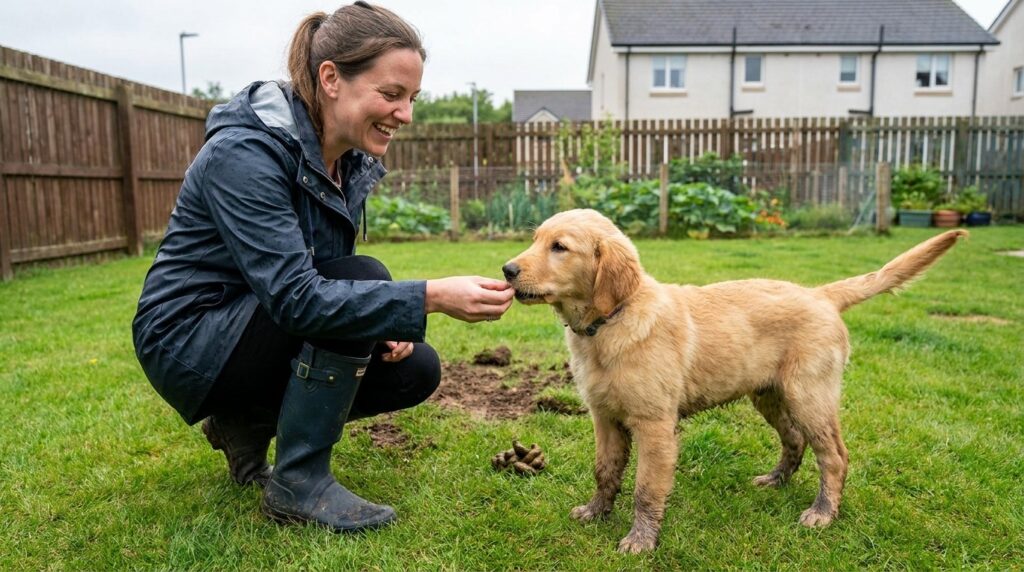
Getting the fix right starts with identifying the cause. Here is a comprehensive look at every known trigger.
Medical Issues
Urinary Tract Infections (UTIs)
UTIs are one of the most common medical causes of sudden regression. They create inflammation in the urinary tract, giving puppies an uncontrollable urge to urinate frequently. You might notice your puppy squatting more often, producing only small amounts of urine, or crying while peeing. PetMD recommends scheduling a veterinary visit if sudden, frequent urination develops, especially if it is accompanied by blood in the urine or excessive licking of the genital area.
Gastrointestinal Problems
Diarrhea from dietary changes, food sensitivities, or intestinal parasites can make it physically impossible for a puppy to hold it. Parasites are particularly common in young puppies and can cause urgent, loose bowel movements that no amount of training can prevent. A stool sample at your vet’s office can rule this out quickly.
Other Medical Conditions
Less common but worth knowing about: bladder stones, kidney issues, diabetes, and Cushing’s disease can all cause increased urination. Spinal problems or injuries may affect a dog’s ability to control elimination. If your puppy’s regression comes on suddenly with no obvious environmental trigger, a thorough vet exam should be your first step.
Developmental and Hormonal Changes
Growth Spurts and Teething
Rapid physical growth demands enormous energy from a puppy’s body. During growth spurts, the brain is juggling so many new inputs that learned behaviors, including house training, can temporarily take a back seat. Teething creates additional stress and discomfort that diverts attention away from learned routines.
Adolescent Hormone Surges
Rising sex hormones during adolescence (typically 6 to 12 months) affect bladder control and trigger marking instincts. Male puppies may begin lifting their legs indoors, and female puppies may have more frequent urination around their first heat cycle. These hormonal shifts are biological, not behavioral, and they require patience rather than punishment.
Emotional and Environmental Triggers
Stress and Anxiety
Dogs are deeply sensitive to their environment. Loud noises (fireworks, thunderstorms, construction), new people in the home, conflict between household members, and separation anxiety can all cause stress-related accidents. Submissive urination, where a puppy pees when greeting people or during moments of excitement, is another stress response that can mimic regression.
Changes in Routine
Puppies thrive on predictability. A new work schedule, different feeding times, a switch in who handles morning walks, or even rearranging furniture can disrupt the cues your puppy relies on to know when and where to go. Consistency is the backbone of house training, and any crack in the routine can trigger a backslide.
New Environments
Moving to a new home, visiting relatives, or staying at a pet sitter’s house introduces unfamiliar smells, sounds, and layouts. Your puppy may not recognize the new space as their territory and may not understand where the approved potty area is. This is especially common during holiday travel or after a boarding stay.
Training and Management Gaps
Too Much Freedom, Too Soon
This is one of the most common owner-side causes. Once a puppy has a few clean weeks, it is tempting to let them roam the whole house unsupervised. The problem is that house training is not fully reliable until a puppy has demonstrated months of consistent success, not just weeks. Giving freedom too early removes the structure that was holding the training together.
Inconsistent Reinforcement
If rewards for outdoor elimination become sporadic (or stop entirely once the puppy seems to get it), the behavior is not as solidly reinforced as it appears. Puppies need continued positive feedback during the learning phase. Fading rewards too early can lead to a regression because the habit is never fully cemented.
Punishment After Accidents
Scolding a puppy after finding an accident (even seconds later) does not teach them to go outside. It teaches them to hide when they need to eliminate, which often means they start sneaking off to closets, behind furniture, or into rooms where you cannot see them. This creates a worse problem than the original regression.
Inadequate Cleanup of Previous Accidents
Dogs can detect urine residue that is completely invisible and odorless to humans. Standard household cleaners, especially ammonia-based products, do not eliminate the scent markers. If a spot still smells like a bathroom to your puppy, they will return to it. Enzymatic cleaners are the only reliable solution.
How to Diagnose the Cause of Your Puppy’s Regression
Before you can fix the problem, you need to figure out what is actually driving it. Here is a diagnostic approach that works.
Step 1: Rule Out Medical Issues First
Always start here. Schedule a vet visit and request a urinalysis, a fecal exam, and a general health check. Medical causes like UTIs and parasites are easy to treat but impossible to solve with training alone. If your vet gives the all-clear, move to environmental and behavioral factors.
Step 2: Start a Potty Training Log
For one full week, record every single accident and every successful outdoor trip. Note the time, location, what happened just before (eating, playing, sleeping, being left alone), and how long it had been since the last outdoor break. Patterns will emerge quickly. You might discover that all accidents happen within 20 minutes of meals, or that they cluster on days when the puppy is left alone longer than usual.
Step 3: Evaluate Recent Changes
Ask yourself: what changed in the past two to four weeks? New schedule? New pet? New food? Construction nearby? Guests staying over? Stopped using the crate? Reduced the number of daily potty breaks? Even small changes can trigger regression in sensitive puppies.
Step 4: Assess the Level of Freedom
Take an honest look at how much unsupervised access your puppy has. If they are roaming freely through multiple rooms for hours at a time, that is likely part of the problem. Tightening up their space does not mean permanent confinement. It means matching their freedom to their demonstrated reliability.
Step-by-Step Fixes for Puppy Potty Training Regression
Once you have identified the cause (or at least narrowed the possibilities), it is time to act. These fixes work for the vast majority of regression cases.
Go Back to Basics
Treat your puppy like a brand-new house-training project. That means restarting the fundamentals as if day one just began. Take your puppy out first thing in the morning, after every meal, after every nap, after every play session, and before bedtime. For puppies under 6 months, the AKC recommends outdoor trips every one to two hours during the day. Do not wait for your puppy to signal that they need to go. Act proactively.
Tighten Supervision and Restrict Access
Use baby gates, closed doors, and the crate to limit your puppy’s roaming area. If they are in the room with you, keep them on a leash tethered to your belt or to a nearby piece of furniture so you can catch pre-accident signals (sniffing, circling, moving toward a corner). If you cannot actively watch them, they should be in their crate.
Reinstate Crate Training
The crate is not a punishment. It is the single most effective house-training tool available because dogs naturally avoid soiling their sleeping area. Make sure the crate is properly sized: large enough for your puppy to stand, turn around, and lie down, but not so large that they can use one end as a bathroom. A housebreaking guide from Dan Gentile Dog Training puts it simply: think den, not condo.
Reward Outdoor Success Every Single Time
This is not the time to assume your puppy knows the deal. Every successful outdoor elimination gets an immediate reward: a high-value treat, enthusiastic verbal praise, and a moment of play. The reward must happen within three seconds of the puppy finishing, not when they come back inside. Timing is everything in positive reinforcement.
Use Enzymatic Cleaners on Every Accident Spot
Standard cleaners mask odors to the human nose but leave behind scent molecules that a dog can still detect. Enzymatic cleaners break down urine proteins at the molecular level. Soak the area thoroughly and let the cleaner sit according to the manufacturer’s directions. For carpeted areas, you may need to treat the padding underneath as well.
Set Phone Alarms for Potty Breaks
Relying on memory alone is risky, especially during a regression. Set recurring alarms on your phone based on your puppy’s age and bladder capacity. The general guideline, as outlined by the AKC, is that a puppy can hold their bladder for roughly one hour per month of age (a 3-month-old gets about 3 hours, a 5-month-old gets about 5). During regression, err on the shorter side.
Use a Consistent Potty Command
Pick a cue like “go potty” or “do your business” and use it consistently every time you take your puppy to the designated spot. Over time, this verbal cue becomes associated with the act of elimination and can help prompt your puppy to go on command, which is incredibly useful during bad weather, rushed mornings, or travel.
Adjust the Schedule if Needed
If your puppy has been having accidents 15 minutes after meals, adjust your post-meal outdoor trip to happen 10 minutes after eating instead. If nighttime accidents are the issue, move the last water bowl pickup to two hours before bedtime and add a final outdoor trip right before lights out. Small timing adjustments can make a big difference.
Never Punish Accidents
Rubbing a puppy’s nose in an accident, yelling, or swatting them does not work. Full stop. It creates fear, erodes trust, and teaches the puppy to hide their elimination rather than do it in the right place. If you catch your puppy mid-accident, calmly interrupt with a sharp sound (a clap or a quick “ah-ah”), scoop them up, and take them outside immediately. Reward them if they finish outdoors.
Handling Regression in Specific Situations
Submissive or Excitement Urination
Some puppies pee during greetings, when they are excited, or when they feel intimidated. This is not a house-training problem. It is an involuntary response tied to emotional arousal. The fix involves keeping greetings low-key (crouch down, avoid direct eye contact, let the puppy come to you), building confidence through positive training, and waiting it out. Most puppies outgrow submissive urination as they mature and gain confidence.
Marking Behavior in Adolescent Dogs
Marking, which involves small amounts of urine deposited on vertical surfaces, is hormonally driven and typically appears during adolescence. It is not the same as a full-bladder accident. Spaying or neutering can reduce marking behavior significantly, but management strategies (supervision, belly bands for males, restricting access to frequently marked areas) are also effective. Cleaning marked spots with enzymatic cleaners is critical to prevent repeat offenses.
Regression After Boarding or Travel
A change of environment disrupts every habit your puppy has formed. After returning home from boarding, a vacation, or a stay with a pet sitter, expect a brief adjustment period. Go back to the beginner schedule for a few days, re-establish the familiar routine, and give your puppy time to readjust. Most dogs bounce back within a week.
Regression in Rescue or Rehomed Dogs
Dogs coming from shelters, foster homes, or previous owners may never have had consistent house training in the first place. What looks like regression might actually be gaps in their original training. Approach the situation with patience and zero assumptions. Start the house-training process from scratch, use heavy positive reinforcement, and give the dog several weeks to adapt to their new routine.
Preventing Future Potty Training Regression
Once you have gotten through a regression episode, these strategies help prevent the next one.
Extend Freedom Gradually
Add one room at a time. Let your puppy prove they can stay clean in the kitchen for two weeks before opening up the living room. If accidents happen in the new area, scale back immediately. Patience here saves enormous frustration later.
Maintain the Reward Schedule Longer Than You Think Necessary
Keep rewarding outdoor elimination for at least six months after your puppy seems fully trained. Fading too early is one of the top reasons for regression. Treats can become intermittent (every other success, then every third), but do not eliminate them entirely until the habit is rock-solid across different environments, weather conditions, and times of day.
Keep a Consistent Daily Routine
Feed at the same times. Walk at the same times. Crate at the same times. Puppies build house-training habits around predictable patterns, and those patterns need to remain stable through the first year. If a schedule change is unavoidable (a new job, for instance), transition gradually over a week rather than switching overnight.
Continue Crate Training Through the First Year
Even if your puppy seems fully reliable, keeping the crate as part of the routine through the first year provides a safety net. It gives your puppy a safe space, helps during unsupervised periods, and makes recovery from future regressions much faster because the structure is already in place.
Stay Alert to Health Changes
Annual vet checkups (or biannual for young puppies) help catch medical issues before they cause behavioral symptoms. If your dog suddenly starts having accidents after months of clean living, schedule a vet visit before assuming it is a training problem. Check out our comprehensive guide on Puppy Potty Training in 7 Days.
When to Seek Professional Help
Most potty training regressions resolve within one to two weeks of returning to basics. Sometimes, though, the problem runs deeper than a DIY fix can handle.
Consider reaching out to a professional dog trainer if:
- The regression has lasted more than three to four weeks despite consistent training efforts
- Your puppy shows signs of severe anxiety (trembling, destructive behavior, excessive barking when left alone)
- Marking behavior is escalating rather than improving
- Multiple dogs in the household are having issues (which can indicate environmental triggers or social dynamics)
- You are unsure how to read your puppy’s body language or identify what is triggering the accidents
- Medical causes have been ruled out and the problem persists
A professional trainer can observe your specific situation, identify triggers you might be missing, and build a customized plan that accounts for your puppy’s temperament, your home layout, and your daily schedule. Programs that combine structured board-and-train environments with owner education tend to produce the most reliable long-term results, because the puppy learns in a controlled setting and the owner learns how to maintain those results at home.
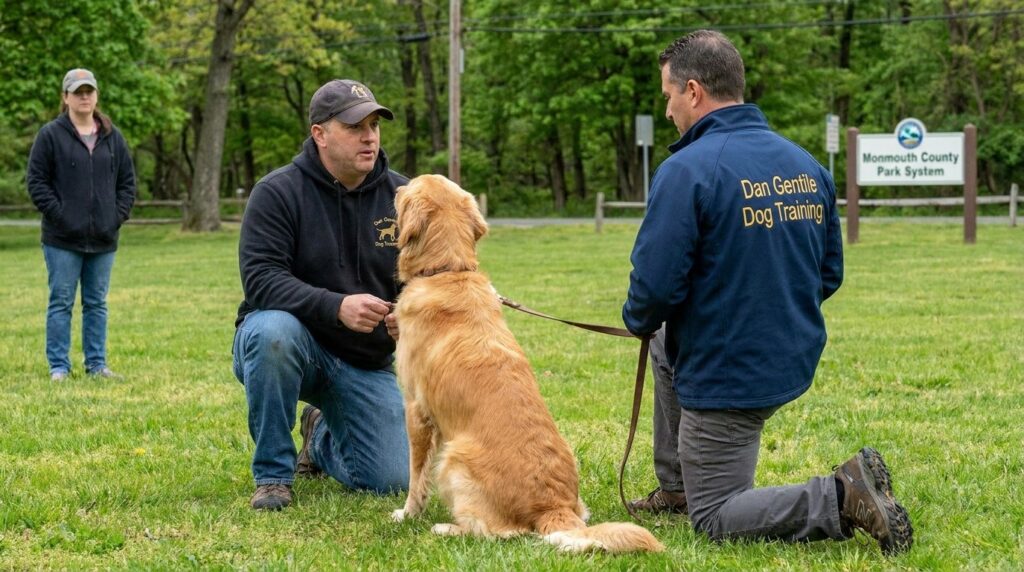
Dan Gentile Dog Training: Trusted Expertise in Puppy Potty Training and Behavior
Solving puppy potty training regression takes experience, patience, and a deep understanding of canine behavior. At Dan Gentile Dog Training, those qualities are not aspirational goals. They are the foundation of a 40-year track record.
Dan Gentile, a distinguished graduate of Cornell University and former apprentice to top international dog trainers, built his training center in Howell Township, Monmouth County, New Jersey from the ground up. The 12-acre facility has trained over 2,500 dogs and earned a 4.3-star Google rating from thousands of satisfied owners across 13 New Jersey counties, including Monmouth, Ocean, Middlesex, Bergen, Mercer, Essex, Morris, and beyond.
What makes the Dan Gentile approach different from typical obedience classes or online training programs is the immersive, results-driven model at the center of everything they do.
The signature Train While Boarding program places your puppy in a structured, professional training environment for two to three weeks. During that time, your dog follows a customized daily routine that addresses obedience, behavior modification, and house-training reinforcement, all in a controlled, low-distraction setting supervised by Dan Gentile himself. This is not a kennel that happens to offer training. It is a training facility that provides boarding as part of a proven method.
The program includes:
- Full obedience training with a guarantee (Sit, Down, Stay, Come, Heel, Leave It)
- Housebreaking support integrated into the daily training structure
- Habit correction training for issues like jumping, nipping, barking, and destructive chewing
- Owner instruction sessions so you know exactly how to maintain your dog’s progress at home
- Free lifetime consultations after graduation, because training does not end when the program does
The facility itself reflects the care behind the program. Climate-controlled kennels, a veterinarian on call 24 hours a day, 7 days a week, 24-camera security with a monitored alarm system, and 12 acres of dedicated training space provide a safe, stress-free environment where puppies can learn without the distractions and anxieties that complicate training in a home setting. As a veteran-owned business, the center operates with a discipline and commitment to excellence that has earned the trust of families throughout New Jersey.
Dan Gentile’s team also specializes in puppy training for dogs as young as 3.5 to 4 months, the exact age range where house-training habits are forming and regression is most likely to occur. Starting professional training early does not just fix current problems. It prevents future ones.
For families dealing with potty training regression who want expert help, the Dan Gentile team is reachable at (732) 938-5040 or through the contact page at njdog.com. The center serves all of New Jersey, with families regularly traveling from Pennsylvania and New York for training that produces lasting results
Frequently Asked Questions About Puppy Potty Training Regression
Is it normal for a potty-trained puppy to start having accidents again?
Completely normal. Puppy potty training regression affects over half of all dog owners at some point. It is especially common during the 4-to-5-month and 7-to-9-month age ranges. Regression does not mean your training failed. It usually signals a developmental change, a medical issue, or an environmental disruption that is fixable.
How long does puppy potty training regression last?
Most regressions resolve within one to two weeks if you return to basics immediately: more frequent potty breaks, tighter supervision, consistent rewards, and crate training. Adolescent-driven regressions tied to hormonal changes may take three to four weeks. If regression persists beyond a month, consult your veterinarian and consider professional training support.
Should I punish my puppy for having accidents during a regression?
No. Punishment does not teach a puppy where to go. It teaches them to fear you and to hide their elimination. Positive reinforcement for outdoor success, combined with calm redirection when you catch an accident in progress, is the only effective approach.
Could my puppy’s regression be caused by a medical problem?
It absolutely could. Urinary tract infections, intestinal parasites, gastrointestinal issues, and other medical conditions can all cause sudden house-training breakdowns. A vet visit with urinalysis and fecal exam should be your first step whenever regression appears without an obvious behavioral trigger.
Does spaying or neutering help with potty training regression?
It can help, particularly with hormonally driven marking behavior during adolescence. Spaying or neutering reduces the hormonal surges that trigger territorial marking, but it is not a cure-all. Training and management remain essential regardless of your dog’s reproductive status.
My puppy only has accidents when I am not home. What should I do?
Accidents that only occur during your absence usually indicate too much unsupervised freedom or separation-related stress. Crate training during alone time is the most effective solution. Make sure the crate is appropriately sized, provide a safe chew toy, and keep absences short initially, gradually increasing duration as your puppy proves reliable.
How often should I take my puppy outside during a regression?
During a regression, increase the frequency of outdoor trips. A good starting point is every one to two hours for puppies under six months and every two to three hours for older puppies. Always go out immediately after meals, naps, play sessions, and first thing in the morning. Set phone alarms so you do not lose track of time.
Can a change in food cause potty training regression?
A sudden diet change can cause gastrointestinal upset (loose stools, increased urgency) that mimics regression. If you need to switch your puppy’s food, transition gradually over 7 to 10 days, mixing increasing proportions of the new food with the old. This gives the digestive system time to adjust.
Conclusion
Puppy potty training regression feels like a setback, but it is really just a detour. Almost every puppy goes through it, and almost every case resolves with a return to consistent training, appropriate supervision, and a bit of patience.
The key is to act quickly. Go back to the basics that worked the first time. Rule out medical issues with a vet visit. Tighten up supervision and crate use. Reward every outdoor success like it is the first time your puppy got it right. And resist the urge to punish, because fear creates more problems than it solves.
If the regression persists or you want expert guidance tailored to your specific situation, Dan Gentile Dog Training has been helping New Jersey families solve exactly these kinds of challenges for over four decades. From their immersive Train While Boarding program to puppy-specific training starting at 3.5 months, the team at njdog.com has the experience, the facility, and the proven track record to get your puppy back on track and keep them there.
Your puppy has not forgotten everything you taught them. They just need a refresher, and now you have the complete playbook to make it happen.
Enjoy This Article? You May Also Like:
- How to Potty Train a Puppy in 7 Days: A Professional Trainer’s Day-by-Day Blueprint
- Dog Board and Train vs Private Lessons: An Honest Comparison to Help You Choose
- Dog Food Aggression: What It Really Is, Why It Happens, and How to Handle It Safely
- Hardest Dog Breeds to Train: What Makes Them Difficult and What Actually Works