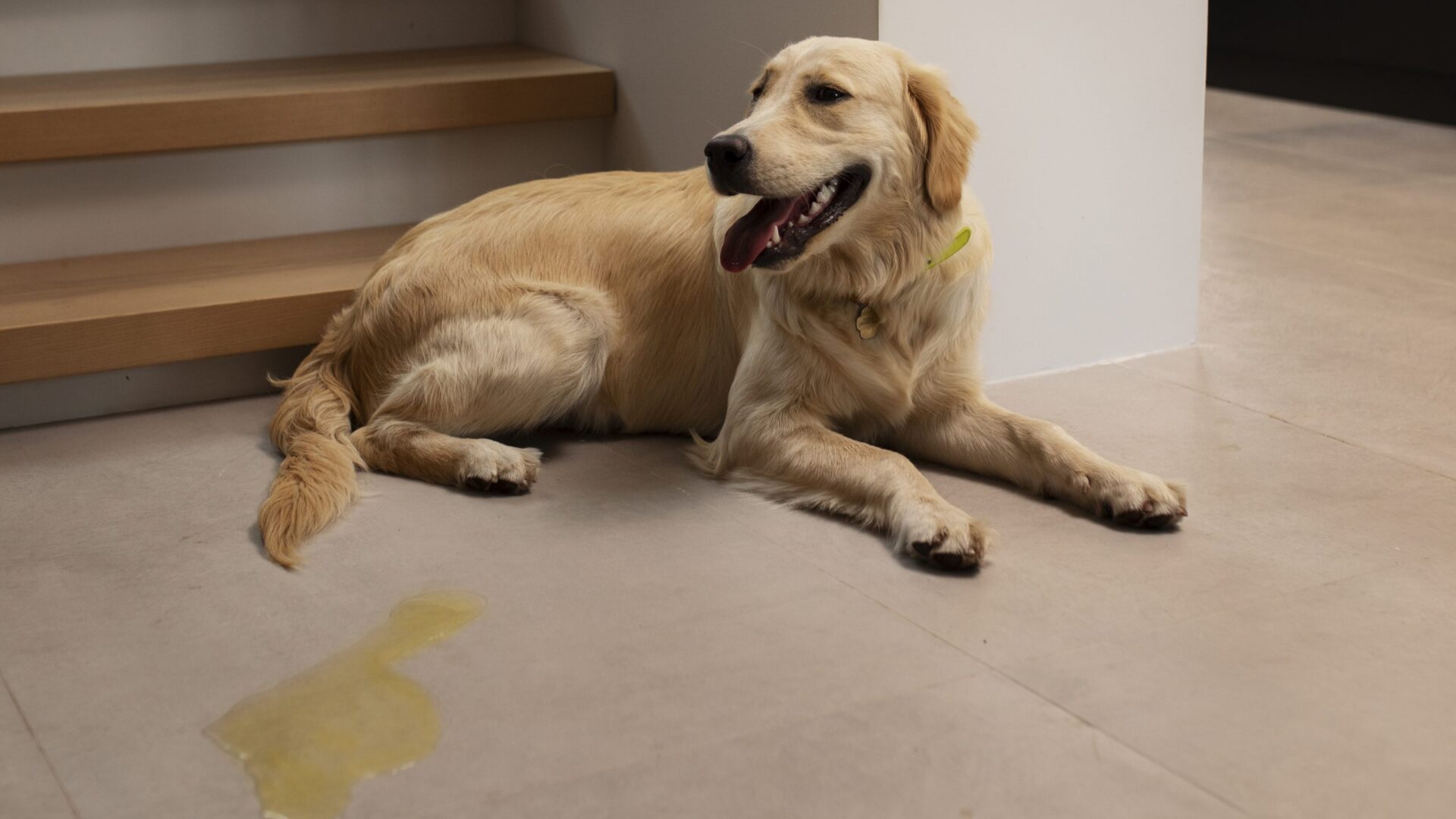
5 Things to Do When Dog Keeps Peeing in House
Pet owners know how hard it is to housebreak a dog. However, if your dog keeps peeing in the house, these five simple tips and this effective dog housebreaking training guide from The Dan Gentile Dog Training Center will help with the house training.
Quick Answer: Why Your Puppy Keeps Peeing in the House
If your puppy keeps peeing in the house, it is usually a scheduling issue, not bad behavior. To stop indoor accidents quickly, follow these three rules:
Take them out immediately: Go outside the second they wake up, after they eat, and after hard play.
Control their free roaming: Never let an unhousebroken puppy wander your house unsupervised. Use a crate or a leash.
Ditch the potty pads: Indoor pads confuse your puppy by teaching them it is acceptable to pee inside on soft squares.
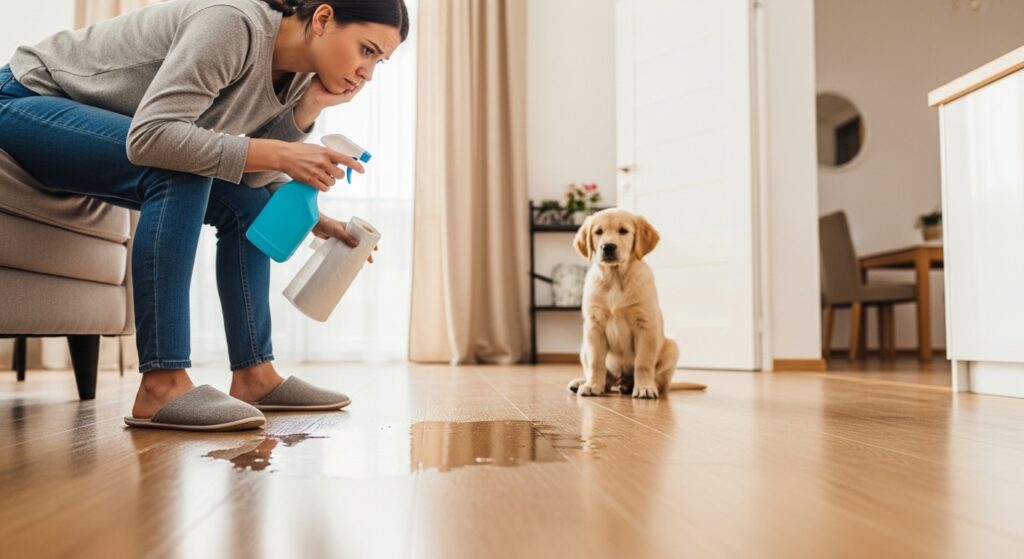
The Biological Reality of a Puppy Bladder
Before you get angry that your puppy keeps peeing in the house, you have to understand their biology. A young puppy physically lacks the muscle development to hold their bladder for long periods.
A general rule of canine development is that a puppy can hold their urine for one hour per month of age, plus one. This means a two-month-old puppy has an absolute maximum limit of three hours. If you are trying to make an eight-week-old puppy wait five hours while you work, they are going to fail every single time. Setting them up for success requires a strict, proactive schedule, not just reacting after the puddle is already on the floor.
Why Potty Pads Sabotage Your Training
When owners get frustrated by constant accidents, they often buy a box of indoor potty pads. This is a massive mistake.
Potty pads actually train your puppy to pee in the house. You are teaching them that it is perfectly acceptable to eliminate on soft, square materials on your floor. When you take the pad away, the puppy will naturally look for the next closest thing, which is usually your expensive living room rug or your bath mat.
Dan Gentile has spent decades fixing the confusion caused by potty pads. True housebreaking requires teaching the puppy that the only acceptable bathroom is the grass outside.
Using the Crate as a Training Tool
If you allow a new puppy to roam your house freely, they will sneak into a quiet corner and pee. You have to limit their freedom until they earn it.
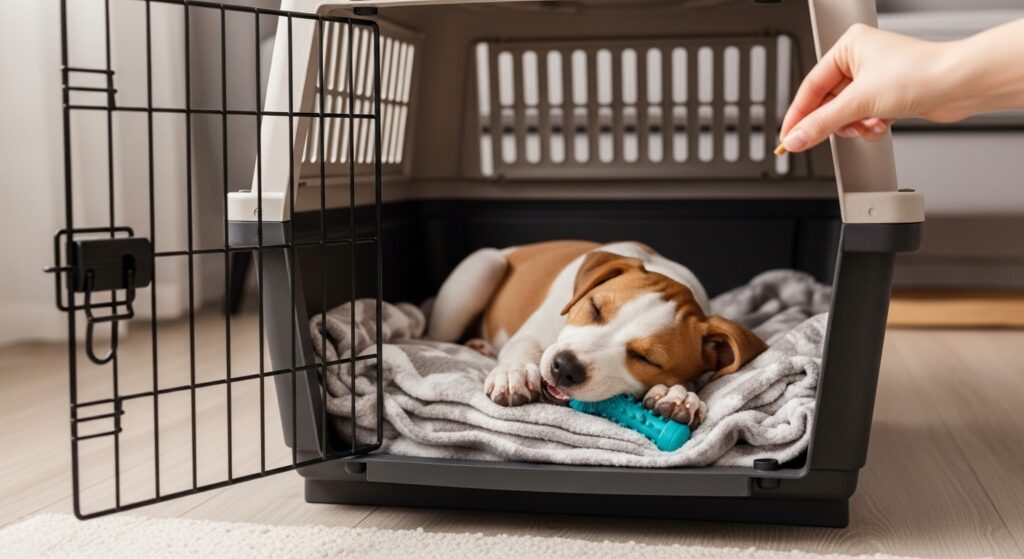
Dogs are den animals. They possess a natural instinct to keep their sleeping area clean. Properly sizing a crate is the ultimate housebreaking hack. The crate should only be large enough for the puppy to stand up, turn around, and lie down. If it is too big, they will pee in one corner and sleep in the other.
At the Dan Gentile Dog Training Center, we teach local families exactly how to utilize crate training without making it feel like a punishment. You can read how our structured foundations build perfect house manners on our Dog Training Program in Monmouth page. Our Board & Train Program takes the guesswork out of puppy training right here on our 12 acre Howell Township campus, ensuring you skip the sleepless nights and the ruined carpets.
The 5 Things to Do When Your Puppy/Dog Keeps Peeing in the House
1. Reward Over Consequence
Young pups respond better to positive reinforcement than scoldings or punishments. Therefore, rather than getting mad when your dog keeps peeing in the house, reward them for the times they do make it outside.
When you give your dog a treat every time they urinate outside, they’ll learn that going outside is the right thing to do. You can stop giving them treats once they grow up and fully resolve the behavioral issue. By then, these habits will be second nature to them.
2. Keep a Close Eye on Them
Puppies don’t know there’s a right and wrong place to relieve themselves. However, if you bring them outside enough times, they’ll think of grassy areas as their bathroom. Soon, they won’t want to go indoors.
Unfortunately, this method requires you to watch over your puppy like a hawk. Yet, placing them outside when they begin looking for a place to pee will quickly curb their housebreaking issues.
3. Introduce Your Dog to Every Room in the House
A common reason young dogs urinate indoors is that they don’t view the space as their own. Dogs pee to mark their territory, and more importantly, they urinate in spots where they don’t spend much time. So, they don’t think they’ll inconvenience themselves by dirtying that area.
If you spend time with your dog in every part of your home, they’ll start viewing the space as their own and won’t want to pee there anymore. This strategy is one of the quickest training methods if your dog keeps peeing in the house. All it takes is a couple of hours playing in each room to keep your pup from treating it as a toilet.
4. Eliminate Indoor Urine Stains and Odors
Avoiding inappropriate urination when you have a young dog is impossible. Yet, you can easily limit repeat offenses in the same spots.
Dogs are more likely to urinate in places they’ve gone before because their instincts tell them it’s safe. However, if you remove the urine scent and stain, they won’t be able to track that location.
Similarly, if your dog has a designated pee spot outside, they’re more likely to return if they can track the odor.
5. Set Up Professional House Training
Getting a young pup to learn anything can be a time-consuming challenge. Most of us can’t train our dog without suffering through a few accidents first.
Luckily, The Dan Gentile Dog Training Center knows how to get through to young animals. We can help if your dog keeps peeing in the house. Professional obedience training establishes the consistent routines and clear communication that stop indoor accidents for good.
Call The Dan Gentile Dog Training Center today at (732)-938-5040 to enroll your dog in house training. We’ll also help you learn more about the reasons behind your dog’s destructive chewing.
Frequently Asked Questions About Puppy Housebreaking
Should I rub my puppy’s nose in their pee?
Absolutely not. This is an outdated and abusive myth. Rubbing a puppy’s nose in their accident does not teach them not to pee in the house. It only teaches them to be terrified of you. They will simply start hiding behind the couch to pee so you do not catch them.
Why does my puppy pee right after we come back inside?
This is incredibly common. The outside world is highly distracting. Your puppy goes outside, gets distracted by a blowing leaf or a neighbor, and completely forgets they had to pee. The second they step back into the boring, quiet house, their bladder relaxes and they eliminate. To fix this, you must stand perfectly still outside and wait for them to pee before allowing any playtime.
How long does it take to fully housebreak a puppy?
Every dog is different, but consistent housebreaking usually takes between four to six months. If you are struggling to build a routine, professional puppy training can drastically speed up the process. Our immersive puppy boot camp at our Monmouth County facility establish rock solid routines in just a few weeks.
Enjoy This Article? You May Also Like:
- Puppy Potty Training Schedule: A Step-by-Step Guide for Success
- The Ultimate Guide to Dog Recall: Safety, Freedom, and Reliability
- Dog Stress Signals: 10 “Silent” Signs of Anxiety Your Dog is Showing You
- Dog Recall Training: A Complete Guide to a Dog That Comes Every Time
If your house-trained puppy has suddenly started having accidents again, our guide to puppy potty training regression walks through the causes and fixes.